Parliament has approved a government motion allowing an increase in the number of ministers, clearing the constitutional path for President Yoweri Museveni’s newly appointed Executive to formally take office.
The motion, tabled by Prime Minister Robinah Nabbanja, sought Parliament’s approval to vary the number of Cabinet Ministers from 21 to 30, and other Ministers from 21 to 51.
The approval aligns the Executive’s size with the President’s recent appointments and fulfills the constitutional requirement under Articles 113(2) and 114(2), which require Parliament to approve any variation in the number of ministers.
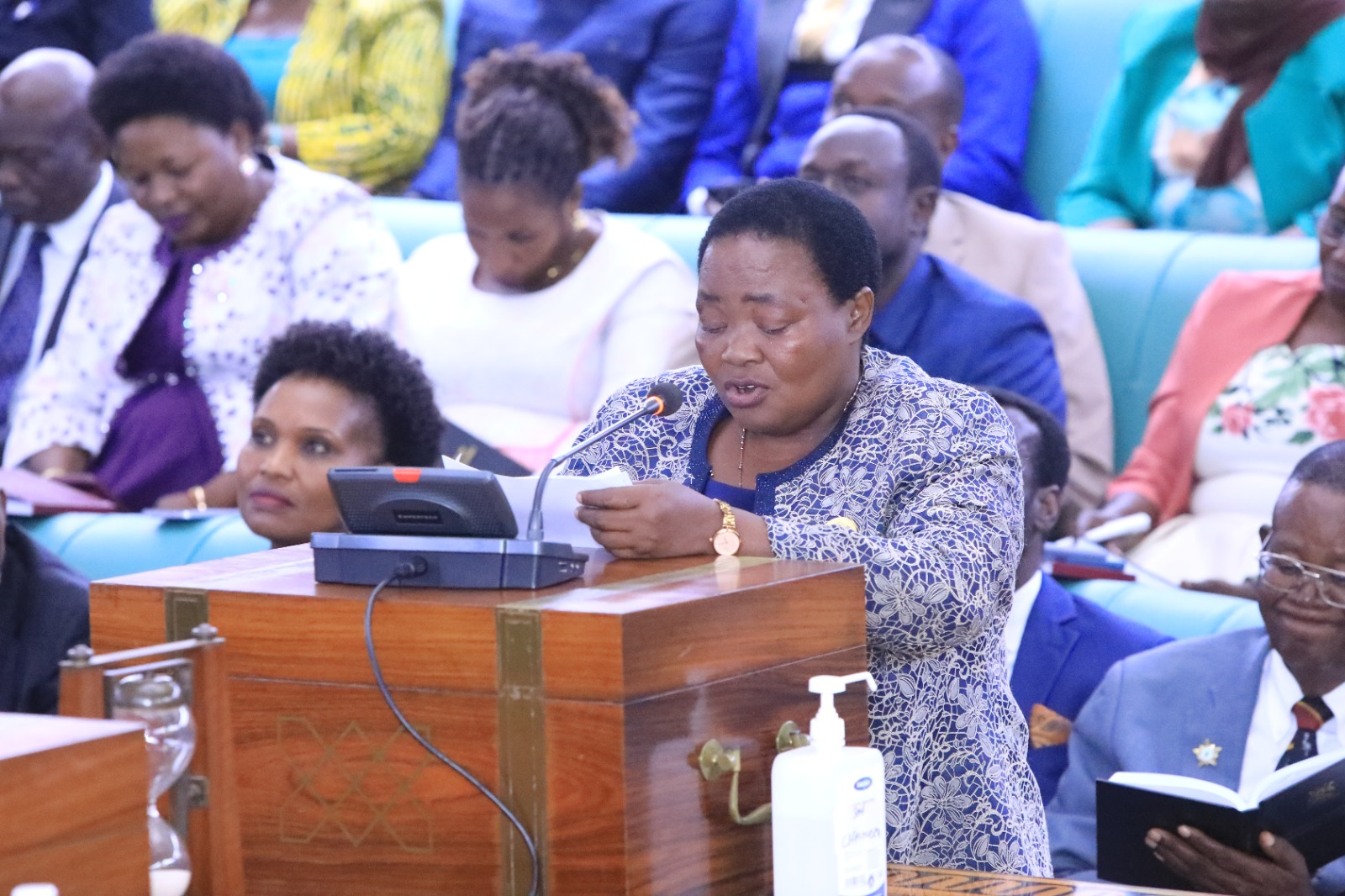
Presenting the motion on the floor of Parliament, Nabbanja said Uganda’s governance demands have significantly expanded since the 1995 Constitution came into force, making the adjustment necessary.
“This motion is not about numbers alone; it is about efficiency, accountability, inclusivity and alignment with Vision 2040 and the National Development Plan,” Nabbanja told MPs.
She argued that Uganda has changed dramatically over the last three decades, citing the increase in districts from 39 in 1995 to 146 today, as well as population growth from about 20 million to 45.9 million, according to the 2024 national census.
“While concerns about costs and duplication have been raised, Uganda’s governance demands are unique, and the Constitution provides for this adaptive approach,” she said.
Nabbanja also dismissed claims that the government was expanding the Executive beyond previous levels, insisting the structure largely reflects the same number of ministers who served in the last Parliament.
“The number of Ministers and Ministers of State that have been carrying out duties is the same number we have brought. We have not changed,” she said.
She added that previous government rationalisation efforts were aimed at eliminating overlap among agencies rather than cutting the ministerial establishment.
“Rationalisation was because we were having ambiguity and duplication of work. Uganda National Roads Authority was doing the same work as the Ministry of Works. So we are here to present the same number we had in the last Parliament,” Nabbanja explained.
Backing the motion, Deputy Attorney General and Kyaka South MP Jackson Kafuuzi said the Constitution explicitly allows the President to appoint “such other Ministers” as may be necessary for the efficient running of the State.
He argued that the debate was not merely about numbers, but about how government is organised to implement its political and development agenda.
“We have gone through an election where a new mandate has been given to the Head of State and all of you,” Kafuuzi said.
“The Head of State traversed the country explaining a manifesto which Ugandans have approved, so he needs a team that will work to effect that manifesto. It is our mandate as MPs to approve the variation.”
Following debate, Parliament adopted the resolution, officially approving the variation of ministerial numbers and endorsing the structure of the incoming Executive.
The decision now clears the final constitutional hurdle for the implementation of President Museveni’s newly unveiled Cabinet of 30 Cabinet Ministers and 51 Ministers of State, setting the stage for the new government to begin work under the NRM administration’s latest term.
Parliament earlier approved Robinah Nabbanja, the Kakumiro District Woman MP, as Prime Minister and Leader of Government Business after an overwhelming vote on the floor of the House. A total of 320 MPs voted in favour, 6 voted against, while 2 abstained, handing Nabbanja a decisive endorsement to continue leading government business in Parliament.