News
Museveni Accuses Andrew Mwenda of Spying on Him, Defends Stephen Nuwagaba

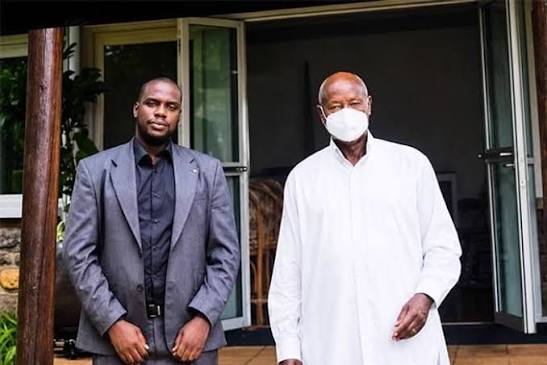
President Yoweri Kaguta Museveni has mounted a robust defence of Stephen Nuwagaba, dismissing claims by journalist Andrew Mwenda that the young man poses a threat to State House and Uganda’s security agencies, while alleging that Nuwagaba is instead a victim of torture and abuse by rogue security operatives.
In a lengthy statement released on Monday, Museveni accused Mwenda of shifting attention from what he described as serious crimes within the security establishment to “trivialities.”
The President said Nuwagaba came under his protection after fleeing alleged torture, maiming and death threats by elements within Uganda’s security services.
“Nuwagaba is a young man in his mid-twenties who came to me as a fugitive, a victim of torture and maiming, whom some elements in the Security Services were trying to silence,” Museveni wrote.

He revealed that Nuwagaba had spent months receiving medical treatment in Uganda and abroad at the President’s direction and that some of the officers allegedly involved are already facing court proceedings.
Museveni used the statement to strongly condemn torture, extrajudicial killings and abuse of power, describing them as immoral, counter-revolutionary and strategically harmful.
Drawing comparisons with atrocities committed during Idi Amin’s regime and the Luwero Bush War, Museveni said Uganda’s liberation struggle was fought precisely to end such abuses.
“Is this what we and the People of Uganda fought for?” he asked.
The President also insisted that during his 56 years of political struggle, he had never ordered the torture of opponents, arguing that discipline within liberation movements relied on punishment rather than brutality.
Investigation underway
Museveni disclosed that he had already ordered a “quiet investigation” into the allegations surrounding Nuwagaba and questioned why some individuals appeared determined to discredit him.
He suggested that attempts to portray Nuwagaba as dishonest could be intended to conceal criminal conduct within the security services.
“If the boy is a liar, why the desperation?” he asked.
Sharp criticism of Mwenda
The President accused Andrew Mwenda of repeatedly targeting him and diverting public attention from more pressing national issues.
Museveni recalled previous disagreements with the veteran journalist, including criticism of Uganda’s emerging pharmaceutical industry, and alleged that Mwenda had previously branded local innovators as fraudsters while questioning the President’s own judgment.
He argued that Uganda’s real challenges lie in corruption, abuse of office and compromised security personnel rather than Nuwagaba.
“The main problem of Uganda is not Nuwagaba seizing State House and the Security Forces, but the criminals… who have been blocking the flow of information about criminals and covering them up,” Museveni said.
Corruption and intelligence failures
The President further cited corruption in the Parish Development Model (PDM), road projects, local government recruitment and State House as examples of issues he believes deserve greater scrutiny.
He also defended his long-standing reliance on both formal intelligence agencies and informal citizen networks, arguing that whistleblowers have frequently exposed corruption and criminality when official institutions failed.
Drawing on experiences from the National Resistance Army (NRA) bush war, Museveni recounted several intelligence operations to rebut Mwenda’s assertion that informal intelligence methods were outdated.
Museveni concluded by warning against discouraging patriotic citizens from reporting corruption and wrongdoing, insisting that informal intelligence remains essential whenever official systems fail.
The statement comes amid a series of articles published by Andrew Mwenda’s magazine The Independent alleging the mystery of Stephen Nuwagaba and broader questions surrounding accountability within Uganda’s security agencies.