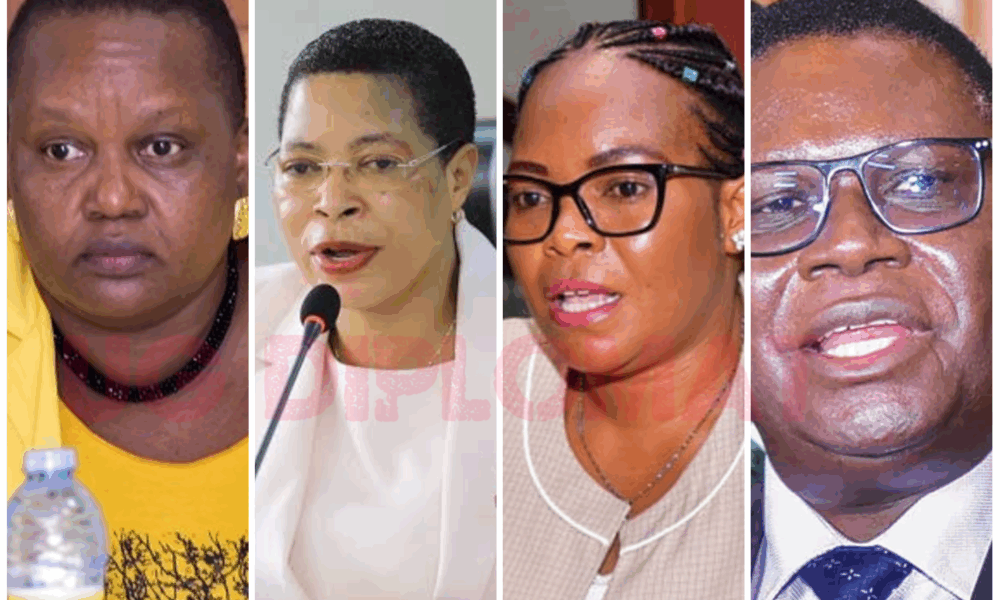
The contest for Speaker of Uganda’s 12th Parliament has rapidly evolved from what initially appeared to be a routine leadership renewal into a complex political test of power, loyalty, and institutional authority within the ruling system.
Beneath the public declarations by contenders lies a deeper struggle over who ultimately controls the political center of gravity inside Parliament, and how independent that institution will be in the next political cycle.
The Institutional Prize
The Speaker’s office in Uganda is not merely ceremonial. Under Article 82 of the Constitution, the Speaker presides over parliamentary business, controls debate, interprets rules of procedure, and determines the legislative tempo of the House. In practice, this position sits at the intersection of three power arenas: the Executive, the ruling party’s internal hierarchy, and Parliament’s own institutional autonomy.
For President Yoweri Museveni and the ruling National Resistance Movement (NRM), the Speakership has historically served as a stabilising mechanism, ensuring the legislative agenda moves smoothly while preventing Parliament from becoming a rival political power centre. The late Jacob Oulanyah represented this balancing act before his death in 2022, after which Anita Among assumed the role.
The stakes today are therefore less about personality and more about institutional alignment.
NRM MATHS: Continuity vs Internal Pressure
The NRM Central Executive Committee (CEC) has already endorsed Among for continuity, reflecting the party’s instinct for stability. With an overwhelming majority in Parliament, the NRM technically has the numbers to determine the outcome of the Speaker’s vote.
However, internal caucus dynamics make the equation less predictable than raw arithmetic suggests.
NRM MPs often use leadership elections to renegotiate influence within the system, particularly over committee assignments, regional representation, and access to patronage networks. The Speakership vote, conducted by secret ballot, creates a rare opportunity for legislators to express internal dissatisfaction without public defiance.
This is why even candidates with limited formal backing can disrupt the political equation by mobilising blocs of MPs who see the race as leverage in broader negotiations.
The Challenger Strategy
The emergence of challengers such as Norbert Mao, Persis Namuganza, and Lydia Wanyoto reflects different strategic calculations.
Mao’s candidacy is arguably the most politically layered. As leader of the Democratic Party and a cabinet minister under the NRM–DP cooperation agreement, his bid reframes the Speakership debate as a test of coalition politics rather than a purely NRM internal matter. By invoking the cooperation pact, Mao is effectively challenging the ruling party to demonstrate whether its partnership with smaller parties extends to parliamentary leadership.
Namuganza, meanwhile, is pursuing a mobilisation strategy within the NRM caucus itself. Her claim that over 150 MPs are “mobilising” for her suggests an attempt to build a cross-factional coalition of backbenchers who feel sidelined by existing parliamentary leadership structures.
Wanyoto’s entry adds a third dimension: diplomatic credibility and regional influence. With experience at the African Union and the East African Legislative Assembly, her candidacy appeals to MPs seeking a Speaker with broader institutional stature.
State House Factor
Despite the growing field of candidates, few observers believe the outcome will be determined purely through open competition.
In Uganda’s political system, high-stakes leadership contests often converge on one decisive question: where State House ultimately aligns.
Signals from the executive, even subtle ones, can shape the direction of the NRM caucus, especially when MPs weigh the risks of opposing the preferred establishment candidate.
Recent remarks by Muhoozi Kainerugaba, who said he would consult President Museveni before taking any position on parliamentary leadership, reinforce the perception that the final alignment may emerge through internal consultation rather than open confrontation.
For President Museveni to effectively implement his development agenda, the legislature shouldn’t be a stumbling block.
Broader Stakes
Beyond the personalities involved, the Speakership battle carries implications for three larger political questions:
1. Parliamentary Independence
Will the 12th Parliament assert greater institutional autonomy, or remain tightly aligned with executive priorities?
2. Coalition Politics
If Mao’s argument gains traction, it could redefine the meaning of the NRM–DP cooperation framework and potentially open the door to broader coalition governance.
3. Internal NRM Cohesion
A contested Speakership vote could expose factional undercurrents within the ruling party ahead of future succession debates.
The Bottom Line
The battle for Speaker is ultimately about more than who holds the gavel. It is a referendum on how power is negotiated within Uganda’s political architecture.
Whether the outcome reinforces continuity under Among or produces a surprise coalition around an alternative candidate, the race has already achieved one significant shift: the Speakership, once treated as a settled internal arrangement, is now openly contested.
And in a system where Parliament has historically balanced between institutional authority and political discipline, that shift alone signals that the 12th Parliament may begin under a different political atmosphere than the one that defined its predecessor.