
Analysis
Crispus Kiyonga: Uganda’s Quiet Strategist of Governance, Diplomacy and Community Transformation

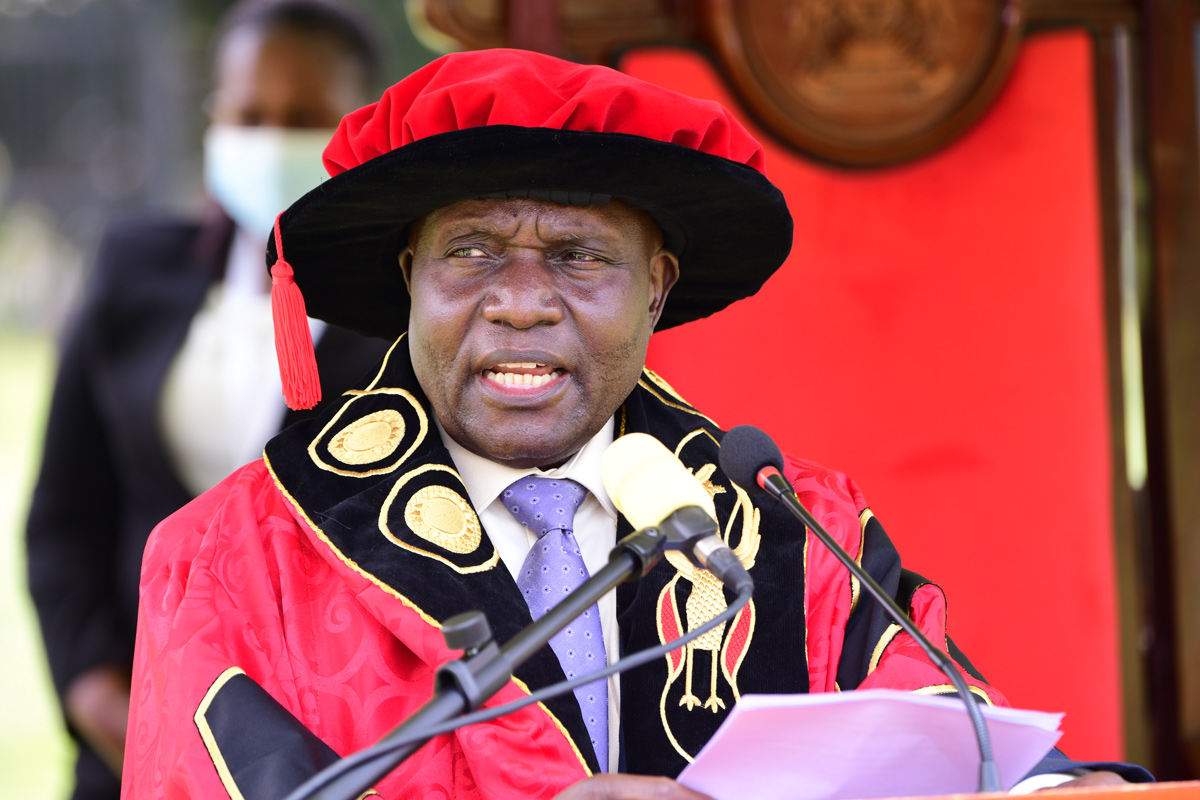
By Kabyanga Milly Felix
The appointment of Crispus Kiyonga as Uganda’s Second Deputy Prime Minister and Deputy Leader of Government Business is more than a routine political deployment. It is a strategic elevation of one of Uganda’s most experienced, disciplined and intellectually grounded statesmen, a man whose public life has consistently reflected calm leadership, ideological steadiness, diplomatic sophistication and commitment to community transformation.
At a time when modern politics increasingly rewards noise, confrontation and populist theatrics, Dr. Kiyonga represents a different leadership tradition of thoughtful, measured, research-driven and development-oriented. His career has traversed medicine, liberation politics, economic management, defense, diplomacy and regional peace-building giving him a rare multidimensional understanding of governance and statecraft.
Few leaders in Uganda possess the breadth of institutional memory and administrative experience that Dr. Kiyonga carries. From his role in the liberation struggle to serving in key ministries including cooperatives, Finance, Health, Internal Affairs and Defence, and later as Uganda’s Ambassador to China, he has remained one of the most intellectually consistent figures within government.
A Politician of Consistency and Substance:
What distinguishes Dr. Kiyonga from many contemporary politicians is consistency. For decades, his message to communities has revolved around livelihood improvement, food security, poverty eradication and human development. While many politicians change ideological direction depending on political convenience, Dr. Kiyonga has remained remarkably anchored on the belief that sustainable national transformation begins at household level. His politics has never been excessively performative but has instead focused on practical questions:
• Can households feed themselves?
• Can families improve nutrition?

• Can communities generate stable incomes?
• Can citizens escape subsistence living into productive economic participation?
His emphasis on fighting food insecurity and poverty has not been rhetorical symbolism. It reflects a long-standing conviction that national stability is impossible without socio-economic empowerment at grassroots level.
This explains why he has consistently advocated for agriculture, household productivity and community-centered development approaches. In many ways, his philosophy aligns with the broader National Resistance Movement emphasis on socio-economic transformation through wealth creation, but his own contribution has often stood out because of its technocratic and research-oriented nature.
The Intellectual Approach to Development:
Perhaps one of Dr. Kiyonga’s most important qualities is his appreciation for evidence-based governance. Unlike leaders who approach development challenges emotionally or politically, he approaches them diagnostically and that is a reflection of his medical background as a trained physician.
His recent focus on tackling stunting, malnutrition and poor dietary practices through collaboration with Makerere University demonstrates a leader who understands that poverty is multidimensional, It is not simply the absence of income but also the absence of nutrition, knowledge, productivity and human capital development.
Stunting is one of the most underestimated national challenges in developing countries because its consequences extend beyond childhood health. It affects cognitive development, educational performance, labour productivity and long-term economic competitiveness. By emphasizing research-backed interventions into nutrition and diet, Dr. Kiyonga is essentially advocating for the protection of Uganda’s future human capital base.
Importantly, his approach signals a deeper philosophy that universities and research institutions should not exist in isolation from national policy. His engagement with Makerere University reflects the belief that scientific research must directly inform governance and community solutions.
That is a sophisticated development perspective often missing in African politics, where academic knowledge and policy implementation frequently operate separately.
The Chief Burundi Peace Negotiator and Regional Diplomat:
Beyond domestic governance, Dr. Kiyonga has distinguished himself as one of the region’s most respected negotiators and diplomatic actors.
His role as Uganda’s lead envoy and chief negotiator in the Burundi peace process significantly elevated his stature as a regional statesman. During the political crisis in Burundi, Dr. Kiyonga represented President Yoweri Museveni in mediation efforts aimed at bringing together government, opposition and civil society actors for dialogue. He played a central role in facilitating inter-Burundian dialogue during one of the country’s most delicate political moments, engaging multiple stakeholders with patience, restraint and diplomatic tact.
What stood out throughout those negotiations was not aggression or political grandstanding but composure. Negotiating peace in politically polarized environments requires emotional intelligence, restraint and the ability to maintain communication even when parties fundamentally distrust one another. Dr. Kiyonga demonstrated those qualities repeatedly.
In many ways, Burundi became a practical demonstration of his leadership philosophy of dialogue over provocation, patience over emotional reaction and strategic calmness over political hostility.
Those diplomatic experiences are particularly relevant to his new role as Deputy Leader of Government Business. Parliament itself is fundamentally a negotiation arena. It requires leaders capable of balancing competing interests, responding to criticism without escalating tensions and sustaining institutional order under pressure.
Calmness as Political Strength:
One of Dr. Kiyonga’s greatest political assets is temperament.
In modern politics, calm leaders are often underestimated because contemporary political culture tends to reward aggression and spectacle. Yet history repeatedly demonstrates that stable governance depends heavily on individuals capable of absorbing pressure without transmitting instability into institutions and Dr. Kiyonga belongs to that category of leaders.
He is not known for inflammatory rhetoric. He rarely seeks political drama. Instead, he projects moderation, intellectual discipline and strategic patience. Those characteristics make him particularly suited to serving as a balancing force within government.
As Deputy Leader of Government Business, his calm and methodical style may become an important antidote to increasingly confrontational opposition politics. Effective political management is not always about defeating opponents rhetorically, sometimes it is about denying them the chaos and emotional conflict upon which political polarization thrives.
His diplomatic background further strengthens this advantage. Negotiators learn that sustainable outcomes are rarely achieved through humiliation of opponents but are achieved through careful engagement, consensus-building and maintaining channels of communication even during disagreement.
Integrity and Public Trust:
Another important dimension of Dr. Kiyonga’s reputation is integrity. In societies where public confidence in political institutions is often weakened by perceptions of corruption and opportunism, leaders regarded as incorruptible become strategic institutional assets.
Over many years in public life, Dr. Kiyonga has maintained a reputation for discipline, professionalism and ethical restraint. That significantly enhances his credibility both within government and among sections of the public.
Integrity matters because governance is ultimately about trust. Citizens are more willing to accept difficult reforms and policy direction from leaders perceived to be motivated by national interest rather than personal accumulation.
Dr. Kiyonga’s image as an incorruptible and principled public servant therefore gives additional moral weight to his leadership.
Why His Appointment Matters:
President Yoweri Museveni’s decision to elevate Dr. Kiyonga appears deeply strategic.
The appointment introduces into the center of government coordination:
• a seasoned diplomat,
• a research-oriented policymaker,
• a calm negotiator,
• an experienced administrator,
• and a leader with deep liberation movement institutional memory.
At a time when governance requires both political stability and policy sophistication, Dr. Kiyonga’s profile offers both.
His elevation also signals continued recognition of leaders who prioritize long-term national transformation over short-term political populism. His emphasis on food security, poverty eradication, nutrition and livelihood improvement aligns directly with Uganda’s continuing socio-economic transformation agenda.
The Road Ahead:
However, expectations will inevitably be high. Uganda still faces serious socio-economic challenges including youth unemployment, food insecurity in vulnerable regions, low agricultural productivity and persistent household poverty. Translating research into practical implementation remains a major governance challenge.
Dr. Kiyonga’s biggest opportunity may therefore lie in strengthening the bridge between research institutions, government systems and communities. If effectively coordinated, evidence-based approaches to nutrition, agriculture and household productivity could significantly improve long-term development outcomes.
His understanding of diplomacy, negotiation and institutional coordination may also help strengthen the quality of government engagement within Parliament and across state institutions.
Conclusion:
Crispus Kiyonga represents a rare category of African statesman that are intellectually grounded yet practical, calm yet influential, diplomatic yet firm, experienced yet still policy-driven.
His role in the Burundi peace negotiations demonstrated his capacity to manage complex political tensions through dialogue and patience.  His long-standing advocacy for livelihood development, food security and research-backed solutions demonstrates a leader focused on structural transformation rather than political theatrics.
As Second Deputy Prime Minister and Deputy Leader of Government Business, he enters office not merely as a politician, but as a strategic stabilizer and a bridge between policy and politics, between research and implementation, and between governance and community transformation.
In an era increasingly dominated by loud politics, Dr. Kiyonga’s greatest strength may precisely be what makes him different. composure, discipline, negotiation and the quiet confidence of experience. Hongera Musyakulhu.