Analysis
OPINION: Why The Battle Over Parliament’s Dress Code Is An Ideological Imperative

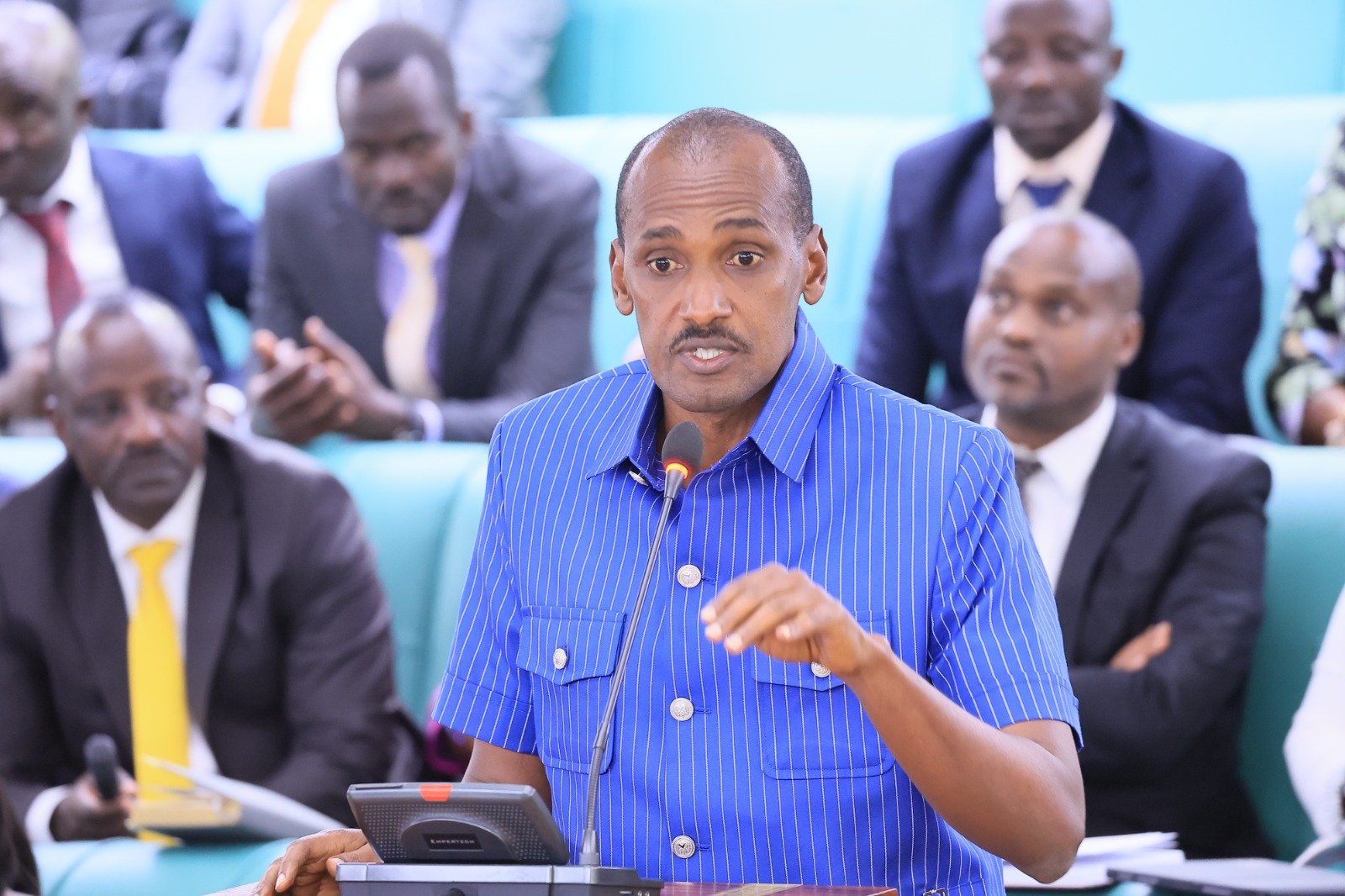
The recent attacks on Hon. Minister Frank Tumwebaze which triggered the debate in the Parliament of Uganda regarding parliamentary dress codes, reignited byprompting the minister’s defense of the Kaunda suit, is far more than a frivolous dispute over fashion. It is a profound ideological battle over cultural sovereignty, institutional identity, and the lingering psychological hangovers of colonialism.
For over six decades following ‘political independence’, many African governance institutions have inadvertently preserved Eurocentric standards as the exclusive measure of formality, decency, and professionalism. The belief that a black tie, long-sleeved shirt, and heavy three-piece wool coat constitute the sole “gold standard” of smartness in an African legislature is not only ideologically flawed; it is environmental nonsense.
The Historical Weaponization:
To understand why we must dismantle these rigid dress codes today, we must first recognize how colonial powers systematically “haunted” and targeted traditional African culture, in this case attire in the past. Colonial authorities understood early on that cultural identity is the backbone of political resistance therefore dress was never treated as neutral but rather instead it was a battleground.
If you may recall, during the colonial invasion, African traditional wear, body adornments, and natural hairstyles were deliberately vilified. Colonial administrators, missionaries, and legal codes labeled indigenous dress as “uncivilized,” “heathen,” “savage,” or “disorderly.” When anti-colonial movements began to organize, native attire became an explicit symbol of rebellion. In response, colonial regimes used formal institutional rules, mission schools, and public employment to mandate European dress as a prerequisite for social mobility, legal recognition, and professional respectability.
They systematically weaponized sartorial assimilation to break the African spirit, disconnect us from our heritage, and enforce psychological submission. The tragedy today is that long after the colonialists ‘departed’, our own institutions continue to enforce the very same prejudice against our heritage.
To my dear mzungu style smart colleagues, clothing around the world evolved primarily as a functional response to climate. The heavy, layered European suit was engineered specifically for temperate and cold climates, designed to trap heat and protect against harsh winters.

Imposing this heavy attire on the African tropics, where ambient temperatures regularly demand breathable, lightweight fabrics, is an absurd historic mismatch and failure to reason. We have normalized sweating through multi-layered European suits in equatorial heat simply because colonial administrators dictated that this was what “civilized” governance looked like.
Consider the Arab world. Nations across the Middle East and North Africa have steadfastly retained their distinct cultural attires, such as the thobe, bisht, and keffiyeh. These garments were designed specifically for hot, arid environments. Arab diplomats and leaders wear their traditional dress with immense pride in international forums, from the halls of the United Nations to global economic summits. They command global respect without ever compromising their cultural identity or conforming to Western sartorial standards.
Why, then, does Africa continue to hesitate? Why do our institutions treat our own climate-appropriate, culturally rich garments as “informal” or “indecent”?
Embracing African Identity:
This prejudice extends beyond fabric to our very natural hair and grooming standards. For generations, institutional rules in schools, judiciaries, and parliaments across Africa have marginalized citizens with natural hairstyles, particularly dreadlocks. Funny enough international schools allow them.
We must explicitly credit and commend the Rastafari Movement, whose members steadfastly preserved and defended natural dreadlocks as a symbol of spiritual purity, African identity, and anti-colonial resistance. For decades, Rastafarians faced institutional discrimination and social exclusion for wearing their natural hair. Today, as global courts and progressive institutions increasingly validate natural dreadlocks as a legitimate, professional, and culturally protected form of expression, we must recognize that the Rastafari movement was decades ahead of its time in defending the dignity of African hair and culture. A truly decolonized African parliament must ensure that no African is disqualified or demeaned for wearing their natural hair or traditional locks.
Pan-African Exemplars of Dignity:
African history proves that leadership dignity does not depend on colonial attire. Mwalimu Julius Nyerere, Kenneth Kaunda, and Samora Machel elevated the safari and Kaunda suit into enduring symbols of self-reliance, anti-imperialist solidarity, and accessible governance. Nelson Mandela’s signature Madiba shirt famously challenged rigid global protocols, demonstrating that authority stems from moral leadership, not a necktie. We have also observed in the recent years President Yoweri Museveni doning a unique shirt which is locally made.
Ambassador Olara Otunnu, during his recent high-level address at the United Nations, he confidently donned rich African attire. In doing so, he demonstrated on the highest global stage that African statesmen command immense respect without needing to imitate European fashion unlike the rest of his team. H.E. Vice President Jessica Alupo continuously models executive elegance and cultural authority through her consistent embrace of the African Kitengi. Her presence at national and international summits proves that traditional African wear embodies the peak of diplomatic propriety.
Therefore, when the Parliamentary Committee on Rules, Privileges, and Discipline reviews the proposed dress code amendments, it must act with ideological clarity. The Speaker of Parliament, Rt. Hon. Comrade Jacob Oboth Oboth, set the right precedent by protecting the rights of legislators to wear dignified African attire. To fully realize this transformation, Parliament and public institutions across Uganda should take these2 concrete steps: Explicitly update standing orders and parliamentary rules of procedure to define Kaunda suits, Madiba shirts, Kitengi, Kanzus, recognized traditional attire, and natural African hair (including dreadlocks) as fully compliant with formal institutional standards; and Embrace lightweight, locally sourced fabrics designed for an equatorial climate, prioritizing comfort, health, and functionality over colonial nostalgia.
By embracing African wear, we boost local textile production, empower local fashion designers, and fulfill the core objectives of the Buy Uganda, Build Uganda (BUBU) policy.
Decolonization cannot remain a theoretical concept confined to history books; it must be reflected in how we structure our laws, build our institutions, and dress our leaders. It is time to retire the colonial hangover, reverse the historical targeting of our culture, embrace climate-sensible attire and natural grooming, and wear our African heritage with unapologetic pride.
The author is Head of Administration & ICT, Pan-African Movement (Uganda National Chapter)
National Coordinator, Nile Valley Reunion Project
nbalenzi@gmail.com