Analysis
PROMISED AIR?: Uganda’s Ebola Victory Exposes the Dark Side of Donor Pledges

UG DIPLOMAT ANALYSIS
Uganda’s Ebola-free declaration is more than a public-health victory. It has exposed an uncomfortable reality in international development financing: partners can announce impressive pledges, dominate headlines and attend coordination meetings, yet leave African governments carrying the immediate financial burden.
Tuesday’s declaration by Health Minister Chris Baryomunsi that the country is officially free of the deadly Ebola should ordinarily have been a straightforward story of medical triumph: a dangerous imported outbreak detected, transmission chains reconstructed, contacts quarantined and the country completing the required monitoring period without another infection.
The 2026 outbreak resulted in 20 confirmed cases and two deaths, with 15 of the infections originating in the Democratic Republic of Congo. Eighteen patients recovered and were discharged. The 42-day monitoring period was calculated from June 16, when the last Ugandan national with locally transmitted Ebola was discharged, although a Congolese patient remained under treatment until mid July.
But behind the official declaration lies a potentially bigger story—one concerning money, international promises and the widening gap between diplomatic announcements and resources delivered on the ground.
Uganda Media Centre Executive Director and Government Spokesperson Alan Kasujja brought that issue into the open with a cheeky but pointed social-media post during the response.
“Lots of promises were made – some by well meaning allies- others by opportunists.. That Uganda would be supported financially to deal with Ebola,” Kasujja wrote on Tuesday, adding that Uganda was largely pushing back the outbreak using its own resources.
Coming from the official government spokesperson, the statement cannot easily be dismissed as ordinary social-media frustration. It appeared to express concerns that have quietly circulated within sections of government for years: development partners frequently announce commitments during emergencies, receive international publicity for the pledges and participate in high-level meetings, but the promised cash, equipment or operational support can arrive late, arrive partially—or never reach the frontline at all.
The Pledge–Disbursement Gap
The frustration is not entirely without supporting evidence.
On May 27, the United Nations and humanitarian partners launched a US$15.8 million emergency appeal to support Uganda’s national Ebola response over three months. At the time of the appeal, however, a funding gap of approximately US$12.7 million remained.

The wider regional financing picture was even more revealing.
Africa Centres for Disease Control and Prevention officials said in June that donors had pledged approximately US$910 million for the Ebola response in Uganda and the DRC, but less than US$90 million—under 10%—had actually been received by that stage.
Earlier, Africa CDC Director-General Jean Kaseya had disclosed that initial commitments of nearly US$500 million had dropped to approximately US$290 million after some donors withdrew or revised their pledges.
This is precisely the distinction that often disappears from international-development reporting: money pledged is not money disbursed.
A pledge can be announced at a conference, posted on social media and included in a donor’s diplomatic statement. But health workers cannot purchase protective equipment, transport laboratory samples, feed quarantined contacts or maintain treatment centres using a press release.
Uganda required immediately deployable resources; not figures awaiting approvals in foreign capitals, allocations spread across several countries or funding routed through multiple international organisations with lengthy procurement procedures.
Did Partners Provide Nothing?
Kasujja’s remarks should not automatically be interpreted to mean that Uganda received absolutely no international assistance.
The World Health Organisation publicly reported that it was supporting surveillance, contact tracing, clinical preparedness, supplies, community engagement and cross-border coordination. The World Bank similarly announced that it was mobilising financing and technical support for both Uganda and the DRC.
Uganda’s Ministry of Health also held an Ebola accountability forum and thanked partners for technical and financial support during the response.
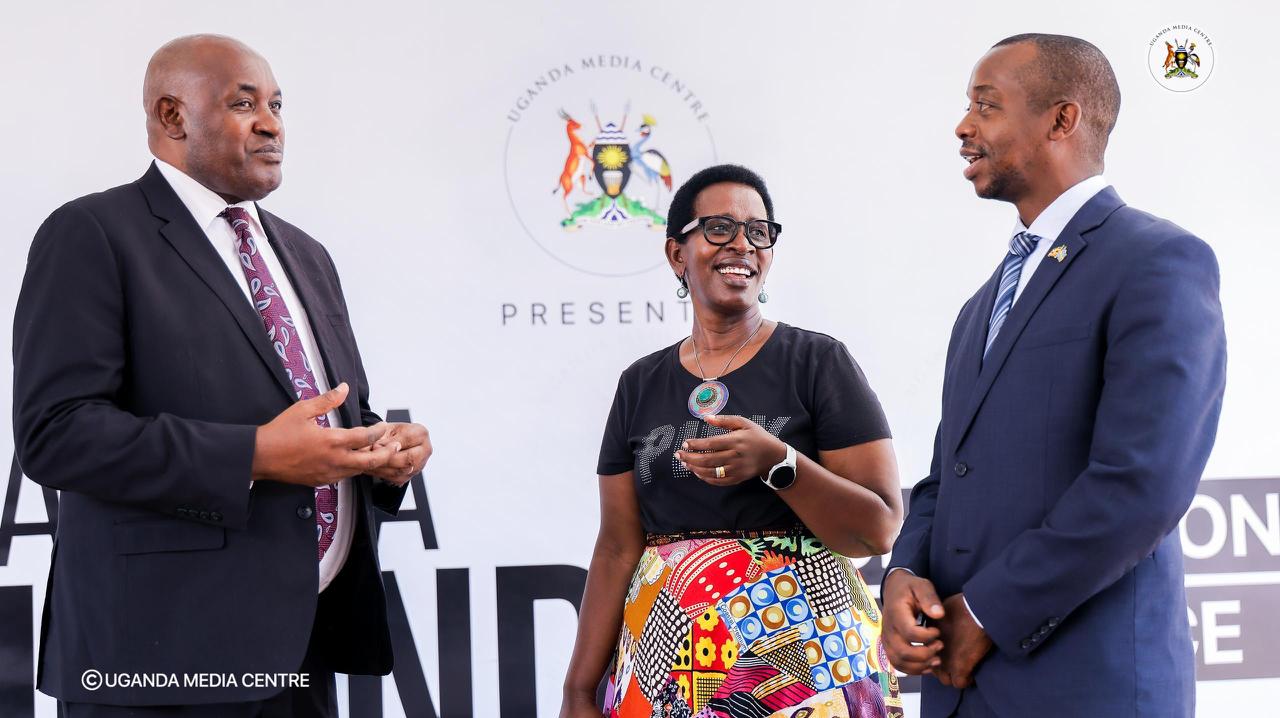
Health Minister Dr Chris Baryomunsi (L) with PS Dr Diana Atwine (C) and State Minister Dr Charles Ayume after announcing that Uganda was ebol free
Partner assistance can take several forms: cash, medical supplies, laboratory services, personnel, training, transport, technical expertise or funding provided directly to international agencies rather than transferred to the Government of Uganda.
The unresolved issue, therefore, is not whether international organisations participated. It is whether the level, speed and form of assistance matched the large commitments announced publicly—and how much of Uganda’s actual frontline expenditure was financed from domestic resources.
Without a publicly accessible table showing each pledge, the amount disbursed, its recipient, delivery date and intended activity, both the government’s frustration and the partners’ claims of support remain difficult to reconcile.
Uganda’s Preparedness Became Its Insurance Policy
Whatever eventually arrived from abroad, Uganda’s ability to contain Ebola was built on investments made before the 2026 outbreak.
The country had trained emergency medical personnel, established treatment facilities, pre-positioned supplies and developed institutional experience from previous outbreaks. The World Health Organisation’s representative in Uganda credited that preparedness with enabling the rapid response and limiting fatalities.
Uganda did not wait for foreign consultants to explain contact tracing. It already had epidemiologists, laboratory scientists, surveillance officers and clinicians familiar with Ebola operations.
It did not begin designing an emergency system after the first cases appeared. Existing systems were activated.
That may be the most important lesson from the outbreak. International partnerships remain valuable, but national preparedness is the only resource a country can confidently deploy on the first day of an emergency.
Promises require meetings, agreements, approvals and procurement processes. Domestic systems can begin working immediately.
Diplomatic Cost of Broken Promises
Development assistance is not merely financial. It is also diplomatic.
When governments repeatedly hear large commitments that do not materialise, confidence in partnerships weakens. Officials begin treating donor announcements as public-relations exercises rather than reliable operational commitments.
That mistrust could eventually damage genuine cooperation. Countries may become reluctant to share sensitive outbreak information, allow international organisations into national systems or structure emergency plans around external funding.
There is also an imbalance in publicity. Donors frequently obtain headlines when announcing pledges, but there is considerably less attention months later when the funds remain undisbursed.
Uganda, meanwhile, carried not only the response costs but also the economic consequences of being labelled an Ebola-affected country. At least 15 countries maintained partial or complete travel restrictions, affecting tourism, trade and business even as Kampala argued that the outbreak was imported and under control.
Partners therefore cannot claim the diplomatic credit of supporting Uganda while leaving Kampala to absorb most of the financial and economic burden.
Time for a Public Pledge Tracker?
Uganda’s Ebola victory presents an opportunity to introduce greater accountability into its relationship with development partners.
The government should publish a detailed Ebola financing report separating: Government expenditure; Cash received from each partner; Supplies and equipment delivered; Technical personnel deployed; Funds pledged but not disbursed; Regional funding that never reached Uganda; Outstanding commitments and expected delivery dates.
Such transparency would protect both sides.
It would allow Uganda to identify partners that failed to honour their commitments, while ensuring that organisations which provided genuine assistance receive proper recognition.
It would also prevent government officials from making sweeping accusations where some support may have arrived through technical or indirect channels.

Health Minister Dr Chris Baryomunsi (L) hands over the discharge certificate to Uganda’s last ebola patient. PHOTO BY ALEX MASEREKA JOEL
More importantly, Uganda should establish or strengthen a permanently financed national epidemic contingency fund. Emergency money should be available immediately after an outbreak is confirmed, with partner funding used to replenish or expand the response rather than determine whether operations can begin.
Victory—and a Warning
Uganda’s Ebola-free declaration is a victory for its health workers, scientists, surveillance teams, clinicians and communities that complied with quarantine and contact-monitoring requirements.
But Alan Kasujja’s “promise air” comment has transformed the celebration into something more politically significant.
It has raised a question that should concern every African government dependent on international emergency financing: When development partners announce millions of dollars, how much actually reaches the affected country—and when?
Uganda defeated the outbreak partly because it had built domestic expertise and was prepared to spend its own resources.
The country should celebrate that capacity. But it should also demand a full reconciliation of every international pledge made in its name.
The next outbreak may move faster, spread farther and cost considerably more. Uganda cannot plan its national security around money that exists only in speeches, conference communiqués and social-media posts.