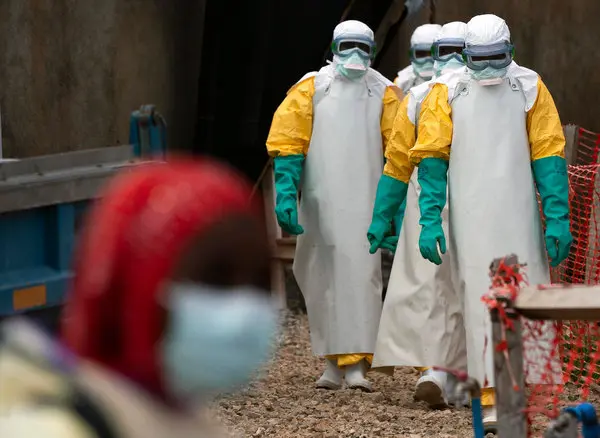
The World Health Organization has declared the Ebola outbreak in eastern Democratic Republic of the Congo a Public Health Emergency of International Concern after the deadly virus spread into neighbouring Uganda.
WHO Director-General Tedros Adhanom Ghebreyesus warned that there are “significant uncertainties” surrounding the true number of infections and the geographical spread of the outbreak, which has already recorded around 246 suspected cases and 80 deaths.
The outbreak is centred in Ituri Province in eastern DR Congo and involves the Bundibugyo strain of Ebola — a rare variant for which there are currently no approved vaccines or specific treatments.
According to the WHO, eight laboratory-confirmed cases have been detected across three health zones, including Bunia, the capital of Ituri Province, as well as the gold-mining towns of Mongwalu and Rwampara.
Health officials also confirmed that the virus has crossed into Uganda, where two cases have already been reported. Ugandan authorities said a 59-year-old man who died on Thursday tested positive for Ebola.
Despite the alarming spread, the WHO said the outbreak does not yet qualify as a pandemic emergency.
The agency warned that countries neighbouring DR Congo remain at high risk due to heavy cross-border movement, trade, and travel. Uganda, South Sudan, Tanzania, and Angola were specifically highlighted as vulnerable to further transmission.
WHO urged both DR Congo and Uganda to immediately strengthen emergency response measures, including setting up emergency operation centres, enhancing surveillance systems, contact tracing, and infection prevention protocols.
The agency advised that confirmed Ebola patients should be isolated immediately and only discharged after testing negative twice in tests conducted at least 48 hours apart.
The WHO also discouraged countries outside the affected region from closing borders or imposing travel bans, arguing such measures are driven by fear rather than science.
Ebola was first identified in 1976 in what is now DR Congo and is believed to have originated from bats. This marks the country’s 17th Ebola outbreak.
The virus spreads through direct contact with bodily fluids or contaminated surfaces and causes symptoms including fever, muscle pain, fatigue, vomiting, diarrhoea, internal bleeding, and organ failure. The disease has an average fatality rate of about 50 percent.
The Africa Centres for Disease Control and Prevention previously raised concern over the outbreak’s spread in urban areas such as Bunia and Rwampara, as well as mining operations in Mongwalu where population movement is high.
Africa CDC Director-General Jean Kaseya stressed that regional coordination would be critical to stopping the outbreak from escalating into a wider continental crisis.
READ ALSO: Museveni Meets Epidemics Task Force Over Ebola Outbreak, Urges Calm
Over the past five decades, Ebola outbreaks across Africa have killed approximately 15,000 people. DR Congo’s deadliest outbreak between 2018 and 2020 claimed nearly 2,300 lives, while another outbreak last year killed 45 people in a remote region.
READ ALSO: One Person Succumbs To Ebola In Kampala As Uganda Confirms Outbreak