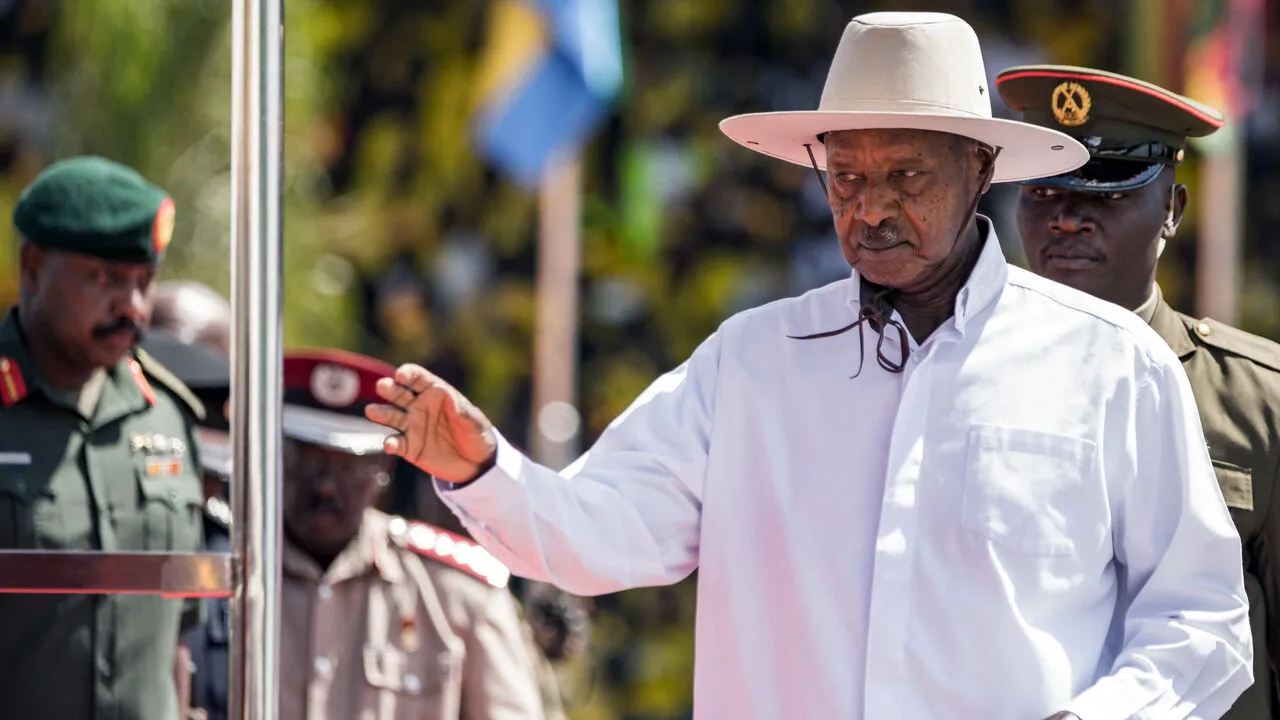
The Economist’s recent article, “Twilight of an autocrat”, presents a classic example of Western journalistic reductionism. It frames the complex African political transitions through mere sensationalism, deprives readers of a nuanced analysis of Uganda’s governance, state institutions, and internal political dynamics.
The Myth of Self-Exile and Grassroots Reality
The article portrays Hon. Robert Kyagulanyi (Bobi Wine) as a political victim who was forced into self-exile/ asylum. However, a rigorous analysis reveals a different dynamic. On Electoral Performance, his political party the National Unity Platform (NUP) faced internal structural limitations, including an inability to field candidates across all local and parliamentary seats nationwide as reflected in the just concluded local councils 1 and 2, and women councils where the NUP performed poorly. Internal allegations regarding ticket sales and selective allocations based on loyalty further weakened grassroots party coherence.
Also, on the Role of the Judiciary, rather than remaining in Uganda to pursue legal remedies or lead a constitutional opposition, Hon. Kyagulanyi opted for foreign platforms as a plan to strengthen his alliances in USA than locally in Uganda. True democratic leadership relies on domestic accountability rather than international public relations.
On Public Mobilization, the article ignores a fundamental political reality: no state security apparatus can permanently suppress a genuine, widespread popular movement of millions. The absence of mass uprisings since the election period demonstrates that political sentiment in Uganda is far more fragmented and complex than Western narratives suggest.
Judicial Accountability vs. Political Immunity
The narrative surrounding Dr. Kizza Besigye similarly misinterprets legal proceedings as purely political persecution.
State Sovereignty and Rule of Law under the universal standard, treason and national security charges require judicial trial. Political status does not confer immunity from statutory law. In any sovereign state, allegations involving national security are adjudicated through the judiciary. Therefore, treating political figures as immune from legal scrutiny undermines the principle of the rule of law.
Lastly, political Competition and Foreign Interference
The Economist goes ahead and characterizes Uganda’s political horizon as an impending crisis, misconstruing competitive internal dynamics for institutional collapse. However, following the succession dynamics, the emergence of figures like Gen. Muhoozi Kainerugaba reflects active political positioning within a multiparty system.
In open political environments, candidates build coalitions and seek strategic leverage both locally and internationally. Therefore, the so-called posturing and endorsements of Muhoozi is just political and sign that he himself, though being a president’s son, he doesn’t take it for granted that he will succeed his father. Instead, he uses all the political machinations to win the acceptance of the citizens of Uganda as their next President. And indeed, ever since he came out to declare his intentions, his ratings within both the National Resistance Movement party and the country at large, especially among the youth has increased tremendously.
On the Imperialist Framing, Western commentary often evaluates African political systems against external standards while ignoring historical and structural realities. African democracy continues to evolve, but it must do so free from paternalistic foreign narratives that reduce complex statecraft to simplistic caricatures.
In Conclusion, Uganda’s democratic political field is a dynamic, highly competitive and unpredictable arena. True democratic maturity requires analyzing African politics through institutional mechanics, internal party structures, and constitutional processes, but not through the superficial lens of external media outlets looking to sensationalize sovereign national affairs based on a few cunning opposition politicians.
The Author is Head of Administration, Pan-African Movement – Uganda National Chapter