
Politics
REVEALED! Phillip Kakuru Tipped to Win Key NRM Entrepreneurs League Race

KAMPALA | UG DIPLOMAT: In a race that has drawn some of Uganda’s most seasoned political entrepreneurs, emerging signs from the NRM grassroots and insider circles point to one name rising above the rest, Phillip Kakuru.
Credible sources and analysts in the political corridors of power reveal with authority thag the presidential advisor and founder of Rostec Colleges appears to be cruising ahead in the hotly contested bid to chair the NRM Entrepreneurs League, a position that automatically also earns a seat on the party’s powerful Central Executive Committee (CEC).
The race features prominent figures such as Amb. Ceaser Augustus Mulenga, Robert Rukaari, and Sanjay Tanna, each with deep political and economic footprints in Uganda’s power circles.
But if whispers within the party’s lower structures and high echelons are anything to go by, Kakuru’s blend of grassroots strategy, diaspora backing, and financial muscle has struck a chord with a party hungry for generational and ideological renewal.
“He is not campaigning with posters. He’s campaigning with projects,” a source from Western Uganda tol this publication.
“People can see his SACCO. They see his trade summits. They see action.”
Campaign Built on Tangible Change
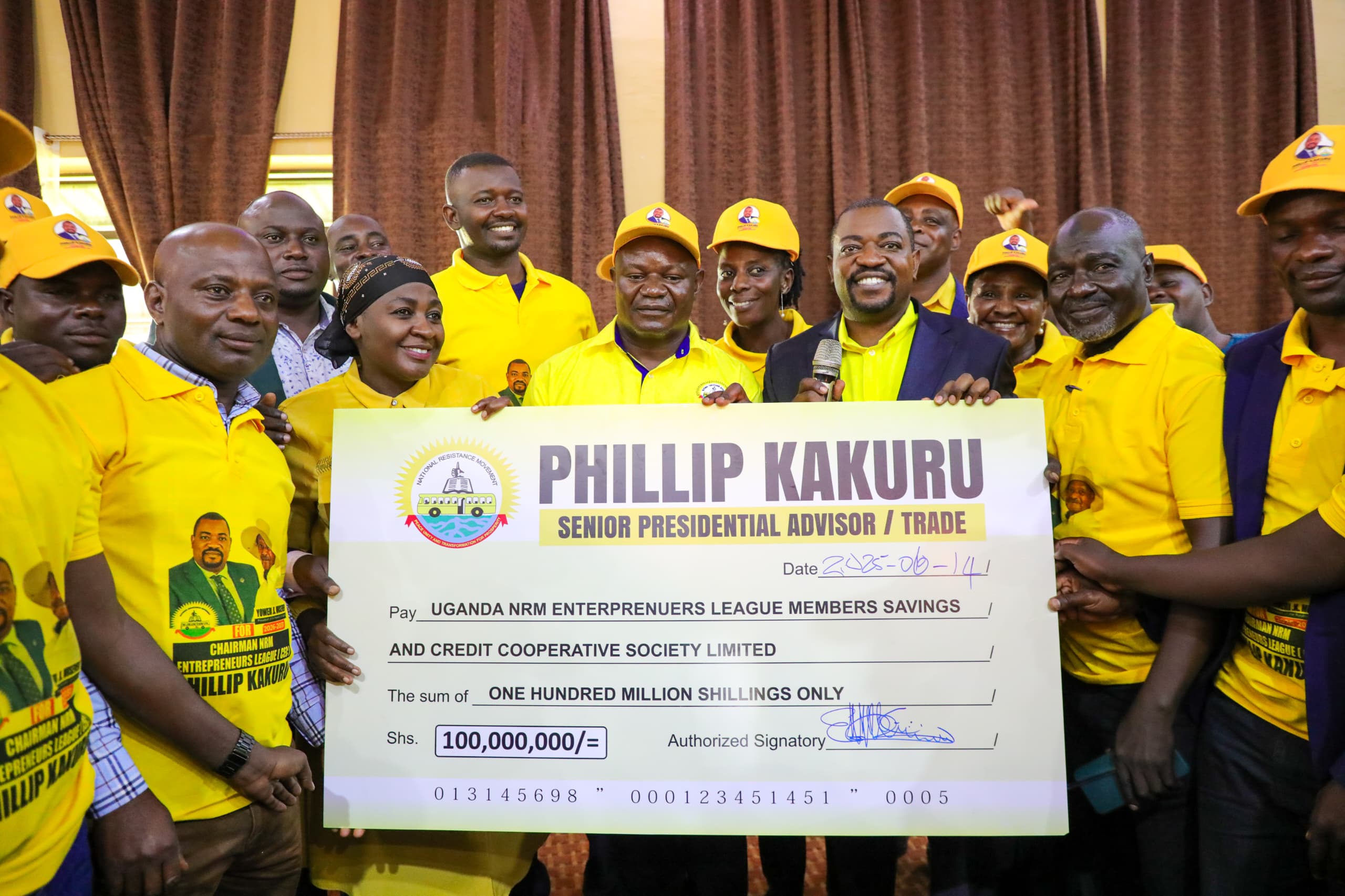
Unlike many of his rivals whose campaigns have leaned on past achievements or name recognition, Kakuru is running on a results-first platform. Last month, he injected UGX 100 million into a new SACCO aimed at empowering youth entrepreneurs and SMEs, indicating not just intent but immediate implementation. The SACCO, launched under the NRM Entrepreneurs League framework, is already in the process of setting up offices nationwide, with Bugolobi as its pilot branch.

His bold plan to create “mass tycoons” through targeted investment, savings culture, and policy advocacy stands in contrast to traditional patronage-based campaigns. Kakuru’s campaign slogan “The Voice” embodies his promise to be an active bridge between entrepreneurs and the state.
“We cannot keep saying young people are the future when we exclude them from policy and funding conversations,” Kakuru said recently. “The Entrepreneurs League should not be a title; it must be a vehicle.”
Echoes of Past Political Disruptors
Kakuru’s rise is drawing comparisons to past political insurgencies within the NRM and beyond. His model, combining practical economic empowerment with strategic political mobilization, bears resemblance to how figures like Richard Todwong rose through the ideological leagues of the party with a message of internal reform, or how Hajjat Hadijah Namyalo’s “Tova Ku Main” campaign reshaped the political center of gravity ahead of President Museveni’s 2025 re-nomination last weekend.
Political pundits also recall how Amelia Kyambadde, once seen as merely a technocrat, ascended through the NRM structures by fusing private sector credibility with grassroots empathy, a model Kakuru seems to emulate, but with a distinctly diaspora and pan-African lens.
Every five years, the NRM gets a wave of new political blood that doesn’t just seek a seat, it brings a mission.
A Field of heavyweights
Still, Kakuru’s journey is far from uncontested.
Ceasar Mulenga, former presidential advisor on special duties, is backed by a network of traditional mobilizers and commands respect in Eastern Uganda.
Robert Rukaari, the current Entrepreneurs League boss, is running on his record of private sector integration and policy engagement.
Sanjay Tanna, a former Tororo Municipality MP, appeals to the Indian-Ugandan business constituency and has built a loyal following over the years.
Yet, unlike in past races where seniority and proximity to State House guaranteed victory, this election is being shaped by ideas, visibility, and youth-driven mobilization, a terrain where Kakuru is excelling.
Why It Matters
The NRM Entrepreneurs League is no longer a ceremonial group, it has evolved into a policy think tank, lobbying engine, and economic mobilization arm of the ruling party. Whoever chairs it will not only steer internal conversations about wealth creation but also influence the party’s broader economic agenda ahead of the 2026 general elections.
With Uganda’s population increasingly youthful, urbanizing, and tech-savvy, the demand for entrepreneurial leadership that matches the times is growing. Kakuru’s candidacy appears to offer the substance and style that this new demographic craves.
Final Word
With election day approaching next month at the much anticipated DelegatesConference, regional endorsements, from Elgon to West Nile, continue to trickle in for Kakuru. If the grapevine is right, Uganda may soon see a new kind of political entrepreneur take center stage: one with a plan, a platform, and a proven ability to deliver before asking for votes.