News
Museveni Unveils 320m-Litre Fuel Storage Terminal in Mpigi

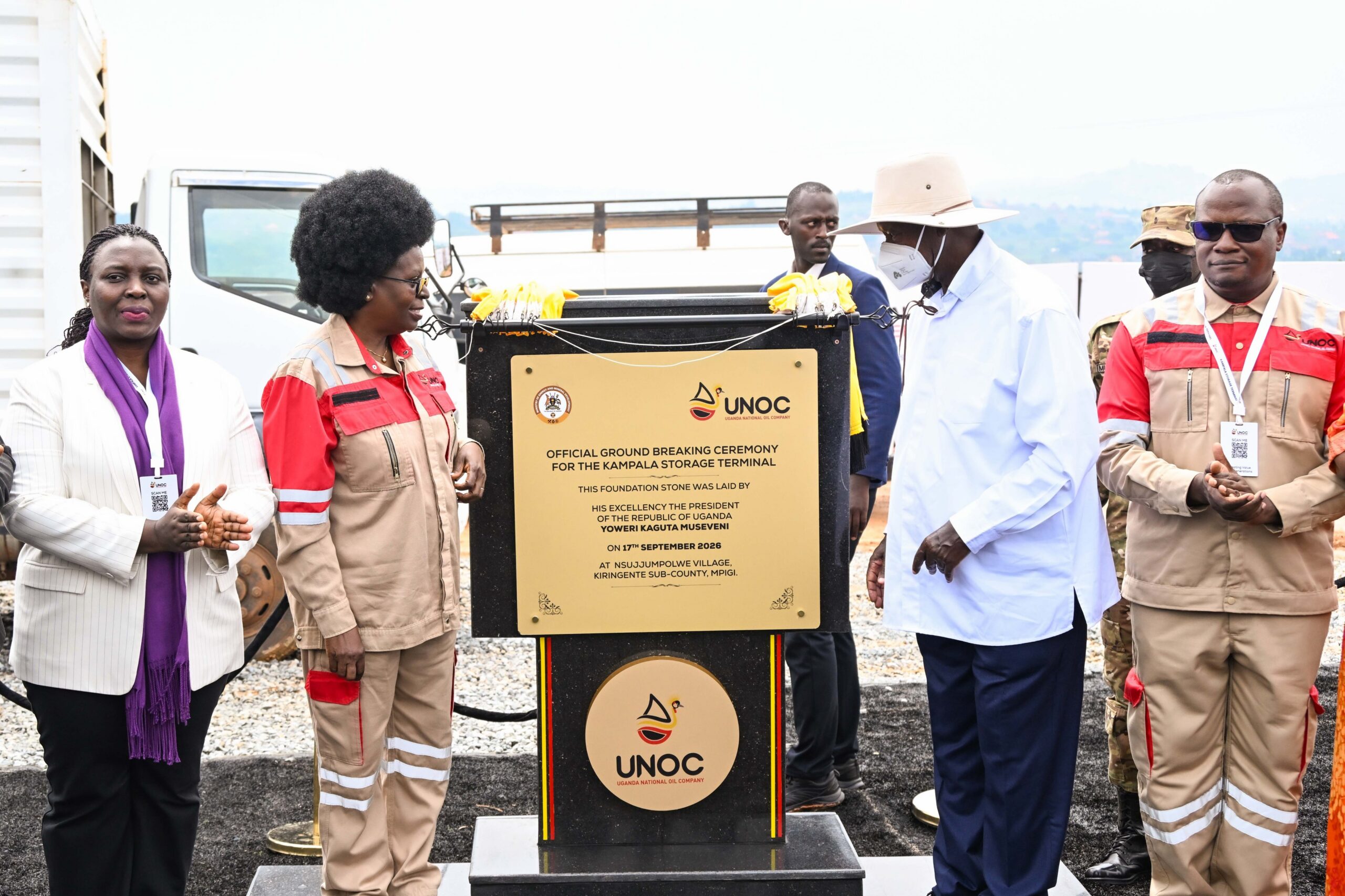
President Yoweri Museveni has said Uganda must overhaul the way it procures petroleum products, revealing that the country had been buying fuel through middlemen in Kenya before his intervention.
Museveni made the remarks on Thursday as he broke ground for the 320-million-litre Kampala Storage Terminal in Mpigi, describing the facility as an important component of Uganda’s efforts to strengthen strategic petroleum reserves.
“When we took over Government in 1986, we entrusted administration to technocrats. However, it took a Kenyan Senator to alert me that Uganda was buying petroleum products through middlemen in Kenya. Unbelievable!” Museveni said.
According to the President, government intervention in the procurement process has since reduced the prices Uganda pays for petroleum products.

He said the price of diesel had fallen from US$118 to US$83 per metric tonne, while petrol declined from US$97.5 to US$61.5. Aviation fuel, he added, had dropped from US$114.25 to US$79.25.
Museveni linked the changes to efforts to eliminate unnecessary intermediaries in Uganda’s petroleum supply chain.
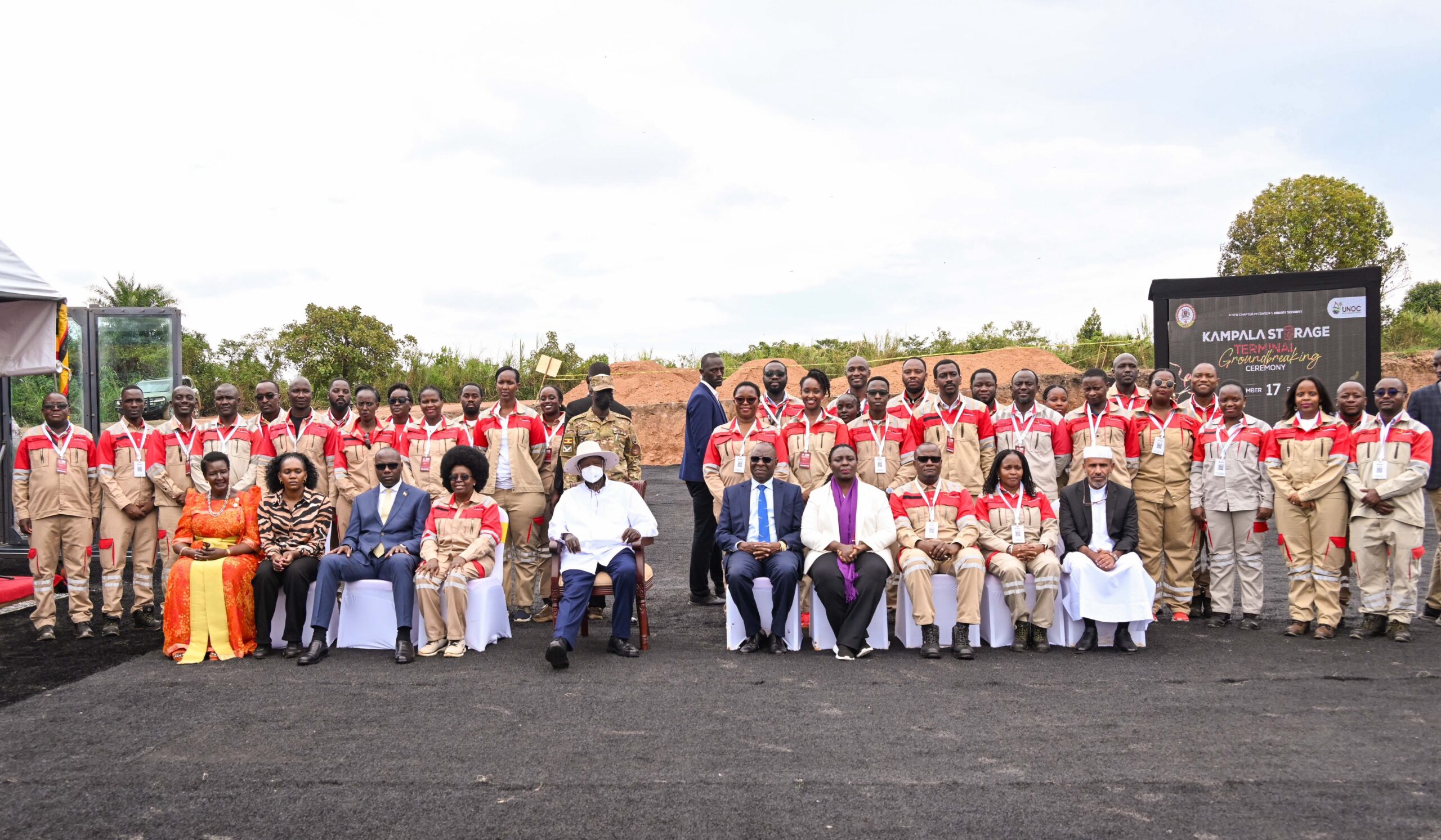
The President said the new storage terminal will become increasingly important as Uganda develops its own petroleum resources and seeks to improve the country’s resilience against disruptions in fuel supplies.
“As we develop our petroleum resources, we must strengthen our strategic reserves,” he said.
The groundbreaking also highlighted Uganda’s regional cooperation on energy security.
Museveni welcomed a delegation sent by Tanzanian President Samia Suluhu Hassan, saying Uganda would continue working with Tanzania and other East African countries to strengthen regional petroleum security.
The Kampala Storage Terminal is expected to expand Uganda’s capacity to store petroleum products and provide additional reserves for domestic consumption and regional supply needs.
Museveni also used the occasion to commend residents of Mpigi for protecting the ekifunjo, or papyrus swamp, urging communities to preserve Uganda’s natural environment.
“I thank the people of Mpigi for protecting the ekifunjo (papyrus swamp). This is how God made Uganda, and we should keep it that way,” he said.
The President further called for improved waste-management systems, including the use of incineration technologies that can convert waste into electricity.
The remarks come as Uganda prepares for a major transformation of its energy sector, with the country’s oil production and associated infrastructure expected to reshape the petroleum supply chain in the coming years.