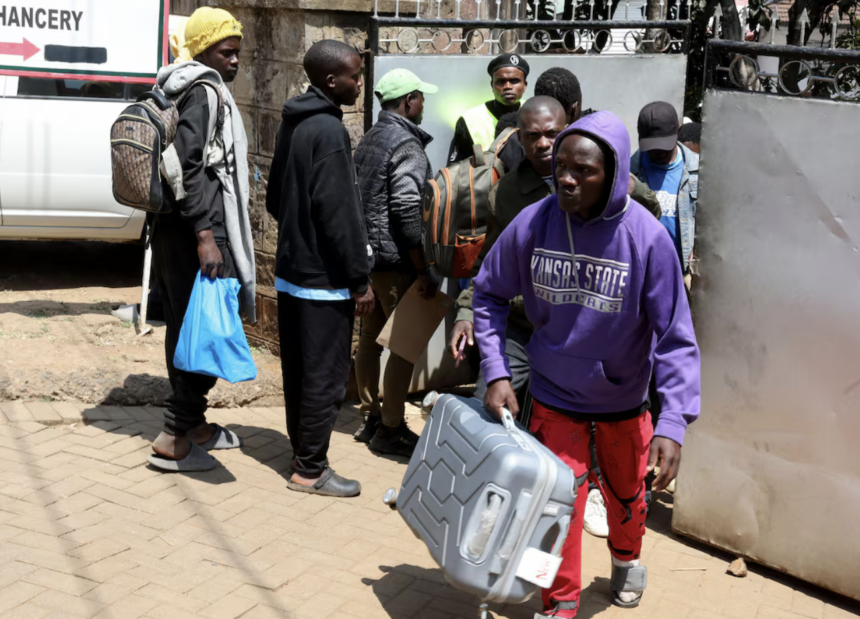
NAIROBI — A section of Ugandans who have been operating small businesses in Nairobi and other parts of Kenya have started returning home following a directive by the Kenyan government suspending foreign nationals engaged in certain small-scale businesses.
The directive, issued by Kenyan President William Ruto on September 2, has triggered uncertainty among foreign traders, including Ugandans who have built livelihoods around small retail businesses, hawking and other informal enterprises.
President Ruto issued the directive while addressing micro, small and medium-sized enterprise traders at State House in Nairobi, where he said foreign nationals should not compete with Kenyan citizens in businesses that can be undertaken by local entrepreneurs.
Kenyan authorities began enforcing the directive on September 7, prompting some foreign traders to close their businesses and leave the country.
For Ugandans who have operated businesses in Kenya for years, the measures have raised concerns over their livelihoods and the future of cross-border economic activity between the two East African Community partner states.
Some Ugandan traders have reportedly opted to return home rather than risk confrontation with enforcement authorities or continue operating businesses that may now fall under the restricted categories.
The crackdown is particularly significant for Uganda because Kenya remains one of its most important economic partners and a major destination for Ugandan traders, workers and businesses.
A test for East African integration
The developments also raise broader questions about the practical application of East African integration.
Uganda and Kenya are members of the East African Community, whose integration agenda seeks to facilitate the movement of people, labour, goods, services and capital across partner states.
While Kenya retains the right to regulate businesses and enforce its domestic laws, restrictions affecting citizens of fellow EAC countries can have consequences for regional trade and mobility.
The situation involving Ugandan traders comes as Burundi has also raised concerns over the treatment of its citizens in Kenya amid the crackdown.
Burundi has called for protection of its nationals, adding a diplomatic dimension to what Kenya considers an enforcement of its domestic regulations.
Kenya has maintained that the measures are aimed at protecting opportunities for Kenyan citizens and ensuring that foreign nationals comply with immigration, labour and business regulations.
The government has particularly targeted foreigners involved in small-scale enterprises that Kenyan authorities consider suitable for local entrepreneurs.
Ugandan traders caught in the middle
For Ugandan traders, however, the issue goes beyond competition.
Many small businesses established by Ugandans in Kenya have become sources of income for families back home, while also contributing to the movement of goods and services between the two countries.
The sudden enforcement of the directive could therefore affect both traders operating in Kenya and businesses in Uganda that depend on the Kenyan market.
It could also prompt questions within the EAC about how national policies affecting foreign workers and traders should be implemented without undermining the bloc’s wider integration objectives.
The immediate concern for affected Ugandans is understanding which categories of businesses are restricted, what permits or exemptions may apply, and whether traders who have operated legally in Kenya will be given time or mechanisms to regularise their status.
As implementation continues, the issue is likely to attract closer attention from Kampala and other EAC capitals, particularly if more citizens begin returning home.
For Uganda, the developments underscore the importance of protecting the rights and interests of its citizens working and doing business within the region while maintaining constructive relations with Kenya.
For the EAC, the episode presents another test of whether regional integration can reconcile national economic protection with the promise of a common East African market.