
Uganda Must Move from Think Tanks to Action Tanks, Speaker Oboth Tells Researchers
November 13, 2026
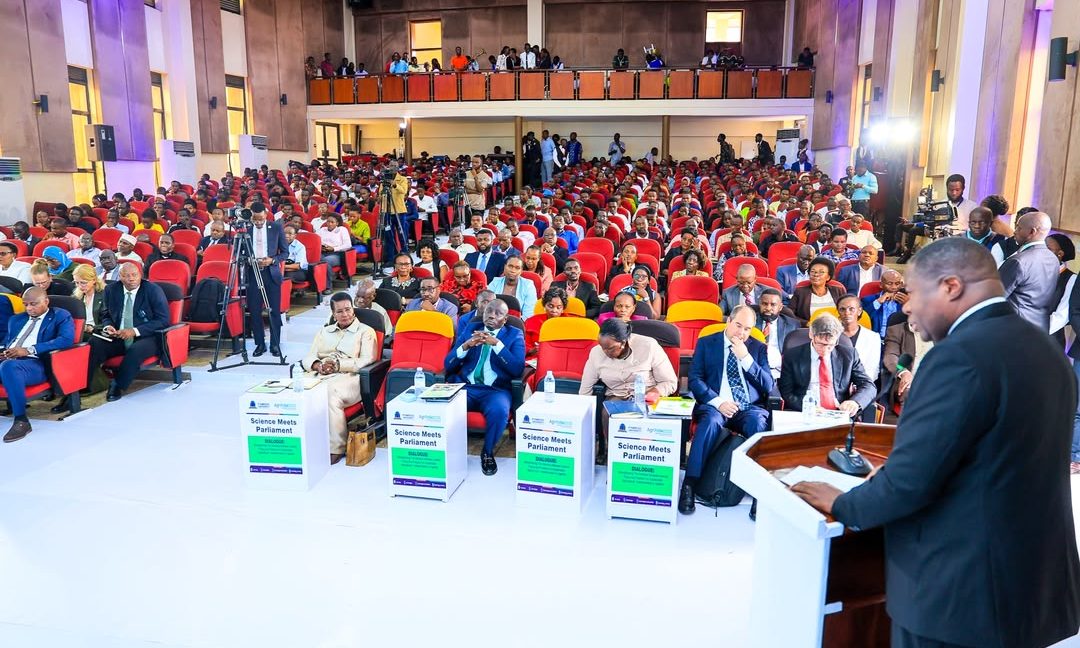
KAMPALA – Speaker of Parliament Rt. Hon. Jacob Marksons Oboth has challenged Ugandan researchers to translate academic research into practical solutions that address the country's socio-economic development challenges, calling for a shift from traditional “think tanks” to “action tanks”.
Oboth made the call on Thursday while officiating as chief guest and keynote speaker at the Science Meets Parliament dialogue held at Kyambogo University, organised by the AgriFoSe2030 Uganda Hub.
The dialogue was held under the theme, “Strengthening the Interface between Science, Policy and Practice for Sustainable Agricultural Transformation in Uganda.”
The Speaker challenged researchers to move beyond producing academic publications and ensure their findings inform government policies, resource allocation and practical interventions, particularly in the agricultural sector.
“We have many think tanks. Perhaps it is time to develop action tanks,” Oboth said, urging scientists to package their research findings into actionable policy proposals rather than leaving them as academic conclusions.
Quoting American statesman Benjamin Franklin, he added: “Well done is better than well said.”

Oboth observed that Uganda does not lack policies, research institutions or technical expertise but continues to face challenges connecting research findings to policymaking, financing and implementation.
He invited researchers to petition Parliament with evidence highlighting gaps between scientific research and government policy, pledging that Parliament would investigate the causes and pursue accountability.
“We would want to be petitioned and shown where the disconnect is, so that we can address it,” he said.
He further committed Parliament to using its oversight, budgetary and legislative powers, particularly through the committees responsible for Agriculture and Science, Technology and Innovation, to identify and address bottlenecks affecting the uptake of research.
The Speaker emphasised that agricultural research must ultimately improve the livelihoods of ordinary Ugandans, particularly farmers across the country.
“If we fail the farmer, we ultimately fail ourselves, because a country that cannot feed itself puts its own future at risk,” he said.
Kyambogo Seeks Long-Term Research Funding
Kyambogo University Vice-Chancellor Prof. Elly Katunguka used the engagement to highlight institutional challenges affecting research financing and the capacity of public universities to translate scientific knowledge into practical outcomes.
He revealed that the university established an internal research grant scheme around 2018, initially financing it with Shs1 billion from its internally generated revenue.
The Government subsequently injected an additional Shs3 billion this year, bringing the research fund to Shs4 billion.
However, Katunguka said the funding arrangements had created difficulties in expenditure and accountability, explaining that Shs2 billion was expected to be released in February, with accountability required by June.
He argued that such timelines made it difficult for universities to utilise research funding effectively within a single financial year and proposed establishing a multi-year research funding framework.
“When you have somebody who was starving, you don’t introduce a lot of food all of a sudden,” Katunguka said, illustrating the challenges universities face in managing increased research resources after years of limited funding.
He also disclosed that public universities operate with only 34 to 35 per cent of their required staffing levels, while institutions struggle to retain specialised professionals, including engineers with PhDs, who are attracted by better remuneration in the private sector.
Among his proposals was the establishment of a parliamentary science-policy dialogue platform and a centre of excellence for science translation at Kyambogo University.
Katunguka said universities were increasingly shifting away from the traditional academic emphasis on publishing research towards ensuring that scientific findings reach communities and inform development.
AgriFoSe2030 Pushes Research Uptake
Prof. Elisabeth Rajala, Programme Director of AgriFoSe2030, underscored the importance of building stronger mechanisms connecting scientific research with policymakers, farmers and communities.
She said the programme, led by the Swedish University of Agricultural Sciences and funded by the Swedish International Development Cooperation Agency (Sida), marks its tenth anniversary this year.
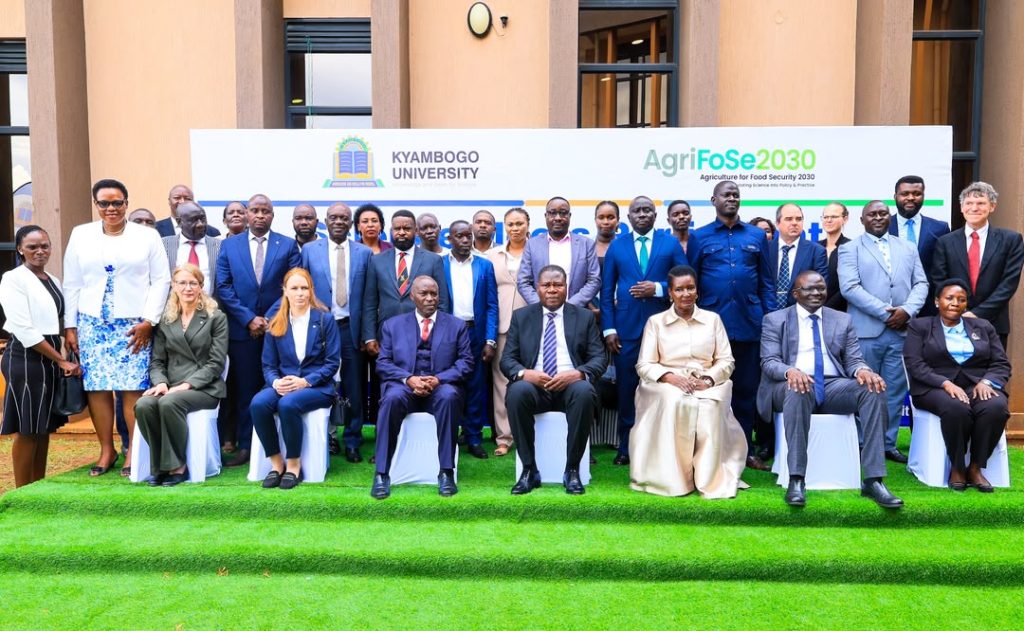
AgriFoSe2030 operates three regional hubs in Uganda, Kenya and Zimbabwe, with the Uganda hub co-managed by Kyambogo University and Gulu University.
Rajala observed that significant research knowledge often remains confined to scientific publications instead of reaching the people and institutions that could use it to address development challenges.
“Too often, knowledge remains in scientific publications rather than reaching policymakers, farmers and communities,” she said.
She added that research only makes a meaningful difference when it is shared, understood and translated into practice.
Echoing the remarks of the Uganda Hub's Dr Judith Nagasha, Rajala said the priority should now be establishing sustainable mechanisms for turning existing knowledge into practical interventions rather than simply generating more research.
She welcomed the proposed centre of excellence at Kyambogo, saying it could develop into a national and regional resource for strengthening the relationship between science and policymaking, with Parliament serving as a strategic partner.
The engagement brought together researchers, university leaders and parliamentary representatives, providing a platform to examine how scientific evidence can contribute more directly to Uganda's agricultural transformation and broader socio-economic development.





+256774552385 | info@ugdiplomat.com
Copyright © 2026 UG Diplomat -Product of CURRENTARC MEDIA