
Somalia President Accuses UAE of Interference, Calls for National Dialogue
November 17, 2026
MOGADISHU — Somali President Hassan Sheikh Mohamud has accused the United Arab Emirates (UAE) of interfering in Somalia’s internal affairs, supporting armed groups and pursuing policies that he says threaten the country’s sovereignty, territorial integrity and national unity.
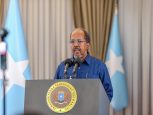
In a televised address to the nation on Tuesday, November 17, 2026, Mohamud alleged that Abu Dhabi had been strengthening relationships with political and security actors outside the authority of Somalia’s Federal Government, contributing to divisions between Mogadishu and regional administrations.
The President warned that Somalia would not accept foreign involvement that undermines its independence or weakens its national institutions. He nevertheless indicated that Mogadishu remained open to relations with the UAE based on mutual respect, equality and recognition of Somalia as a unified sovereign state.
Mohamud said Somalia had exercised patience and pursued diplomatic engagement over the dispute for an extended period but had eventually been compelled to take measures to protect its national interests.
Dispute over strategic ports and security agreements
A major source of tension between the two countries concerns the UAE's economic, security and military relationships with Somalia's federal member states, particularly Somaliland, Puntland and Jubaland.
The President specifically questioned UAE-linked arrangements involving the strategic ports of Berbera, Bosaso and Kismayo, arguing that agreements affecting Somalia's national infrastructure, security and strategic interests must respect the country's constitutional framework and the authority of the Federal Government.
The UAE has substantial commercial interests in the region. Dubai-based logistics company DP World operates the Port of Berbera under a long-term concession and is also involved in port operations in Bosaso.
Mogadishu has consistently argued that foreign governments should not enter into arrangements affecting Somali territory without the Federal Government's involvement and approval.
The disagreement became particularly serious in January 2026, when Somalia's Cabinet announced the cancellation of all agreements with the UAE, including defence, security and economic cooperation arrangements.
The decision was rejected by Somaliland, Puntland and Jubaland, whose administrations maintained that their existing agreements with the UAE remained valid. The dispute exposed the deep divisions between Somalia's central government and some of its regional administrations.
Allegations of military and political interference
During Tuesday's address, Mohamud went further, accusing the UAE of helping establish military bases and supporting armed formations operating outside Somalia's national security command structures.
He argued that the existence of parallel security arrangements weakens the cohesion of the country's armed forces, particularly as Somalia continues its fight against the al-Shabaab militant group.
The President also alleged that financial and political support extended to certain regional administrations had contributed to disagreements with the Federal Government.
He raised concerns about the wider geopolitical implications of foreign involvement in Somalia and referenced conflicts in Libya, Yemen and Sudan as examples of how external rivalries can deepen political fragmentation.
These remain allegations made by the Somali President; the UAE's response to the latest accusations was not immediately available.
President appeals for national dialogue
Beyond the diplomatic dispute, Mohamud used his address to appeal for greater political unity, calling on federal member states, young people, opposition figures and other national stakeholders to engage in dialogue over Somalia's future.
He particularly addressed Puntland, Jubaland and communities in the northern regions, insisting that political disagreements should be resolved through consultations among Somalis rather than through external intervention.
The appeal comes amid an escalating domestic political crisis over constitutional amendments, electoral arrangements and the distribution of authority between the Federal Government and regional administrations.
The government has been pushing for a transition towards direct elections under its one-person, one-vote agenda, while opposition groups and some regional leaders have challenged aspects of the proposed electoral framework and constitutional changes.
The disagreement has also affected attempts to convene an inclusive national political dialogue. A conference scheduled for November 14–18 in Mogadishu failed to open as the Somali Future Council, an opposition alliance involving influential political figures and regional leaders, stayed away, demanding international mediation.
The impasse has complicated efforts to reach consensus on the country's next elections and the future of its political institutions.

+256774552385 | info@ugdiplomat.com
Copyright © 2026 UG Diplomat -Product of CURRENTARC MEDIA