
Mohammed Hamid and the AYA Group: The Ambitions, Risks and Realities of Indigenous Ugandan Investment
November 17, 2026
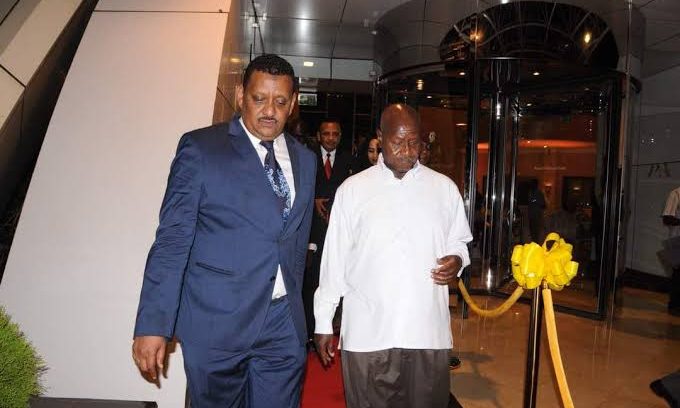
Uganda's private sector has produced entrepreneurs whose ambitions extend beyond conventional business operations, seeking to establish enterprises capable of transforming industries, creating employment and positioning Ugandan capital in major investment projects.
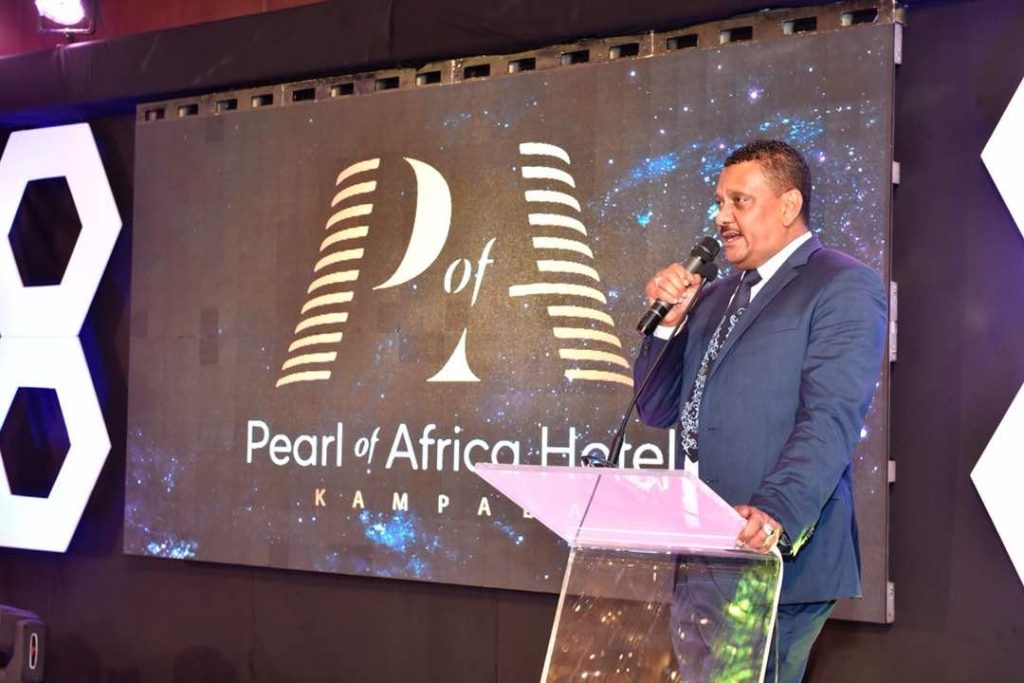
Among the businessmen associated with this ambition is Mohammed Hamid, the chairman and driving force behind AYA Group, whose investment interests became particularly visible through the development of the Pearl of Africa Hotel in Kampala.
The hotel, one of Uganda's most recognisable hospitality landmarks, represented an ambitious attempt by an indigenous business group to deliver a world-class luxury property in the country's capital.
But the AYA Group story is not simply about the construction of an iconic hotel. It is also a story about entrepreneurship, access to international financing, business expansion, corporate risk and the difficult realities of sustaining large-scale investments.
For Uganda, the experience raises an important question: how can indigenous business groups build enterprises that remain commercially sustainable while contributing to national economic transformation?
A business empire built around diversification
Hamid's business journey is closely associated with the development of AYA Group into a conglomerate with interests in several commercial sectors.
In a 2017 interview with Forbes, Hamid described AYA Group as a business conglomerate with interests in milling, food manufacturing, commodity trading, transportation and hospitality. The publication reported annual group revenues of approximately US$300 million at the time, a historical figure that should not be mistaken for current audited revenue.
The group's diversification strategy reflects an approach in which businesses operate across different parts of the economy rather than concentrating on a single industry.
Food processing and milling, for instance, connect investment to agricultural production, distribution and consumer markets. Transportation supports the movement of goods, while hospitality creates opportunities in tourism, accommodation, conferencing and leisure.
Such diversification can offer businesses opportunities to develop complementary commercial interests, broaden revenue streams and participate in different segments of the economy.
However, operating across multiple industries also introduces management complexity. Each sector has different capital requirements, regulatory obligations, market conditions and operational risks.
The ability to coordinate these interests while maintaining financial discipline is therefore central to the long-term performance of a diversified business group.
The Pearl of Africa Hotel: A defining investment
Perhaps no project better illustrates Hamid's investment ambitions than the Pearl of Africa Hotel.
In his 2017 Forbes interview, Hamid said the project was motivated by his belief that Uganda lacked a genuinely world-class five-star hotel capable of competing with international hospitality standards.
He described travelling internationally, experiencing luxury hotels and identifying an opportunity to introduce comparable standards in Uganda.
The hotel took approximately 11 years to complete. Hamid told Forbes that the development cost about US$320 million, substantially higher than some estimates circulating at the time.
The project became a defining expression of the group's ambition to establish a major indigenous investment in Uganda's hospitality sector.
Its significance extended beyond the accommodation business. The development demonstrated the potential for local entrepreneurs to mobilise international financing, engage specialist contractors and pursue projects requiring substantial technical and financial resources.
It also illustrated the importance of Kampala's position as a destination for diplomatic engagements, international conferences and regional business activity.
Indigenous investment and Uganda's economic transformation
Uganda's economic transformation requires more than government expenditure and foreign direct investment. It also depends on the growth of domestic enterprises capable of mobilising capital, developing productive capacity and creating employment.
Indigenous business groups can contribute to this process by investing in manufacturing, agriculture, logistics, tourism, real estate and other sectors that support economic activity.
AYA Group's investment experience provides an opportunity to examine this contribution.
For example, food processing and milling can support agricultural value addition by creating markets for locally produced raw materials. Hospitality investments can strengthen tourism infrastructure, while transportation businesses can support distribution and commercial activity.
However, the actual economic contribution of any conglomerate must be established through measurable outcomes, including employment figures, local procurement, production capacity, tax contributions and sustainable business performance.
This is particularly important as Uganda implements its Fourth National Development Plan (NDP IV), which places emphasis on industrialisation, private-sector growth, wealth creation and employment.
The challenge for indigenous enterprises is to translate investment ambitions into productive businesses that can compete locally and regionally.
Beyond the personality: Building institutions that endure
Many large African businesses begin with the vision and determination of individual founders. However, their long-term survival depends on whether they develop strong management structures, professional leadership, effective internal controls and sustainable succession arrangements.
For a diversified business group, these institutional foundations become even more important as operations expand across different industries and markets.
The ability to attract investment partners, maintain creditor confidence and establish transparent corporate governance systems can determine whether an enterprise survives beyond its founding generation.
For Uganda, encouraging the development of strong indigenous business institutions is an important part of building a resilient private sector.
The bigger picture
Mohammed Hamid's business journey represents both the ambition and complexity of indigenous investment in Uganda.
Through AYA Group, he pursued business interests across multiple sectors, with the Pearl of Africa Hotel becoming the most visible expression of that ambition.
The hotel demonstrated the scale of what an indigenous investor could attempt, while its financing and legal challenges highlighted the risks that accompany capital-intensive developments.
The wider lesson extends beyond one businessman or one company.
Uganda needs domestic entrepreneurs willing to take investment risks, develop productive enterprises and compete in international markets. Equally, it needs business institutions built on financial discipline, accountability and long-term sustainability.
Ultimately, the success of indigenous investment should be measured not merely by the scale of a founder's ambitions, but by the strength of the institutions created, the jobs sustained, the value added to the economy and the businesses left for future generations.




+256774552385 | info@ugdiplomat.com
Copyright © 2026 UG Diplomat -Product of CURRENTARC MEDIA