News
Ramaphosa’s Single Ankole Cow Sells for Record UGX1.35 Billion

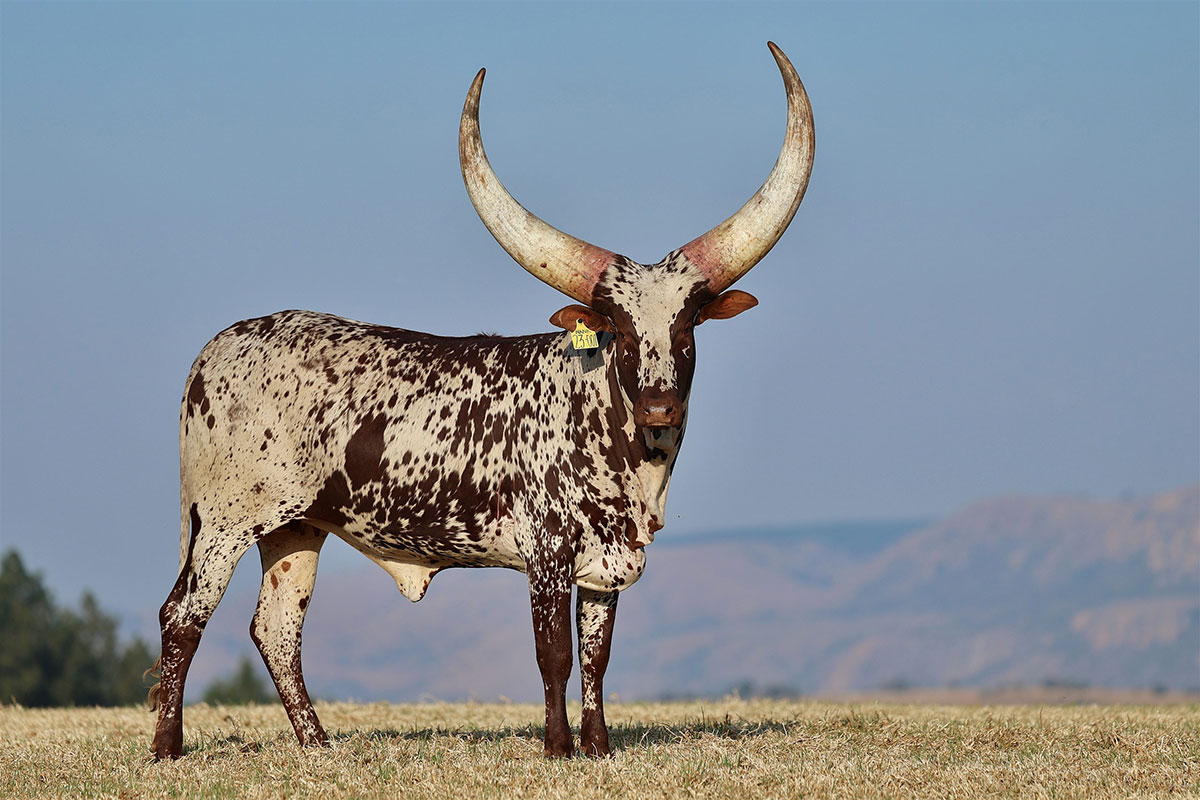
JOHANNESBURG — An Ankole heifer bred at South African President Cyril Ramaphosa’s Ntaba Nyoni cattle farm has sold for a record R6.4 million (about US$370,000), highlighting the rapidly rising commercial value of elite Ankole genetics originating from East Africa.
Named Queen Arusha (NANK23 001)Queen Arusha (NANK23 001), the in-calf heifer was sold as Lot 20 at the Ntaba Nyoni & Friends auction held at Ramaphosa’s Phala Phala farm near Bela-Bela in Limpopo on October 3.
According to Farmer’s Weekly, Veilingswinkel Chief Operating Officer JP Smith confirmed that the sale established a new South African record for a female animal across all cattle breeds. The buyer has not been publicly identified.
The auction generated R22.5 million (about US$1.3 million) in total turnover, with around 120 registered buyers and approximately 100 people attending in person.
Why Queen Arusha commanded R6.4 million
Queen Arusha is a high-value stud animal whose price reflects her breeding potential and genetics rather than her value as ordinary commercial beef.
She is a full sister of Optimus Prime, an Ankole bull with horns measuring about 68 inches. Her pedigree includes prominent Ankole bloodlines such as Tshinakaho and Akira, with Kovu further in the lineage.
The auction also demonstrated the premium being placed on Ankole reproductive genetics. Two sexed semen straws from Optimus Prime sold for R250,000 each, also setting a South African record for sexed semen across cattle breeds.
In total, 37 semen straws generated R1.235 million, while 19 embryos fetched R1.445 million.

Ten bulls sold for a combined R2.75 million, with the highest-priced bull reaching R650,000.
From Uganda to South Africa
The record sale also carries a significant Ugandan connection.
Ramaphosa developed an interest in Ankole cattle during a visit to Uganda in 2004. According to Ntaba Nyoni, the South African president subsequently acquired 40 cows and three bulls from President Yoweri Museveni.
Because of animal-health restrictions on importing live cattle, embryos from the Ugandan animals were transferred to South Africa, providing the foundation for Ramaphosa’s Ankole breeding programme.
South African breeders subsequently developed the breed through selective breeding and reproductive technologies, with the first full-blood offspring auctioned in 2016 and Ankole receiving official recognition in South Africa in 2019.
The breed is indigenous to the Great Lakes region of Africa, including Uganda, Rwanda, the Democratic Republic of Congo and parts of Tanzania.
Ankole genetics become a major investment market
Queen Arusha’s sale represents a dramatic escalation in the value attached to elite Ankole genetics in South Africa.
A Ramaphosa-bred Ankole cow named Fafa sold for R2.1 million in 2022, while Khethiwe fetched R1.8 million in 2024.
The latest auction demonstrates that the market is increasingly valuing cattle not simply for meat production, but for the ability of exceptional animals to pass valuable genetics to future generations.
Veilingswinkel’s Smith said buyers were effectively purchasing access to future genetic production, with technologies such as artificial insemination and embryo transfer allowing elite bloodlines to be multiplied.
For Uganda, where Ankole cattle are both an important cultural symbol and a traditional livestock resource, the record raises questions about the economic potential of developing the breed’s genetics, breeding systems and export-oriented livestock value chains.
Queen Arusha’s R6.4 million price therefore represents more than a South African livestock record. It is also a striking example of how African indigenous livestock genetics can become a high-value international agricultural asset.