News
Kiir Enters Presidential Race As South Sudan Heads for Historic Vote

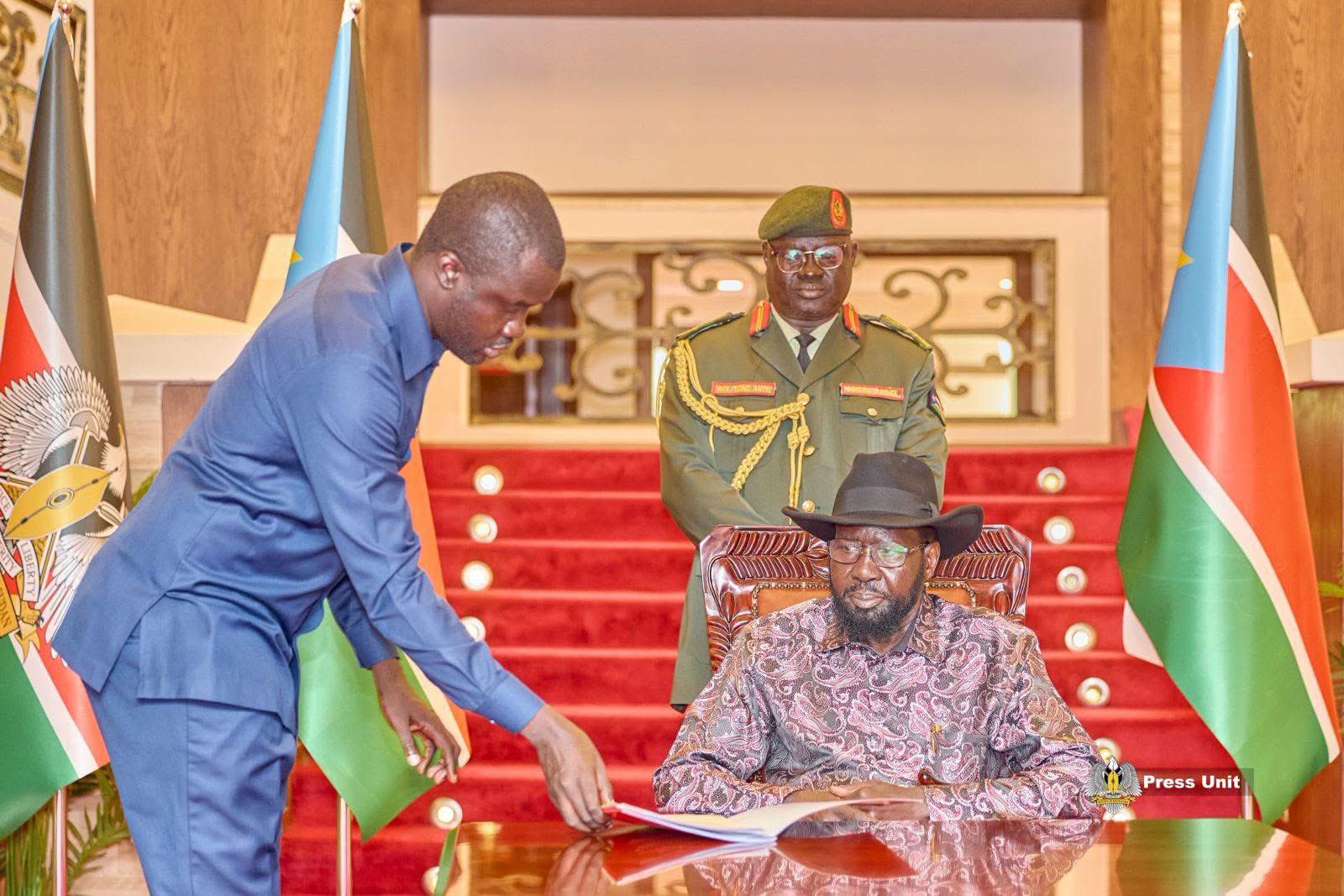
JUBA — South Sudanese President Salva Kiir Mayardit has confirmed that he will contest the country’s general elections scheduled for December 22, 2026, presenting the long-awaited vote as an opportunity to end years of transitional rule and establish a government with a direct electoral mandate.
Kiir made the declaration during an interview with Citizen TV Kenya journalist Jeff Koinange, in which he urged South Sudanese citizens to register in large numbers and choose their leaders through the ballot.
“South Sudan is ready for elections; the people are ready to elect their leaders,” Kiir said, arguing that citizens had grown tired of the prolonged transitional arrangement and were prepared to move into an elected system of government.
The National Elections Commission has officially set December 22 as polling day. If conducted as scheduled, the elections will be South Sudan’s first national vote since it became independent from Sudan in July 2011. The commission has said that voter registration will be conducted nationwide but has also acknowledged legal, financial and logistical challenges that must be addressed before polling day.

The election would mark a critical turning point for the world’s youngest country, which has operated under transitional political arrangements for most of its independent history.
South Sudan’s transitional constitution initially envisaged elections by July 9, 2015. However, the outbreak of civil war in December 2013, subsequent peace negotiations, institutional weaknesses and disagreements between political leaders repeatedly pushed the vote forward.
The current transitional government emerged from the 2018 Revitalised Agreement on the Resolution of the Conflict in South Sudan, which sought to end a five-year civil war and distribute power among the country’s rival political and armed groups.
That power-sharing arrangement produced an unusually large executive and legislature, including five vice presidents and hundreds of lawmakers representing the different parties and factions involved in the peace agreement.
Kiir defended the arrangement as a compromise that was necessary to reduce conflict and bring rival groups into government.
“It works because we need peace, and so we have to make compromises to reach where we are today,” he said.
However, the president acknowledged that the structure had become expensive and difficult to sustain. He said the administration had struggled to provide offices, accommodation and vehicles for all five vice presidents.
Kiir indicated that the size of the government would be reduced after the elections, arguing that resources currently consumed by the expanded political structure should instead be directed towards national development.
“There will be changes after elections,” he said. “Now you can see the five vice presidents—what will they do? In Parliament, we have 650 members—what will they do? This huge government prevented development.”
The remarks suggest that Kiir intends to frame the December election not only as a contest for political leadership but also as a route towards restructuring the state after years of power-sharing.
An elected government would potentially replace the broad coalition established to accommodate former belligerents with institutions based on electoral representation. Kiir argues that reducing the presidency and legislature would create greater room for spending on infrastructure, public services and economic development. Citizen TV separately reported his pledge that the political structure would change after the elections.
On Wednesday, President Kiir assented to the 2026 amendment of the Revitalized Peace Agreement, removing legal requirements that tied elections to the completion of a permanent constitution and national census, and clearing the way for South Sudan’s national elections in December 2026.
However, holding the vote will require more than presidential assurances.
The National Elections Commission has called for urgent amendments to electoral laws and the provision of resources needed to conduct voter registration, civic education, campaigning and polling across a country with limited infrastructure and large displaced populations.
Security and political inclusion also remain major concerns. Fighting continues in parts of the country, while the relationship between Kiir and his long-time rival, Riek Machar, has sharply deteriorated. Machar, the former first vice president and leader of the Sudan People’s Liberation Movement-in-Opposition, remains under restrictions while facing treason-related charges, leaving uncertainty over whether he or his party will participate fully in the election.
The SPLM-IO has questioned the credibility of proceeding with elections before outstanding provisions of the peace agreement are implemented. Observers have also warned that unresolved political disputes and insecurity could undermine voter registration and campaigning in opposition-controlled areas.
The December election therefore represents both a historic opportunity and a significant political risk.
A credible and inclusive vote could give South Sudan its first elected post-independence government, close the extended transitional period and provide citizens with a peaceful mechanism for determining political leadership.
But a disputed or poorly organised process could deepen divisions in a country where competition for political power has previously triggered armed conflict.
Kiir’s declaration places the incumbent firmly at the centre of the emerging presidential race. Having led South Sudan since independence, he is expected to campaign on the ruling Sudan People’s Liberation Movement’s role in the liberation struggle, the preservation of the state and the promise of moving the country from transitional compromise towards elected government.
For South Sudanese voters, however, the decisive issue will be whether the December 22 election delivers genuine political choice, broad participation and a peaceful transfer from transitional authority to constitutional government.