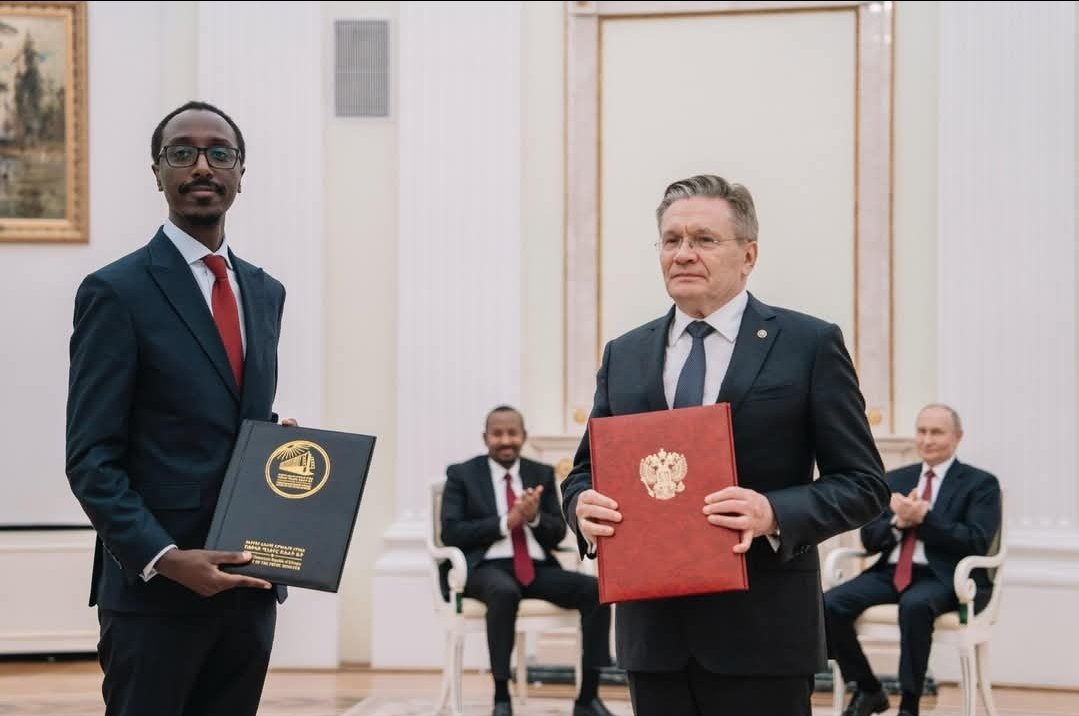
Ethiopian Prime Minister Abiy Ahmed has revealed that his government held extensive bilateral talks with Russian President Vladimir Putin, signaling a new chapter in Addis Ababa–Moscow relations. The high-level discussions, which covered energy, agriculture, healthcare development, and defense cooperation, culminated in the signing of agreements to jointly develop Ethiopia’s first nuclear power plant.
According to Prime Minister Abiy, the nuclear project will provide clean, sustainable, and reliable energy to power Ethiopia’s growing economy and meet the needs of its rapidly expanding population. “Notably, we deliberated on shared interests, including the signing of agreements to jointly develop a nuclear power plant to provide clean energy for societal benefit,” Abiy stated.
The deal is expected to transform Ethiopia’s energy landscape, which has long relied on hydropower, and diversify the country’s energy mix to better withstand the effects of climate variability. Analysts say the partnership also underscores Russia’s growing influence in Africa at a time when Ethiopia is seeking to strengthen ties beyond its traditional partners.
In addition to energy, the talks included cooperation in agriculture—particularly technology transfer to boost productivity—healthcare development, and defense industries. Both leaders emphasized mutual respect and long-term collaboration, framing the agreements as a win-win for their countries.
The Ethiopia-Russia accord follows a pattern of Moscow’s deeper engagement across Africa, where it has sought to position itself as a strategic partner offering alternatives to Western aid and investment models. For Ethiopia, the deal represents not only a step toward energy security but also a symbol of diversified diplomacy at a time of shifting global alliances.