
Profiles
Sheikh Hamad: He Took the Throne in a Coup, Then Built Modern Qatar

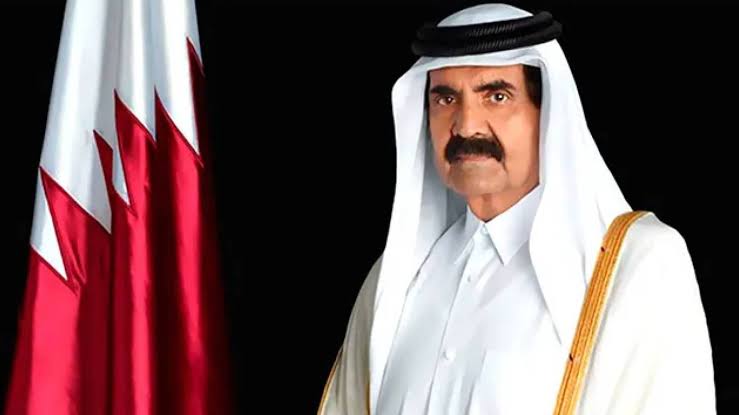
The world is mourning the passing of Sheikh Hamad bin Khalifa Al Thani, the former Emir of Qatar whose bold leadership transformed the tiny Gulf nation into one of the world’s most influential states. He died on Sunday at the age of 74, leaving behind a legacy that reshaped Qatar’s economy, diplomacy, media and global standing.
Born on January 1, 1952, Sheikh Hamad assumed power in June 1995 following a bloodless palace coup that deposed his father, Sheikh Khalifa bin Hamad Al Thani. While his rise to power marked a dramatic turning point in Qatar’s history, it was the transformation that followed that cemented his place among the most consequential leaders of the modern Middle East.
At the heart of his vision was the strategic development of Qatar’s vast natural gas reserves. Under his leadership, the country invested heavily in liquefied natural gas (LNG), becoming one of the world’s leading exporters and generating extraordinary national wealth. The energy boom elevated Qatar into the ranks of the world’s richest countries on a per-capita basis and provided the financial foundation for its global ambitions.
Determined to give Qatar a voice beyond its borders, Sheikh Hamad established Al Jazeera in 1996. The broadcaster revolutionised Arabic-language journalism and grew into one of the world’s most influential international news networks, fundamentally changing the media landscape across the Middle East and beyond.
He also positioned Qatar as a trusted diplomatic player. During his reign, the country deepened strategic ties with the United States through the expansion of Al Udeid Air Base, now the forward headquarters of the U.S. Central Command in the Middle East. At the same time, Qatar developed a reputation as a mediator in regional conflicts and international negotiations, enabling the small Gulf state to exercise influence far beyond its geographical size.
Through the Qatar Investment Authority, Sheikh Hamad championed a strategy of investing the country’s energy wealth in some of the world’s most recognisable companies and landmark properties. The sovereign wealth fund acquired stakes in global corporations including Volkswagen, invested in Harrods and other iconic assets in London, and took ownership of Paris Saint-Germain Football Club, helping diversify Qatar’s economy while expanding its international footprint.
His ambition to raise Qatar’s global profile culminated in the country’s successful bid to host the 2022 FIFA World Cup—the first ever staged in the Arab world. The tournament accelerated massive investments in infrastructure, transportation and hospitality, transforming Qatar into a modern destination for global business, tourism and sport.
Beyond international achievements, Sheikh Hamad prioritised education, healthcare and research at home. He supported the development of Education City, attracted leading international universities to Qatar and invested in institutions aimed at preparing the country for a knowledge-based economy beyond hydrocarbons.

In 2013, he made another historic decision by voluntarily stepping down in favour of his son, Sheikh Tamim bin Hamad Al Thani. The peaceful transfer of power was uncommon in the region and reflected his belief in preparing a new generation to lead the country into the future.
His tenure was not without controversy. Qatar’s independent foreign policy, the influence of Al Jazeera, and allegations surrounding the country’s successful 2022 FIFA World Cup bid attracted sustained international scrutiny. The treatment of migrant workers involved in building World Cup infrastructure also drew widespread criticism, prompting reforms in labour regulations in subsequent years.
Despite these challenges, Sheikh Hamad’s legacy remains defined by transformation. He inherited a little-known Gulf state and left behind a nation recognised as a leading exporter of liquefied natural gas, a global investor, an influential diplomatic actor, a centre for international media and the first Middle Eastern nation to host football’s biggest tournament.
His vision fundamentally altered Qatar’s place in the world, ensuring that its influence would be measured not by its size, but by the scale of its ambitions and achievements.
As Qatar and the international community pay tribute to the former Emir, Sheikh Hamad bin Khalifa Al Thani will be remembered as the architect of modern Qatar—a leader whose decisions continue to shape the country’s trajectory and influence on the global stage.