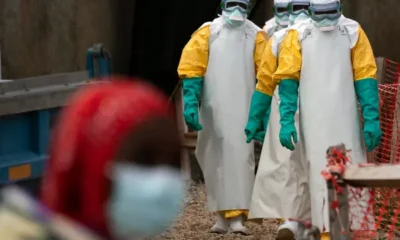
The Africa Centres for Disease Control and Prevention has officially declared an Ebola outbreak in eastern Democratic Republic of the Congo following a surge in infections and deaths in Ituri Province.
According to Africa CDC, at least 246 cases and 65 deaths have so far been reported, mainly in the areas of Mongwalu and Rwampara. Four of the deaths were among laboratory-confirmed Ebola cases.
The continental health body said it is convening an emergency meeting involving DR Congo, Uganda, South Sudan and international partners to strengthen response efforts and enhance cross-border surveillance amid fears of regional spread.
Preliminary laboratory tests carried out by the Institut National de Recherche Biomédicale in Kinshasa detected the Ebola virus in 13 out of 20 samples analysed. The tests were conducted in coordination with DR Congo’s Ministry of Health and the National Public Institute.
Health officials have also reported additional suspected cases in Bunia, the capital of Ituri Province, although laboratory confirmation is still pending.
Ebola is a highly dangerous viral disease transmitted through direct contact with bodily fluids of infected persons. The disease can trigger severe bleeding, organ failure and death.
Early symptoms include fever, muscle pain, fatigue, headaches and sore throat. While vaccines and treatments have improved survival chances in recent years, there is still no definitive cure for the virus.
First discovered in 1976 in what is now DR Congo, Ebola is believed to have been transmitted to humans from bats. Over the past five decades, the disease has killed an estimated 50,000 people across Africa.
DR Congo has experienced multiple outbreaks over the years, including its deadliest between 2018 and 2020, which claimed nearly 2,300 lives.
Last year, the country recorded its 16th Ebola outbreak, during which 15 people died.