
UNSG RACE: All 5 Permanent Members Discourage Uganda’s Otunnu in 9th Straw Poll
November 20, 2026
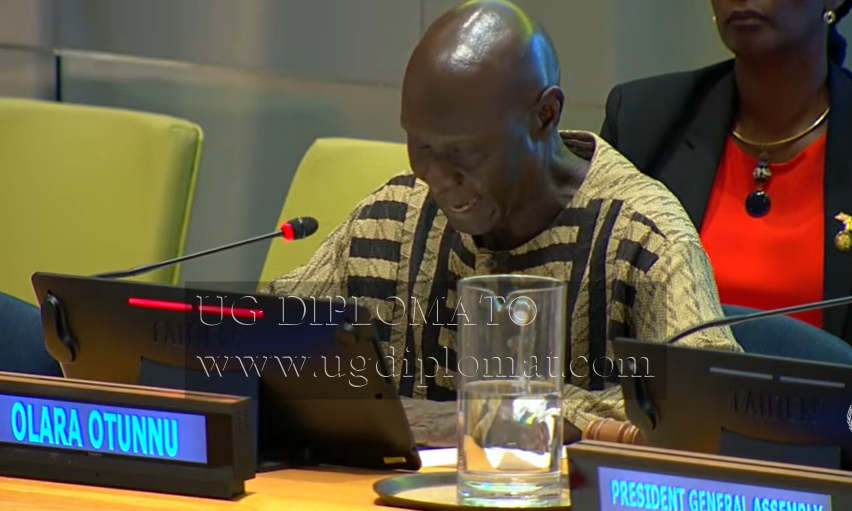
Uganda’s candidate for United Nations Secretary-General, Olara Otunnu, has suffered a major setback in the ninth Security Council straw poll after reportedly receiving no encouragement votes from any of the five permanent members of the Council.
The latest colour-coded ballot, held on Friday, November 20, 2026, provides a clearer picture of the positions of the 15-member Security Council, distinguishing votes cast by the five permanent members (P5) from those of the ten elected members.
According to the reported results, Otunnu received only three votes encouraging his candidacy, while 12 members discouraged it. All five permanent members voted against his candidacy, leaving him without support from any of the countries holding veto powers.
The outcome places the former UN Under-Secretary-General in a difficult position in the increasingly competitive race to succeed António Guterres, whose term ends on December 31, 2026.
Costa Rica’s Rebeca Grynspan emerged as the strongest candidate in the reported results, securing 10 encouragement votes, including three from permanent members. She received four discouragement votes, two of them from the P5, and one no-opinion vote.
Argentina’s Rafael Grossi, Director-General of the International Atomic Energy Agency (IAEA), followed with eight encouragement votes, including two from permanent members. He received six discouragement votes, three from the P5, and one no-opinion vote.
The United Arab Emirates' candidate, Lana Nusseibeh, received seven encouragement votes, two from permanent members, against six discouragement votes, including three from the P5. Two members expressed no opinion.
Guyana’s Carolyn Rodrigues Birkett secured six encouragement votes, including three from permanent members, while six members discouraged her candidacy. Three members expressed no opinion.
Türkiye’s candidate, Feridun Sinirlioğlu, received five encouragement votes, including one from a permanent member, while 10 members discouraged his candidacy, four of them from the P5.
Otunnu’s three encouragement votes were the lowest among the six candidates in the reported results. His 12 discouragement votes were also the highest, with all five permanent members registering opposition.
Significance of the colour-coded ballot
The colour-coded voting system is particularly important because it identifies the positions of the United States, China, Russia, the United Kingdom and France, all of which have veto powers in the Security Council.
Under the UN Charter, the Secretary-General is appointed by the General Assembly upon the recommendation of the Security Council. A candidate needs at least nine votes in the 15-member Council and must avoid a veto from any permanent member.
Although straw polls are informal and do not constitute a final election, they offer an important indication of candidates' prospects and the diplomatic support they command.
For Uganda, the reported outcome raises fresh questions about the viability of Otunnu’s campaign and the extent of diplomatic support behind the country's bid to produce the next UN Secretary-General.
The selection process is entering a critical phase, with the Security Council expected to identify a candidate it can recommend to the General Assembly before Guterres leaves office at the end of the year.


UG Diplomat is an independent digital news and media platform dedicated to comprehensive coverage of national politics, regional diplomacy, international relations, geopolitics, defense, and business. Published under Currentarc Media Ltd, we provide authoritative analysis, breaking news, and in-depth reporting on the diplomatic and economic developments shaping East Africa and the global arena.
COMPANY
Contact Us
Privacy Policy
Terms and Conditions
CONTACT INFORMATION
info@ugdiplomat.com
+256774552385
Copyright © 2026 UG Diplomat -Product of CURRENTARC MEDIA