Business
Uganda Signs South Korea Coffee Deal as Kampala Targets Asian Market

BUSAN, South Korea — Uganda has secured a new coffee export partnership with a South Korean company, opening a potentially significant new market for the country’s biggest export commodity as Kampala intensifies its economic and commercial diplomacy in Asia.
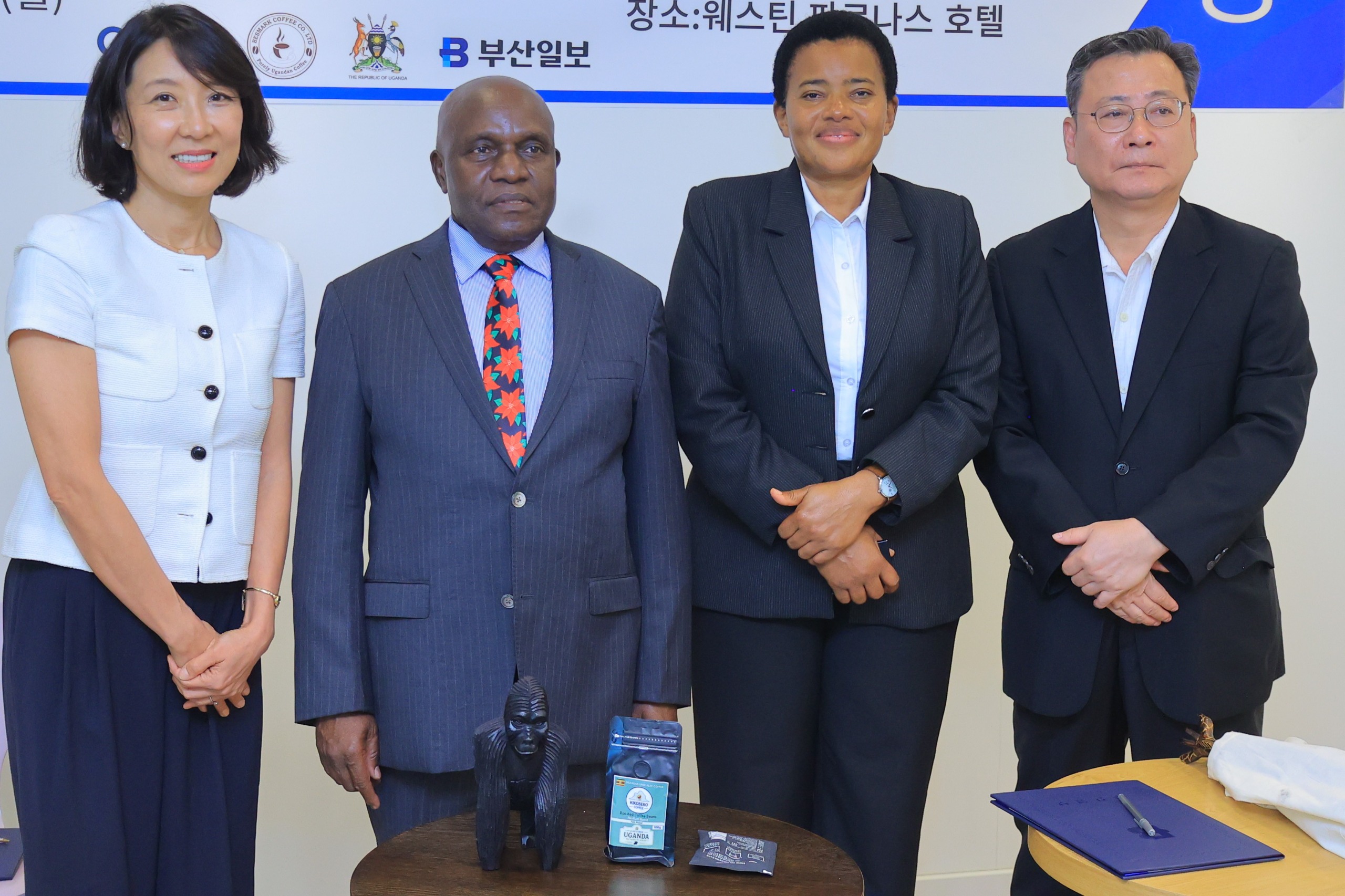
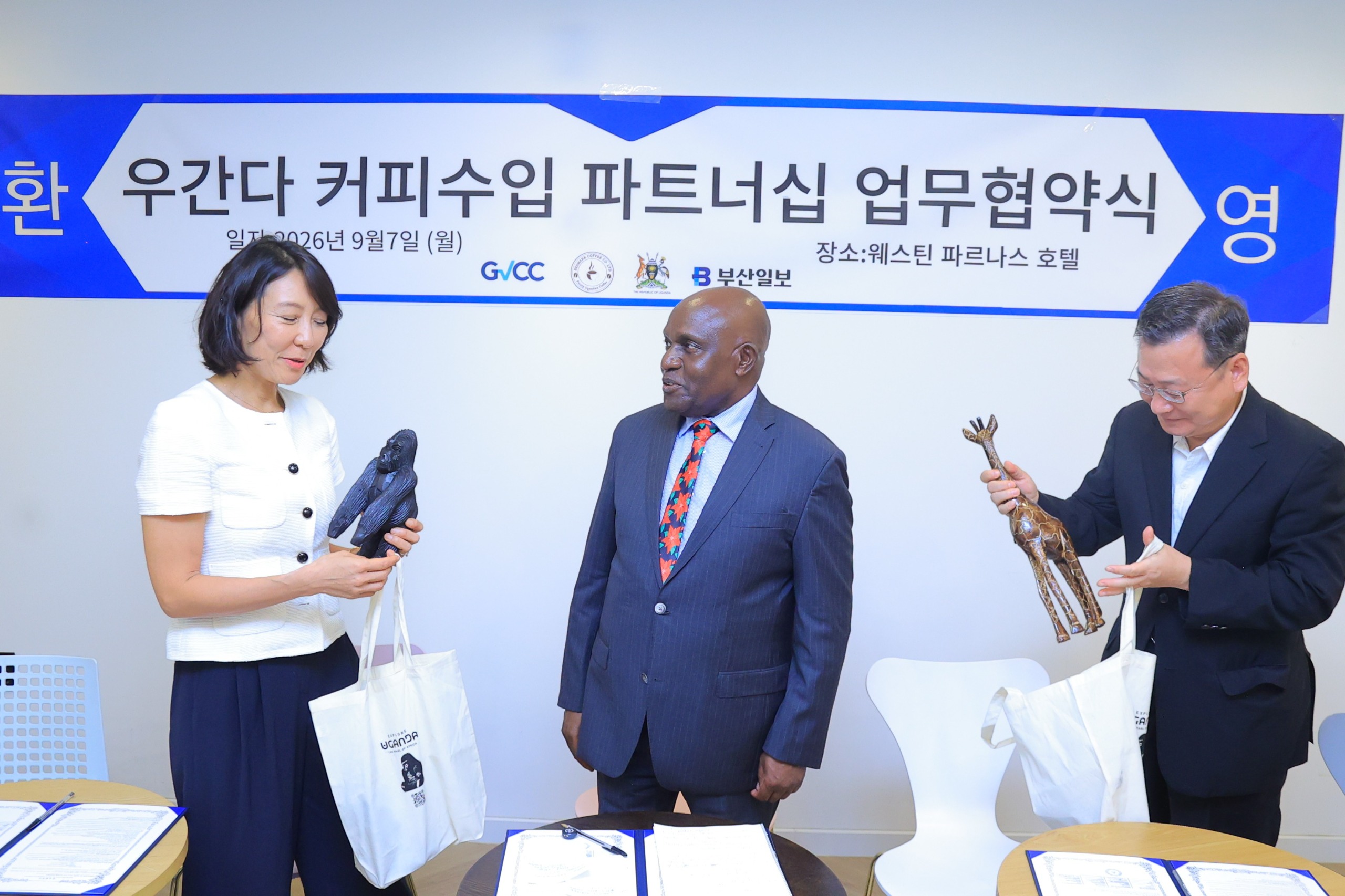
The memorandum of understanding was signed on Monday, September 7, between Besmark Coffee Company Ltd and GVCC Co. Ltd, a coffee firm based in the South Korean port city of Busan.
Under the agreement, Besmark will serve as Uganda’s exclusive supply partner, while GVCC will become the exclusive distributor of Ugandan coffee in South Korea.
The partnership is already moving beyond paper, with two containers of Ugandan coffee currently being shipped to South Korea as the first consignment under the arrangement.
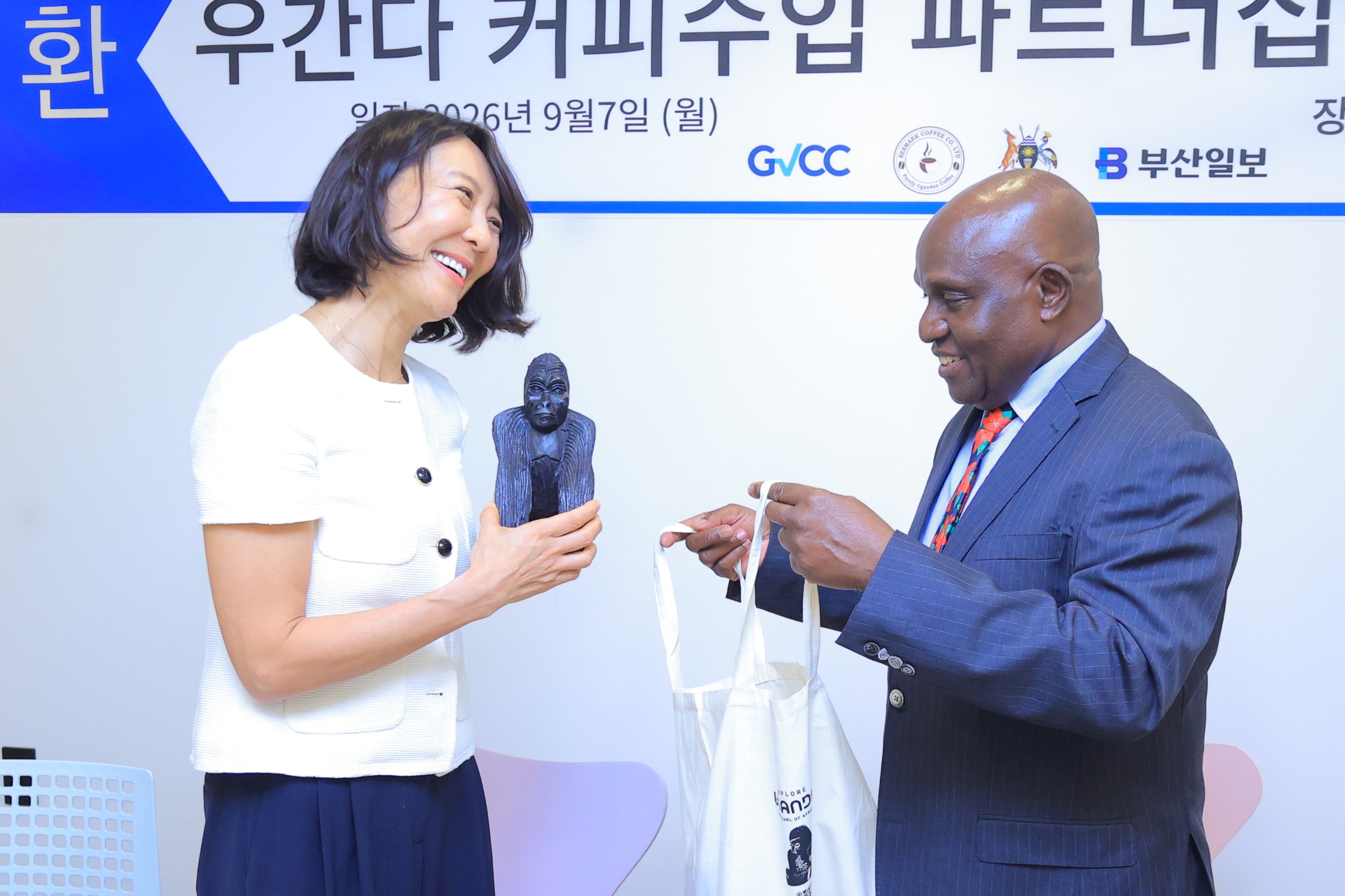

Uganda’s Ambassador to Japan, Tophace Kaahwa, whose mission is also accredited to South Korea, said the deal could grow substantially, revealing that GVCC Chief Executive Soo-jung Lim is targeting imports of about one 20-tonne container every day, equivalent to roughly 3,500 tonnes annually.
Kaahwa appealed to Ugandan farmers to increase production to meet the anticipated demand.
The agreement was signed on the sidelines of the Uganda–Korea Trade and Investment Meeting in Busan, with the main bilateral session scheduled for Tuesday, September 8.
Busan eyeing regional coffee hub
Beyond supplying the South Korean market, the partners want to position Busan as a regional hub for Ugandan coffee, where the beans can be processed, value added and re-exported to other Asian markets, including Japan and Southeast Asia.
Import volumes and pricing will be determined through separate commercial agreements.
The partnership also includes a promotional arrangement with The Busan media, which will support publicity campaigns and events designed to raise the profile of Ugandan coffee among Korean consumers.
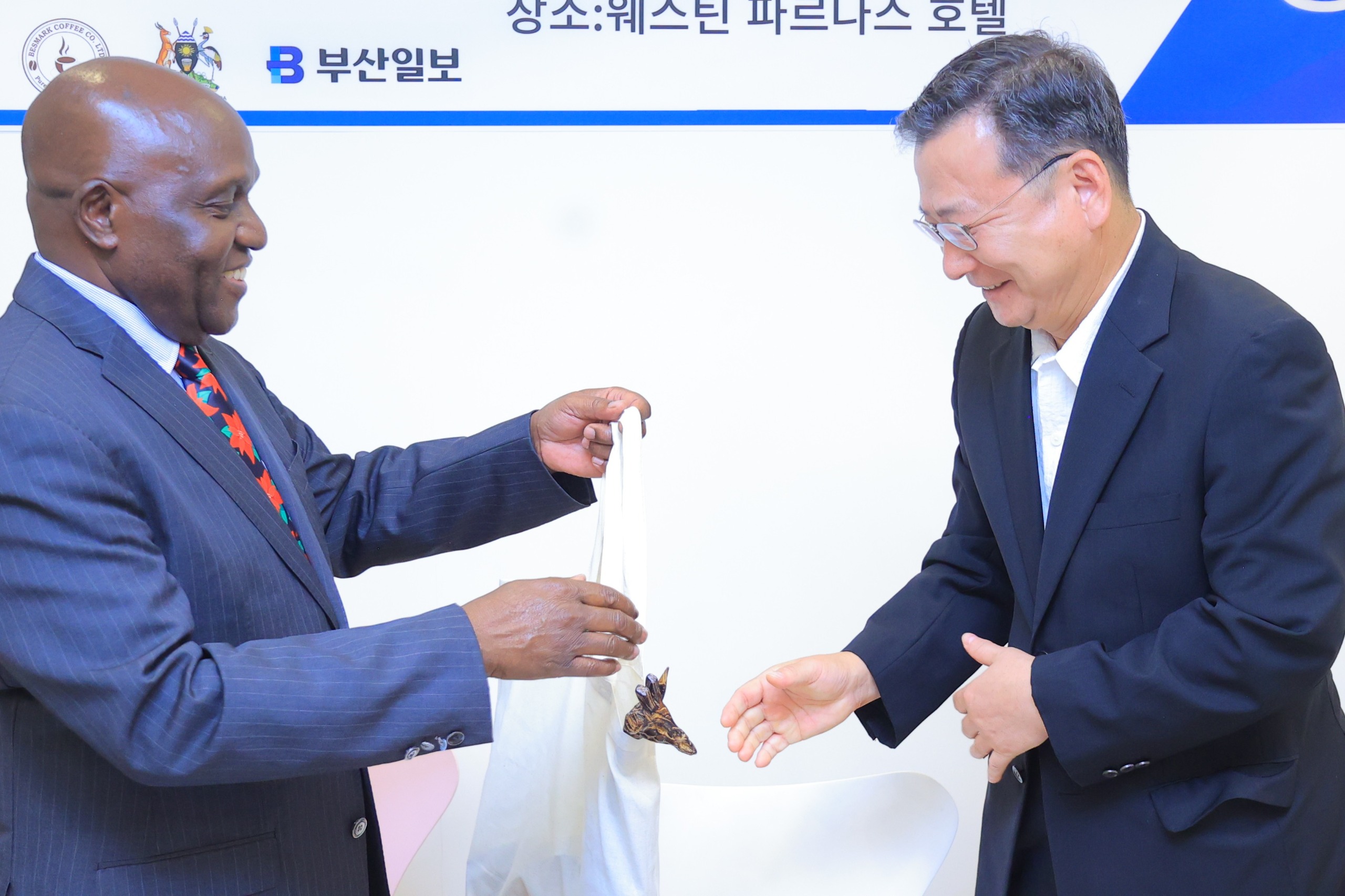
GVCC CEO Soo-jung Lim said the company had developed a strong interest in Ugandan coffee following initial engagements with the Ugandan delegation at a coffee exhibition in Busan.
Kiyonga pushes value addition
Uganda’s Second Deputy Prime Minister, Dr Crispus Kiyonga, who led the Ugandan delegation, welcomed the partnership and assured the Korean company of government support to ensure sustained coffee supplies.
Kiyonga, however, said Uganda ultimately wants to move beyond exporting raw coffee beans and increase value addition at home.
“We want, in time, to add value to our coffee at home rather than ship raw beans,” the delegation said, as Uganda seeks to expand its presence in Asian markets.
He said President Yoweri Museveni had set a national target of producing 20 million bags of coffee annually, significantly above current production levels.
Uganda produces two major coffee varieties — Robusta and Arabica — with Robusta accounting for the overwhelming majority of exports.
Kiyonga also highlighted the importance of smallholder farmers, saying much of Uganda’s coffee is produced by farmers cultivating relatively small plots.
Uganda turns to Asia for bigger coffee markets
The Busan agreement comes as Uganda seeks to diversify its export markets and narrow its trade deficit with South Korea.
Kiyonga said Uganda exports only a fraction of what it imports from South Korea, and argued that increased exports could help create a more balanced trading relationship.
Ugandan officials put exports to South Korea at about $10 million, against imports of roughly $100 million, although official trade data for 2023 put Uganda’s exports to South Korea at approximately $7.18 million.
Coffee, tea and spices accounted for about $2.6 million of those exports.
The new deal is being presented by Uganda’s Foreign Affairs Ministry as an early commercial result of the country’s Economic and Commercial Diplomacy (ECD) strategy, launched in 2025.
The strategy directs Ugandan diplomatic missions to actively identify markets, attract investment and promote Ugandan products, particularly value-added exports, rather than simply facilitate diplomatic relations.
The strategy is also linked to Uganda’s ambition to expand its economy to $500 billion by 2040.
Uganda’s coffee export machine
Uganda has rapidly strengthened its position in the global coffee market.
In the 12 months to May 2026, the country exported 8.6 million 60kg bags of coffee worth about $2.3 billion (UGX 8.3 trillion), up from 7.4 million bags during the preceding year.
Robusta accounts for about 80 percent of Uganda’s coffee exports, while Arabica commands a smaller share but is growing faster in value.
Europe remains Uganda’s largest coffee destination, taking approximately 62 percent of exports in the 2024/25 coffee year. Africa accounted for 23 percent, while Asia took about 13 percent.
The government now wants to capture a larger share of the rapidly expanding Asian coffee market.
Ambassador Henry Mayega described the South Korean agreement as a significant step for Uganda’s coffee exports, noting that coffee is deeply embedded in Ugandan culture, including traditional marriage and bride-price ceremonies.
Despite its growing commercial interest, South Korea remains a relatively small destination for Ugandan exports.
With a population of approximately 51.6 million people, however, officials see considerable room for expansion.
Uganda currently has no resident embassy in Seoul, with its Tokyo mission handling diplomatic relations with South Korea.
The Korea International Trade Association, one of the co-organisers of the Busan meeting, has urged Uganda to consider opening a resident diplomatic mission in Seoul to strengthen trade and investment engagement.