News
Trade Minister Sanjay Meets Ruto Amid Kenya Crackdown on Foreign Small Businesses

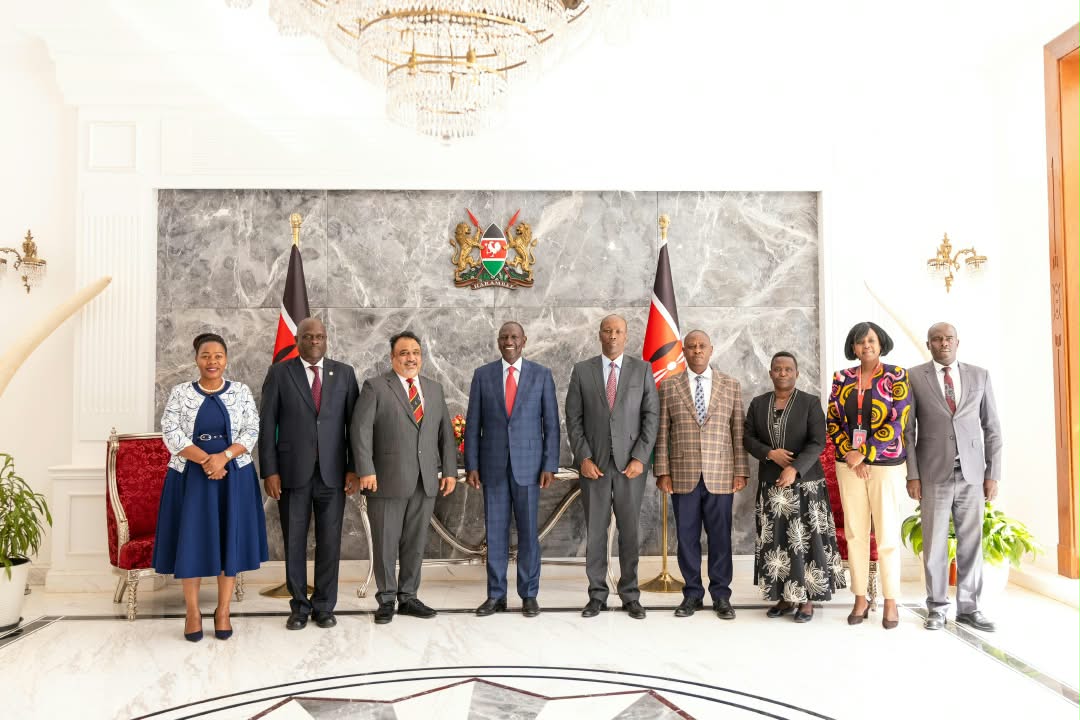
NAIROBI, Kenya — Uganda’s Minister of Trade, Industry and Cooperatives, Hon. Sanjay Tanna, has met Kenyan President William Ruto in Nairobi as the two countries push for stronger trade and industrial cooperation, at a time when Kenya is enforcing new measures targeting foreign nationals operating certain small businesses.
Sanjay led a high-level Ugandan delegation to Nairobi, where he represented President Yoweri Kaguta Museveni in engagements with President Ruto and senior government officials from both countries.
The talks focused on strengthening bilateral trade and industrial cooperation, including addressing policy and regulatory barriers affecting the movement and marketing of goods between Uganda and Kenya.
The high-level engagement comes just days after President Ruto directed that foreign nationals should not compete with Kenyan citizens in small-scale businesses such as hawking and small retail enterprises.
Kenyan authorities began enforcing the directive on September 7, creating uncertainty for foreign traders, including Ugandans who have been operating small businesses in Nairobi and other parts of the country.

Some Ugandan traders affected by the measures have started returning home, raising concerns over the impact of the crackdown on cross-border livelihoods and trade between the two countries.
Against this backdrop, the Uganda-Kenya discussions placed renewed emphasis on removing barriers that affect legitimate cross-border commerce and creating a more predictable environment for businesses operating across the two markets.
The two sides discussed policy, regulatory and standards-related issues, with a focus on improving market access and reducing obstacles that increase the cost of doing business.
Uganda and Kenya also explored opportunities to strengthen value addition, regional supply chains and industrial cooperation, building on the economic interdependence between the two countries.
Kenya is one of Uganda’s most important trading partners and serves as a major transit route for Ugandan imports and exports. Uganda, meanwhile, provides a growing market for Kenyan manufacturers and businesses seeking access to consumers and production inputs in the region.
The simultaneous focus on trade cooperation and restrictions on foreign small-scale businesses highlights the delicate balance between protecting domestic economic opportunities and maintaining regional economic integration.
Both Uganda and Kenya are members of the East African Community (EAC), whose integration agenda seeks to facilitate the movement of goods, services, people and capital among partner states.
For Kampala, deeper economic cooperation with Nairobi remains important to expanding markets for Ugandan products, improving regional supply chains and supporting industrialisation.
The current situation involving foreign traders, however, could add another layer to discussions on how EAC partner states implement domestic economic policies while upholding regional commitments.
The meeting between Sanjay and Ruto therefore comes at a significant moment for Uganda-Kenya relations, with both governments seeking to expand bilateral commerce while navigating concerns over competition, market access and the rights of East African citizens operating across borders.
The outcome of the engagement could help determine whether the two countries can translate their shared commitment to regional integration into more predictable trade rules and greater opportunities for businesses on both sides of the border.