Analysis
SIPPING TRADITION! Ethiopian Coffee Ceremony Draws Japanese Community in Kampala

By Mr. Asnake Belay
Coffee is one of the greatest gifts Ethiopia has given to the world. It is widely believed that coffee was first cultivated, domesticated, and consumed in Ethiopia. Coffee Arabica, renowned globally for its rich flavour and aroma, is indigenous to Ethiopia and remains one of the country’s most treasured natural resources.
According to legend, the discovery of coffee is linked to an Ethiopian shepherd boy named Kaldi, who lived in the Kaffa region of southwestern Ethiopia. One day, Kaldi observed that his goats became unusually energetic after eating the leaves and red berries of a particular plant. Curious about this strange behaviour, he sampled the berries himself and soon experienced a feeling of alertness and vitality.

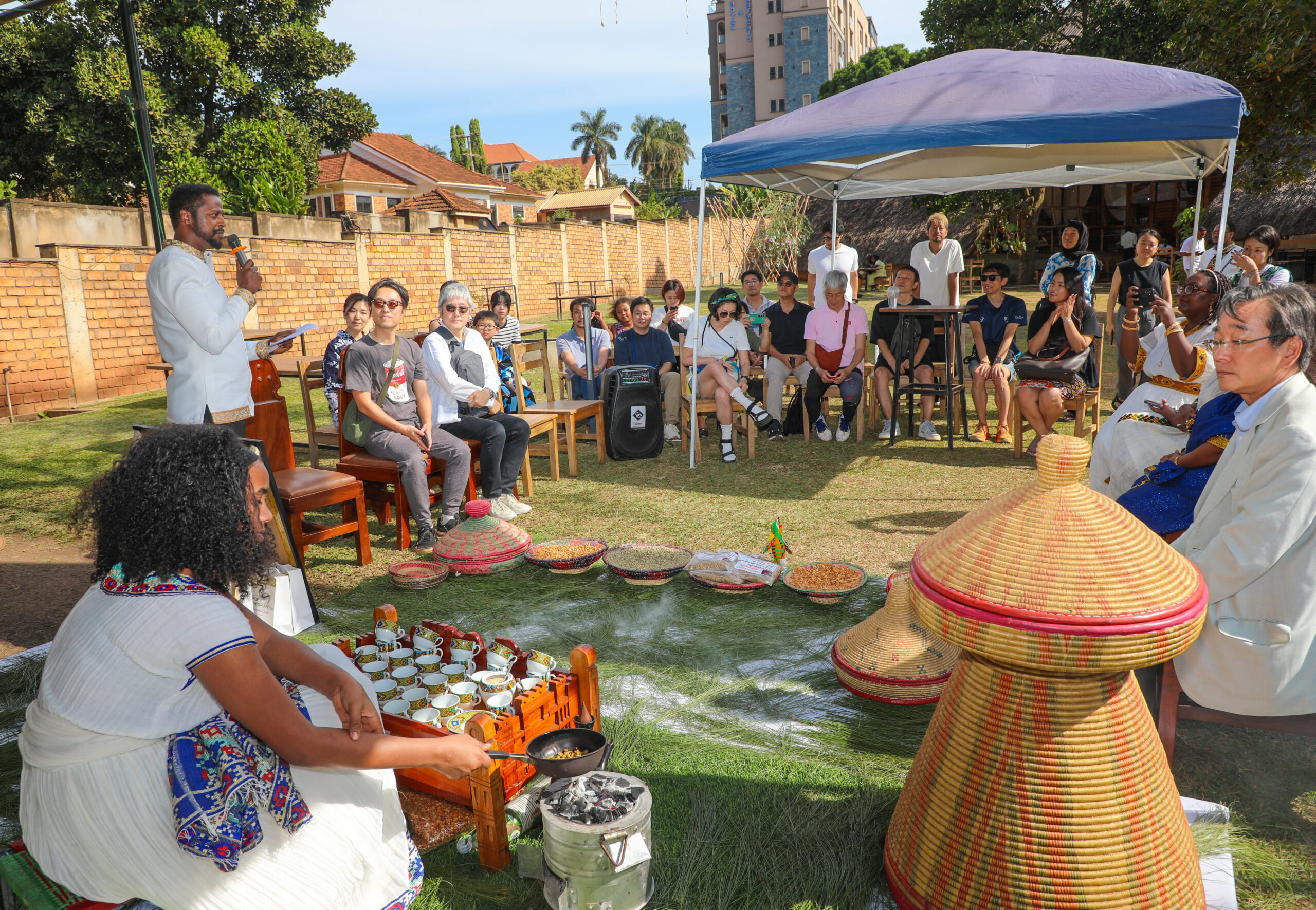
Mr. Robel Admassu, Chargé d’affaires of the Ethiopian Embassy speaking to guests. PHOTO BY ALEX MASEREKA JOEL
Excited by his discovery, Kaldi shared the berries with village elders, who were equally impressed by their effects. Over time, knowledge of these remarkable berries spread throughout the region and beyond, laying the foundation for what would become one of the world’s most popular beverages.
Whether viewed as legend or history, the story of Kaldi symbolizes Ethiopia’s unique and enduring connection to the origin of coffee.
The Ethiopian Traditional Coffee Ceremony
Over centuries, Ethiopians have developed a unique cultural tradition centred around coffee—the Ethiopian Traditional Coffee Ceremony. More than a method of preparing and serving coffee, it is a cherished social institution that brings people together and strengthens community bonds.
The ceremony provides a platform for discussion, storytelling, information sharing, and social interaction. Elders use the gathering to pass on wisdom and cultural values to younger generations, while community members engage in conversations about social, economic, and political matters. In many cases, the ceremony also serves as a respected setting where disagreements can be resolved peacefully.

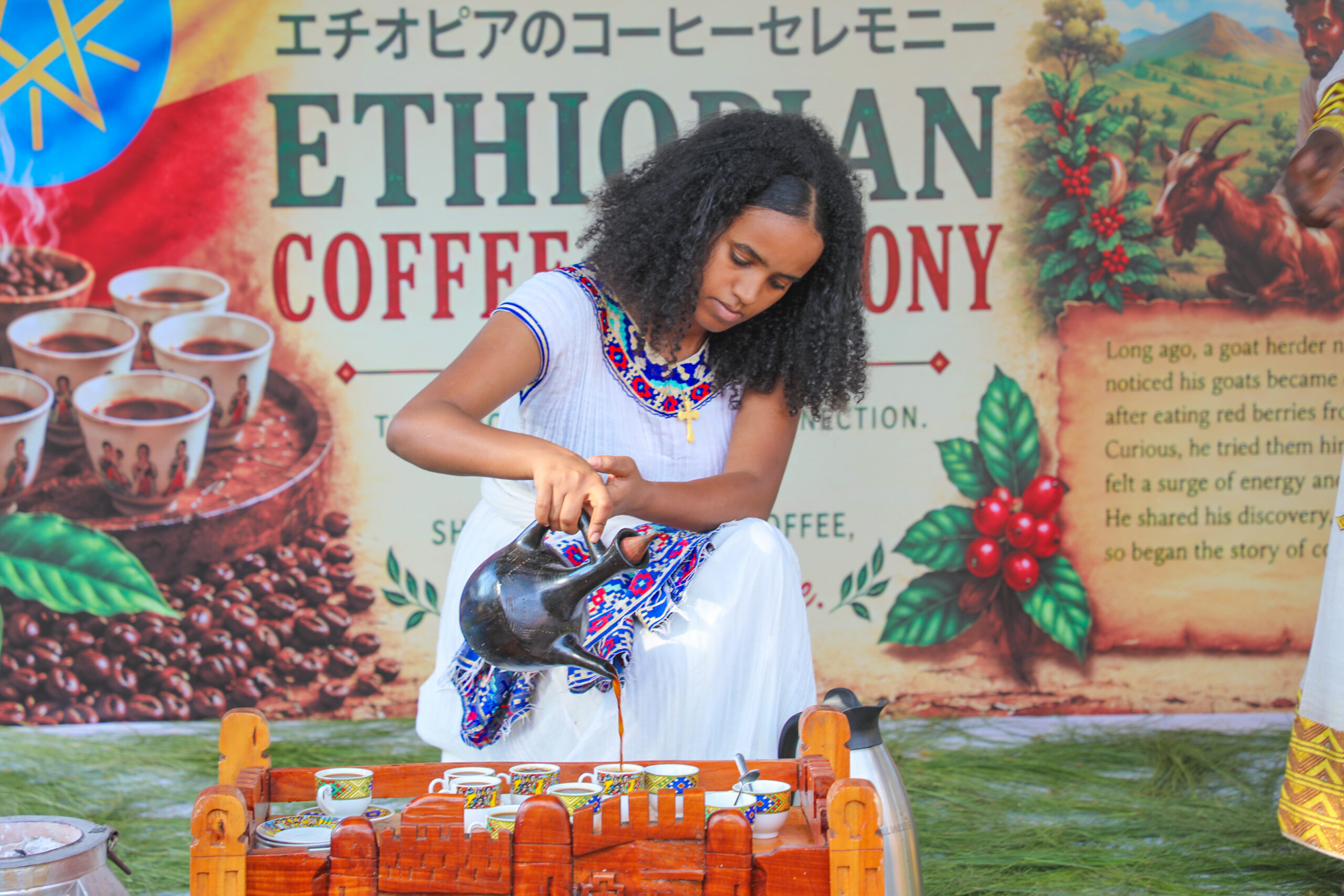
An Ethiopian girl pouring coffee is the climax of the traditional Buna ceremony. PHOTO BY ALEX MASEREKA JOEL
As time has passed, the Ethiopian Coffee Ceremony has evolved into one of Ethiopia’s most treasured cultural assets. Its recognition continues to grow internationally, attracting people interested in Ethiopia’s rich heritage and traditions.
The process itself is both an art and a science. Every step—from roasting the green coffee beans and grinding them by hand to brewing and serving the coffee—reflects centuries of knowledge, skill, hospitality, and cultural pride.
Showcasing Ethiopian Coffee Culture in Uganda
Ethiopians have not only shared coffee with the world but have also proudly carried and promoted the rich traditions surrounding it. Wherever Ethiopians travel, they bring with them the coffee ceremony as a symbol of their culture and identity.
Embassies of Ethiopia around the world actively promote this heritage through cultural events, exhibitions, and public engagements. The Embassy of the Federal Democratic Republic of Ethiopia in Uganda has placed the Ethiopian Coffee Ceremony at the centre of its cultural diplomacy efforts, using it as a bridge to strengthen people-to-people relations between Ethiopia and Uganda.

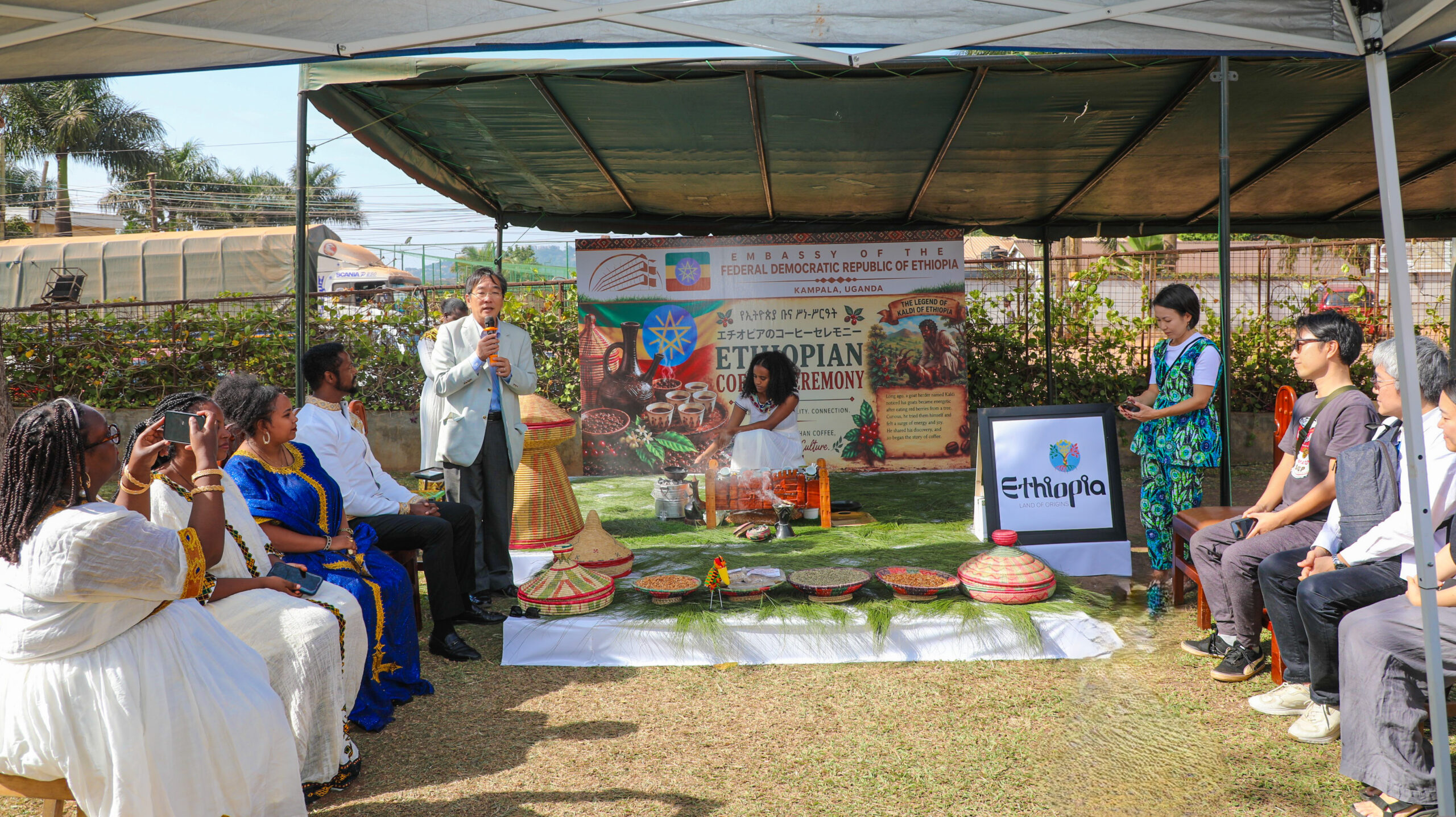
Japanese ambassador to Uganda is H.E. Sasayama Takuya addressing guests at the ceremony. PHOTO BY ALEX MASEREKA JOEL
Over the years, the Embassy has consistently showcased the ceremony at conferences, summits, hotels, cultural festivals, and diplomatic events across Uganda. Through these efforts, the Ethiopian Coffee Ceremony has become one of the most sought-after cultural attractions, appreciated for its authenticity, elegance, and powerful message of hospitality.
A Unique Cultural Encounter in Kampala
On 20 June 2026, the Embassy, in collaboration with YAMASEN Japanese Restaurant and the Japanese Association of Uganda, organized a Traditional Ethiopian Coffee Ceremony in Kampala.
The event formed part of the Embassy’s broader efforts to strengthen cultural ties and foster greater understanding between Ethiopia, Uganda, and the international community residing in Uganda.
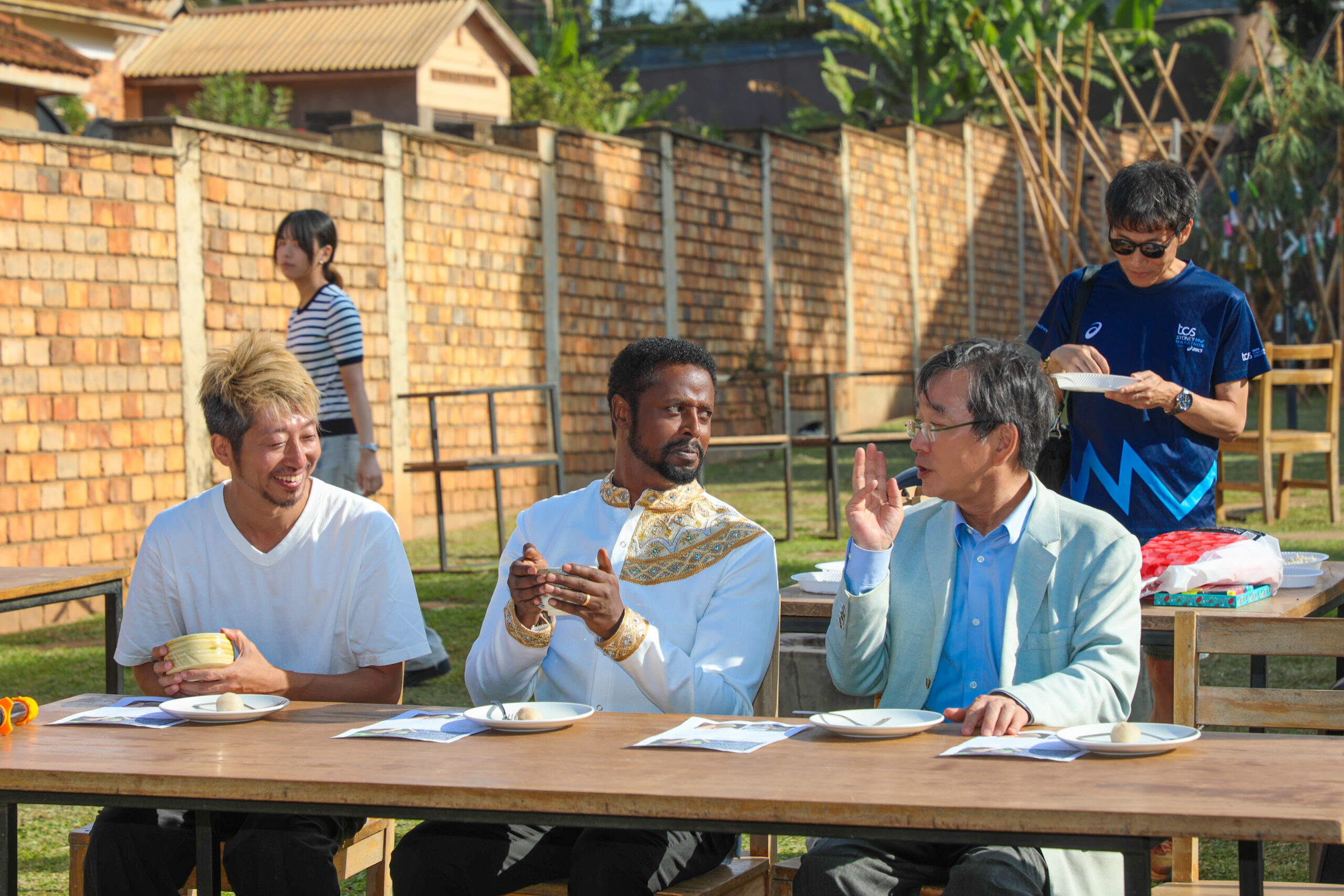
Mr. Robel Admassu, Chargé d’affaires of the Ethiopian Embassy joined by Japanese ambassador to Uganda is H.E. Sasayama Takuya and Yamassen Restaurant Prioprietor. PHOTO BY ALEX MASEREKA JOEL
Guests were treated to an authentic Ethiopian coffee experience, with Ethiopia’s indigenous Coffee Arabica prepared and served according to centuries-old traditions. Beyond enjoying the coffee itself, participants gained a deeper appreciation of the values, customs, and cultural significance embedded within the ceremony.
The interest shown by YAMASEN Japanese Restaurant in partnering with the Embassy stands as a testament to the growing recognition and appreciation of Ethiopian coffee culture in Uganda.
Coffee, Culture and Diplomacy
During the event, Mr. Robel Admassu, Chargé d’Affaires of the Ethiopian Embassy in Kampala, delivered opening remarks highlighting Ethiopia’s legacy as both the cradle of humankind and the birthplace of coffee.
He noted that while coffee contributes significantly to Ethiopia’s economy, the traditional coffee ceremony remains a profound social and cultural institution that reflects the values and identity of the Ethiopian people.
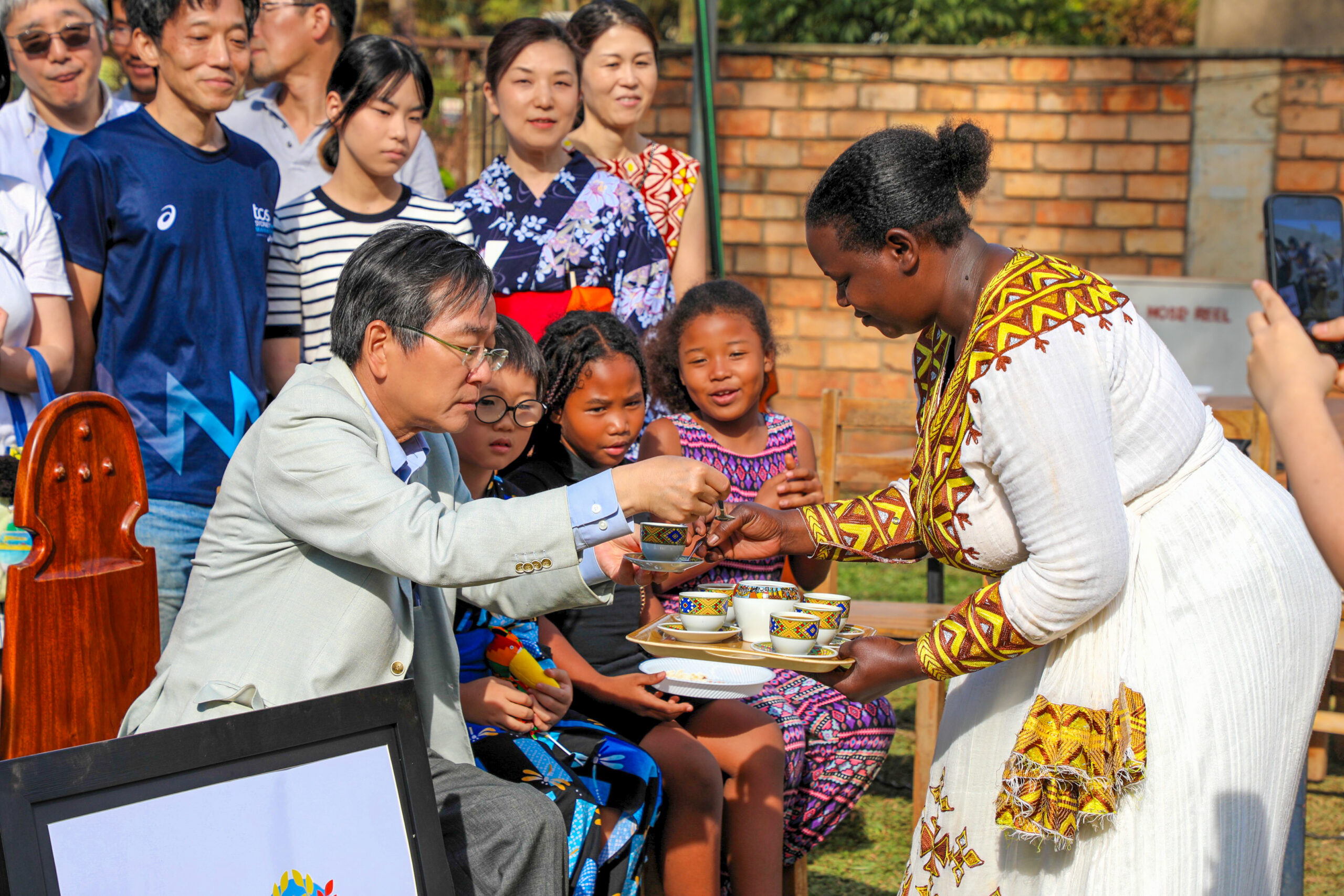
Japanese ambassador to Uganda is H.E. Sasayama Takuya receives a cup of Ethiopian coffee. PHOTO BY ALEX MASEREKA JOEL
Mr. Robel also drew parallels between the Ethiopian Coffee Ceremony and the traditional Japanese Matcha ceremony, emphasizing their shared focus on hospitality, respect, and welcoming guests. He further referenced the historic cultural connections between Ethiopia and Japan, including the iconic song by renowned Ethiopian artist Dr. Tilahun Gessesse inspired by Japan.

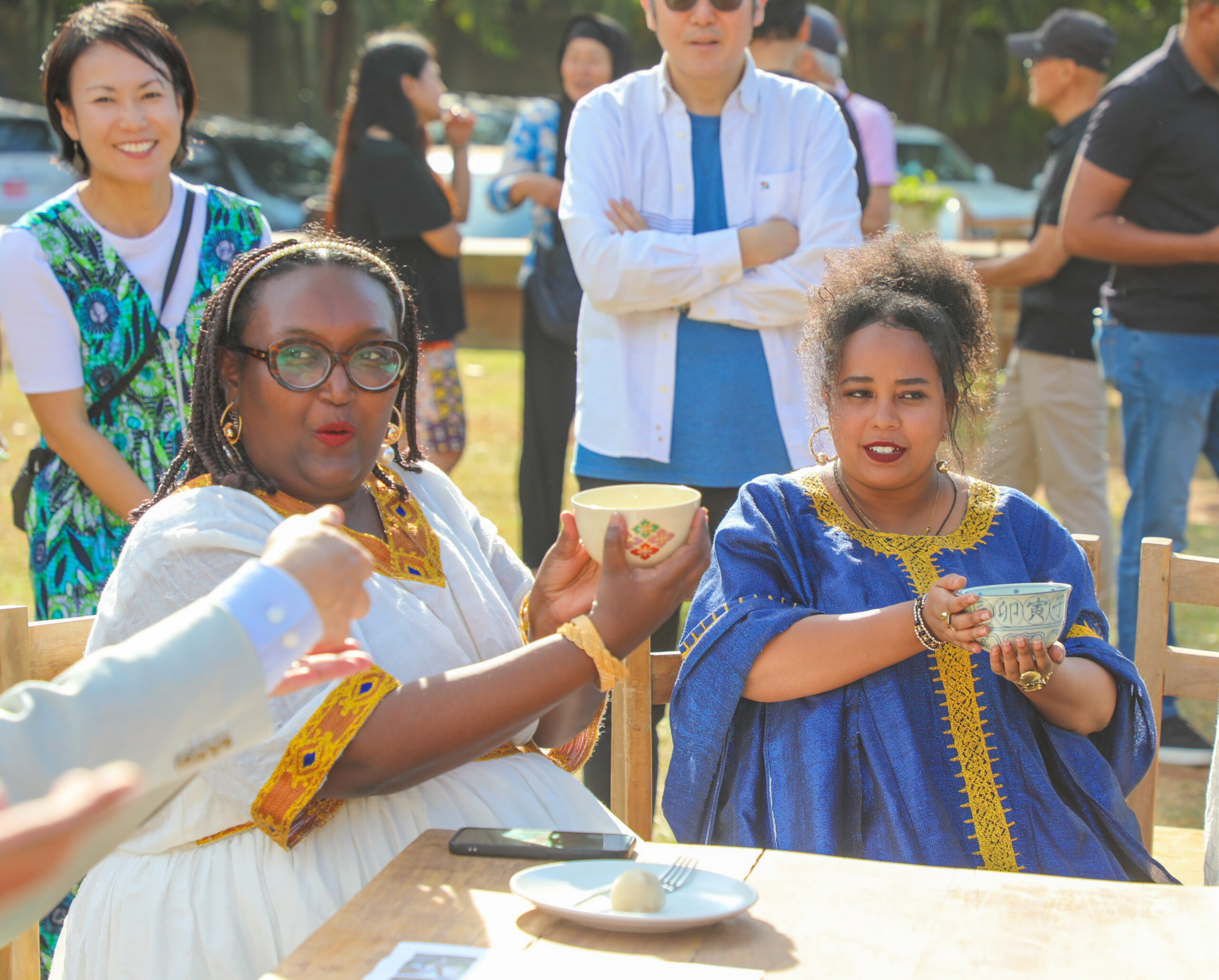
Members of the Ethiopian embassy prepare to take a sip of the Japanese matcha. PHOTO BY ALEX MASEREKA JOEL
In addition, he highlighted Ethiopia’s exceptional tourism potential and encouraged members of the Japanese community living in Uganda to visit Ethiopia, assuring them of the Embassy’s support.
Building Bridges Through Culture
A few months earlier, the Embassy had organized a similar coffee culture presentation at Kampala Serena Hotel, one of Uganda’s premier hospitality establishments. Such initiatives reflect the Embassy’s sustained commitment to introducing Ethiopia’s rich coffee heritage to international audiences.
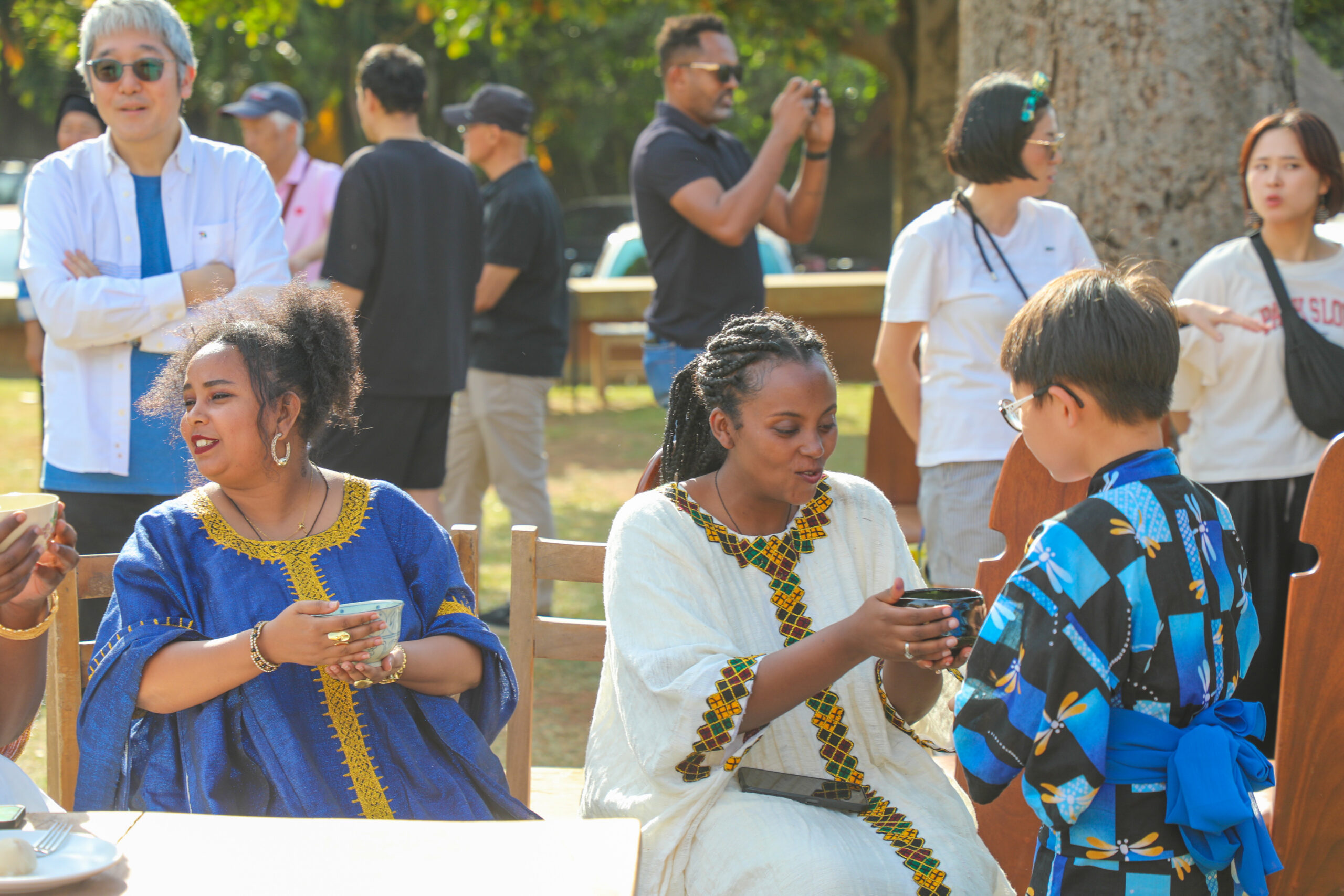
A member of the Ethiopian delegation receives her matcha.
By promoting the Ethiopian Traditional Coffee Ceremony, the Embassy is doing more than showcasing a cultural practice. It is fostering dialogue, strengthening people-to-people connections, enhancing mutual understanding, and building bridges between communities.
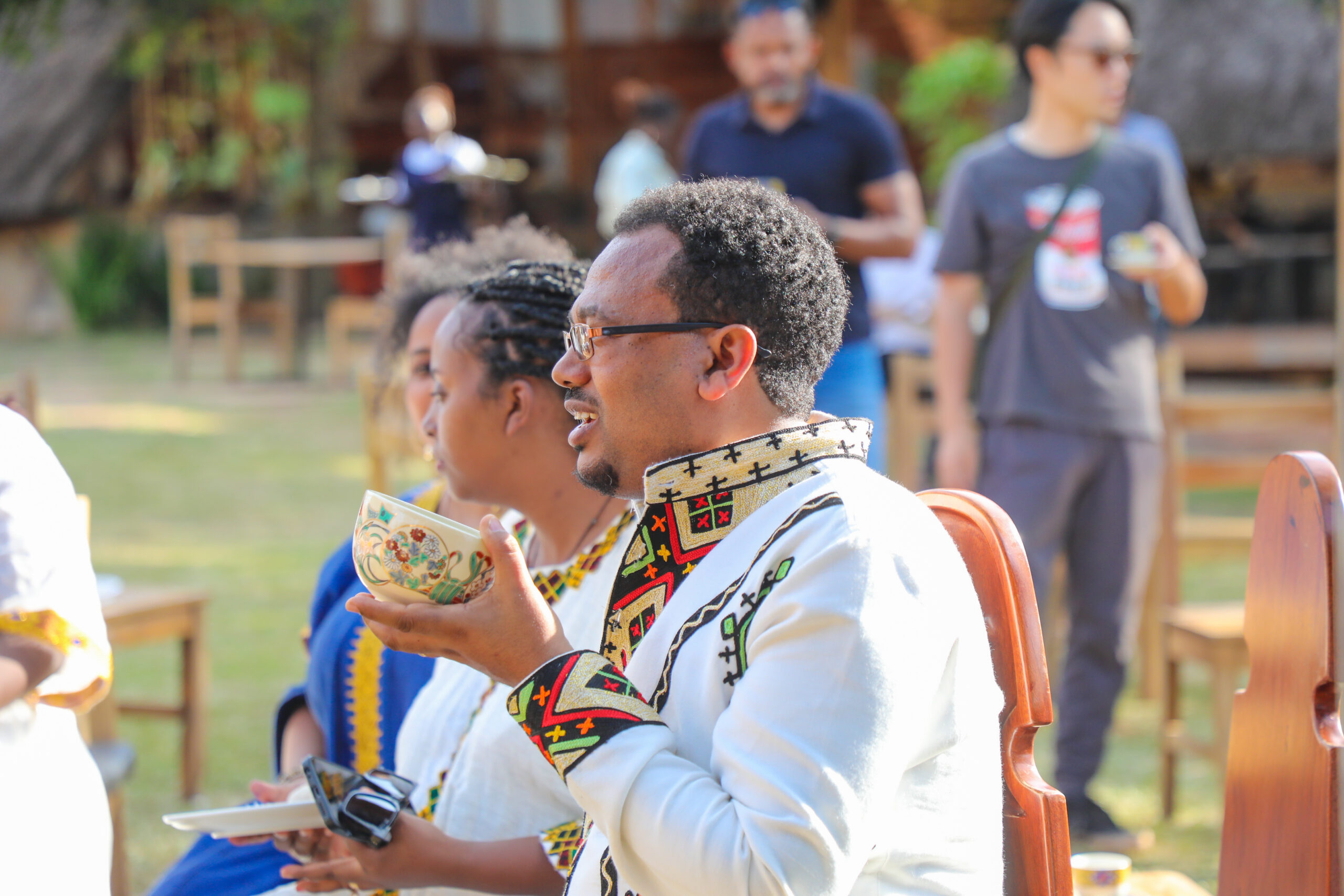
Mr Asnake Belay. PHOTO BY ALEX MASEREKA JOEL
Indeed, coffee remains one of Ethiopia’s greatest contributions to humanity—not only as a beverage enjoyed around the world, but also as a symbol of hospitality, friendship, and cultural exchange.
Mr Belay is the Head of Public Diplomacy at the Embassy of Ethiopia in Kampala