News
SGR JACKPOT! Islamic Bank Approves Shs2.8 Trillion Rail Deal for Uganda

Uganda’s long-awaited Standard Gauge Railway (SGR) project has received a massive boost after the Islamic Development Bank (IsDB) Executive Board approved a record €650.75 million (about Shs2.8 trillion) financing package, the largest amount ever approved by the Bank for a single project in Uganda.
The landmark approval was secured during the 51st IsDB Group Board of Governors’ Annual Meetings held in Baku, Azerbaijan, under the theme “Regional Integration for Sustainable Prosperity.”
Leading Uganda’s delegation, Permanent Secretary and Secretary to the Treasury Dr. Ramathan Ggoobi described the approval as a major milestone and reaffirmed government’s commitment to achieving financial closure for the SGR project by November 2026.
The financing will fund critical components of the railway project, including construction of the 553-metre Jinja Nile Bridge, the 2.12-kilometre Mbuya-Kampala tunnel, six railway stations in Tororo, Iganga, Jinja, Lugazi, Kampala East and Kampala City, as well as three workshops in Kampala East, Jinja and Tororo.
The SGR is expected to transform cargo and passenger transport, reduce logistics costs, improve regional connectivity and boost Uganda’s competitiveness as a trade hub in East Africa.

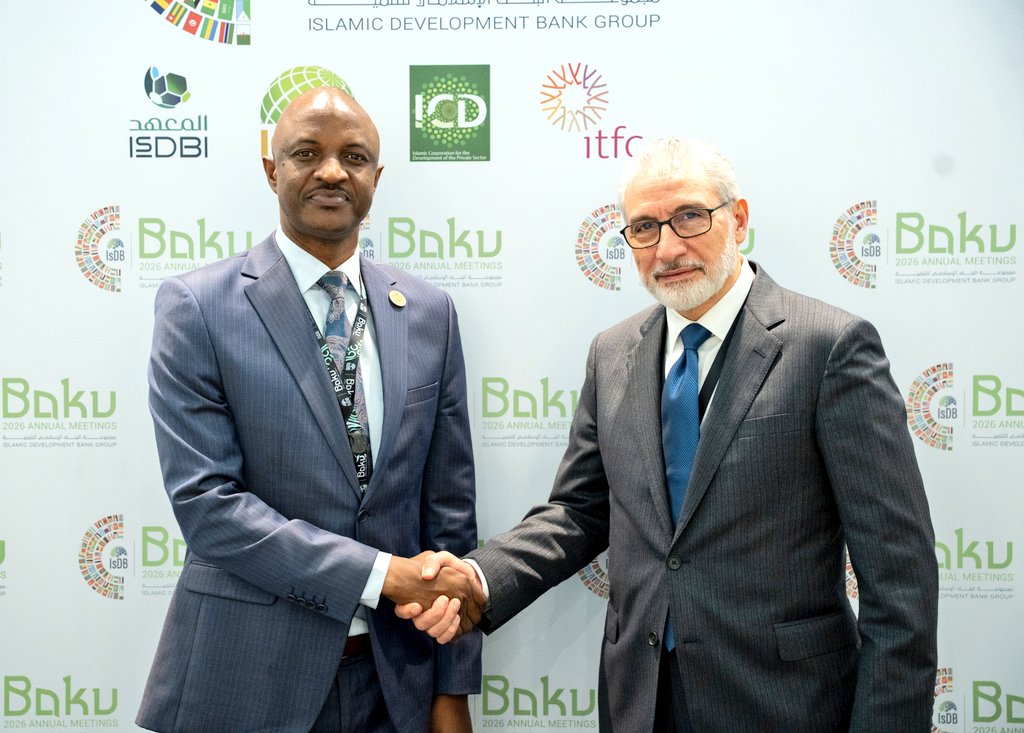
Permanent Secretary and Secretary to the Treasury Dr. Ramathan Ggoobi (L) led Uganda’s delegation.
The approval further strengthens the growing partnership between Uganda and the Islamic Development Bank. By the end of May 2026, IsDB had eight active public sector projects in Uganda worth nearly $897 million, largely concentrated in transport infrastructure, roads, education, irrigation and healthcare.
Among the major projects financed by the Bank are the upgrading of key national roads, construction of the Masindi Port Bridge, irrigation schemes in northern and eastern Uganda, and establishment of regional oncology centres in Arua and Mbale.
Speaking during the Governors’ Roundtable, Dr. Ggoobi also welcomed the newly launched IsDB Concessional Fund (ICF), saying it comes at a critical time when traditional foreign aid is declining and financing gaps are widening across developing countries.
He urged multilateral financial institutions to become more responsive and adaptable to the changing global economic landscape, arguing that developing countries need innovative financing solutions to accelerate growth and development.
For Uganda, the historic approval signals that one of the country’s most ambitious infrastructure projects is finally gathering momentum, bringing the dream of a modern railway network closer to reality.