News
Museveni Calls for UN Security Council Reform, Stronger Multilateralism at UNGA 81

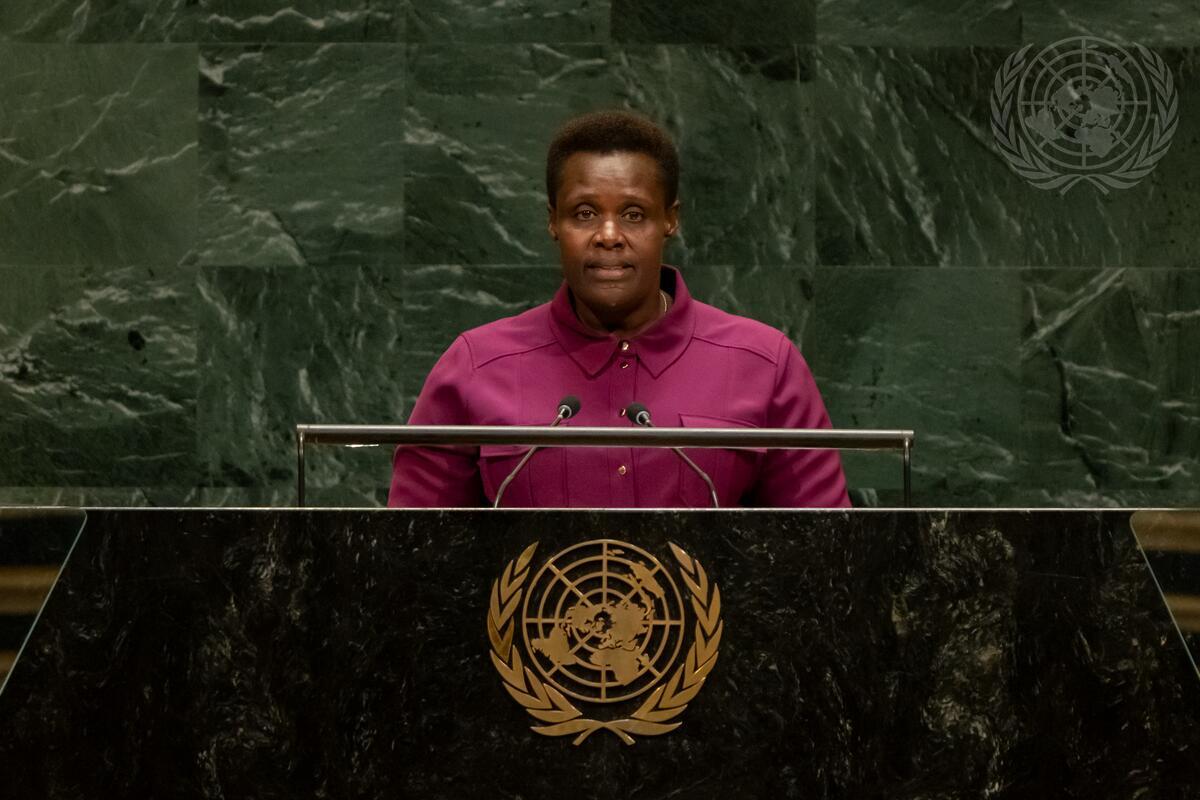
NEW YORK, September 24, 2026 — Uganda has called for comprehensive reform of the United Nations Security Council, stronger multilateral cooperation and a more equitable international financial system as world leaders gather for the 81st United Nations General Assembly.
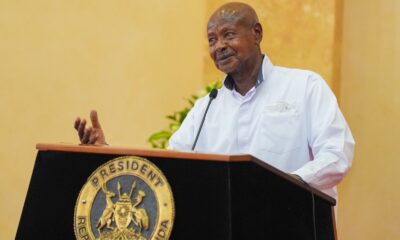
In a statement delivered on his behalf by Vice President Jessica Alupo, President Yoweri Kaguta Museveni said the UN must adapt to evolving global realities while remaining anchored in the principles of its founding Charter.
Museveni said Uganda supports reforms that would make the UN Security Council “more equitable, transparent, democratic and representative.”
“In this regard, we demand Africa’s rightful representation—in both the Permanent and Non-Permanent categories—to correct historical imbalances,” he said, reaffirming Uganda’s support for the Common African Position outlined in the Ezulwini Consensus and Sirte Declaration.

Uganda reaffirms commitment to multilateralism
Reflecting on the UN’s founding after the Second World War, Museveni said the international community must confront the persistent threat of global conflict and recommit to preventing war, protecting human rights and promoting social progress.
“Uganda firmly believes that multilateralism and international cooperation remain the most vital mechanisms for addressing our shared challenges,” he said.
The President reaffirmed Uganda’s commitment to the UN Charter and its interconnected pillars of peace and security, human rights, humanitarian affairs and sustainable development.
On the UN80 initiative, Uganda welcomed efforts to streamline the UN system and improve cost-effectiveness, efficiency and coordination.
However, Museveni cautioned that reform must not weaken existing mandates, commitments or programmes, or undermine implementation of the 2030 Agenda for Sustainable Development.
President urges reforms to global financial institutions
Uganda also used its address to highlight the financial constraints facing developing countries and their implications for progress toward the Sustainable Development Goals.
Museveni noted that only 36 percent of the 139 SDG targets were currently on track, citing limited fiscal space as a major obstacle to accelerated development.
He said many developing countries were directing a disproportionate share of government revenues toward debt servicing instead of essential infrastructure and social services.
Uganda called for urgent reforms to international financial institutions to give developing nations a stronger voice in decision-making.
The President further urged full implementation of the Sevilla Commitment and the Pact for the Future.
He also backed an inclusive international tax system to strengthen global cooperation, curb illicit financial flows and address profit shifting by multinational corporations.
Uganda expressed support for ongoing negotiations on the United Nations Framework Convention on International Tax Cooperation, including protocols on cross-border services and tax dispute resolution.
NDP IV targets $500 billion economy by 2040
Turning to Uganda’s domestic development agenda, Museveni said the country had begun implementing its Fourth National Development Plan (NDP IV) for 2025/26–2029/30.
The plan is anchored on four growth pillars: Agro-Industrialization, Tourism Development, Minerals Exploitation, and Science, Technology and Innovation.
According to the President, Uganda aims to achieve double-digit economic growth over the five-year period and ultimately expand its economy tenfold to a GDP of $500 billion by 2040.
He said the strategy is intended to create jobs and improve the quality of life for Ugandans.
Uganda advocates diplomatic solutions to conflicts
On international peace and security, Museveni said the peaceful resolution of conflicts through diplomacy remains essential for sustainable peace, security and economic growth.
He argued that many conflicts originate from unresolved local or regional grievances and require comprehensive, politically led and locally owned solutions rather than purely military responses.
“Uganda remains a consistent contributor to regional stability, particularly in the Horn of Africa and the Great Lakes Region,” he said.
He added that Uganda’s security approach is rooted in a Pan-African framework that seeks peace through collective alliances and regional cooperation.
Health investment remains national priority
Museveni also outlined Uganda’s health sector priorities under NDP IV, including modernising health centres, upgrading regional referral hospitals and integrating digital health solutions to improve service delivery and accountability.
He said Uganda was addressing both communicable and non-communicable diseases, while maintaining its response to HIV/AIDS through political leadership and community involvement.
The President said Uganda remained on track toward the UNAIDS 95-95-95 targets and its contribution to ending AIDS as a public health threat by 2030.
He called on development partners and multilateral institutions to help bridge financing gaps, strengthen pandemic preparedness and ensure equitable access to diagnostic tools, medicines and vaccines.
Uganda promotes NAM agenda and Otunnu’s UN candidacy
As Chair of the Non-Aligned Movement, Uganda reaffirmed its commitment to unity, peace and solidarity among developing nations.
Museveni said Uganda remains dedicated to advancing the International Covenant on the Right to Development, including efforts to transform the 1986 Declaration into a binding operational instrument addressing structural global inequalities.
He announced that Kampala will host the NAM Coordinating Bureau Ministerial Meeting for member states and observers from December 2–4, 2026.
The President also formally promoted Uganda’s candidate for the next UN Secretary-General, Ambassador Olara Otunnu.
Museveni highlighted Otunnu’s more than four decades of service in the UN system, international diplomacy and public administration.
He specifically cited Otunnu’s tenure as the inaugural UN Special Representative for Children and Armed Conflict from 1998 to 2005, noting his role in placing the protection of war-affected children on the Security Council agenda and establishing the monitoring and reporting mechanism under Resolution 1612 (2005).
“His extensive experience, statesmanship and proven capacity for consensus-building make him exceptionally qualified to lead the Secretariat at this critical time,” Museveni said.
President calls for a UN that delivers for all
Concluding his statement, Museveni said the UN remains a central pillar of international peace, human rights and development after eight decades.
He acknowledged the organisation’s achievements and convening power while calling for continued reforms to make it more transparent, cost-effective, efficient and representative.
“Through renewed international cooperation, the UN can truly deliver on its founding promises for all humanity,” he said.