
News
Muhoozi Breaks Silence on Uganda-South Sudan Border Clashes, Says “Enemy Was Not SSPDF”

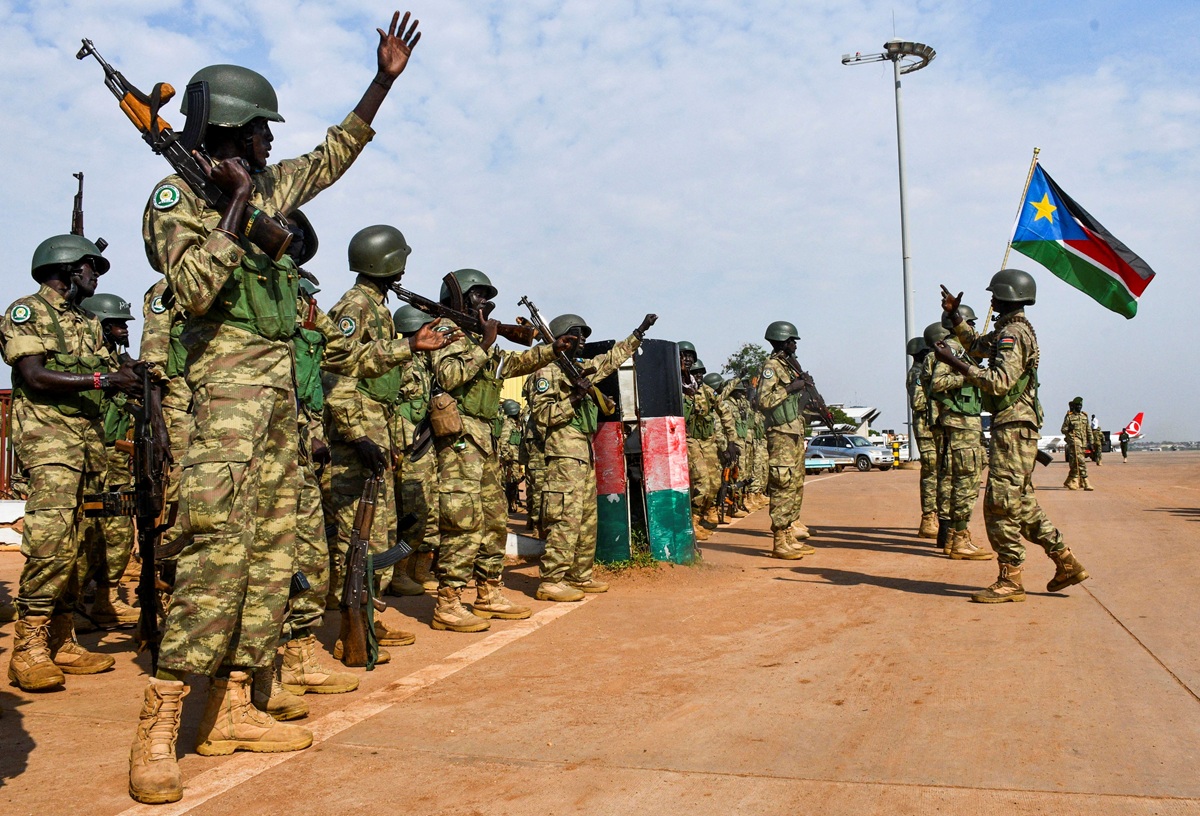
Uganda’s Chief of Defence Forces, General Muhoozi Kainerugaba, has broken his silence on the recent deadly clash between Ugandan and South Sudanese troops along the disputed northern border, clarifying that the armed group responsible for the incursion was not affiliated with South Sudan’s national army.
“The enemy that entered Ugandan territory last month was not SSPDF. It was an assortment of terrorist groups opposed to Juba. We shall deal with them jointly with SSPDF,” Gen Muhoozi posted on X.
His statement comes in the aftermath of a deadly confrontation that erupted in July 2025 near the Uganda-South Sudan border, which reportedly left at least four soldiers dead.
According to reports and official UPDF communication last week, the clash took place when South Sudanese forces allegedly crossed into Uganda and set up a military presence on what Uganda considers its territory in the West Nile region.
Ugandan authorities say attempts to persuade the soldiers to withdraw peacefully failed, prompting a military response from the Uganda People’s Defence Forces (UPDF), which led to armed confrontation and casualties.
SSPDF officials claim their troops were patrolling a recognized area within South Sudan when they came under fire.
In an effort to de-escalate tensions, Gen Muhoozi reframed the incident not as a state-on-state aggression but rather the result of non-state armed actors exploiting the porous border.
His assertion that “terrorist groups opposed to Juba” were behind the incursion indicates a situation of shared threats between the two governments, and aligns with Uganda’s long-standing policy of backing the administration of President Salva Kiir in Juba.

“Mzee [President Museveni] has sent me to meet my Uncle, Afande Salva Kiir, soon. I will go and meet my boss in Juba and we shall resolve the issues,” Muhoozi added, indicating plans for a high-level diplomatic and military engagement.
Diplomatic & Military Engagements
In the lead-up to Muhoozi’s visit, Uganda’s Deputy Chief of Defence Forces, Lt Gen Sam Okiding, paid a courtesy call to the SSPDF Chief of Defence Forces, Gen Dau Aturjong, in Juba last week.
The two senior officers emphasized military cooperation, joint counter-terrorism operations, and the preservation of historical ties between the two nations.
Gen Aturjong hailed the UPDF as a “sister force,” reaffirming Juba’s commitment to bilateral peace efforts:
“No one can separate us because we share a lot historically.”
Lt Gen Okiding, who also visited Ugandan troops deployed in Bilnyang under Operation Mlinzi Wakimya, commended their discipline and urged them to remain on high alert but avoid unnecessary escalation.
The Uganda–South Sudan border remains one of the most undemarcated frontiers in East Africa, despite both countries agreeing to a joint border commission in 2022.
The process has seen minimal progress, with both sides still relying oncolonial-era maps, many of which are contested by local communities.
Local populations on both sides of the border—mostly pastoralist and agrarian communities—have suffered displacement, property loss, and disrupted livelihoods due to repeated skirmishes.