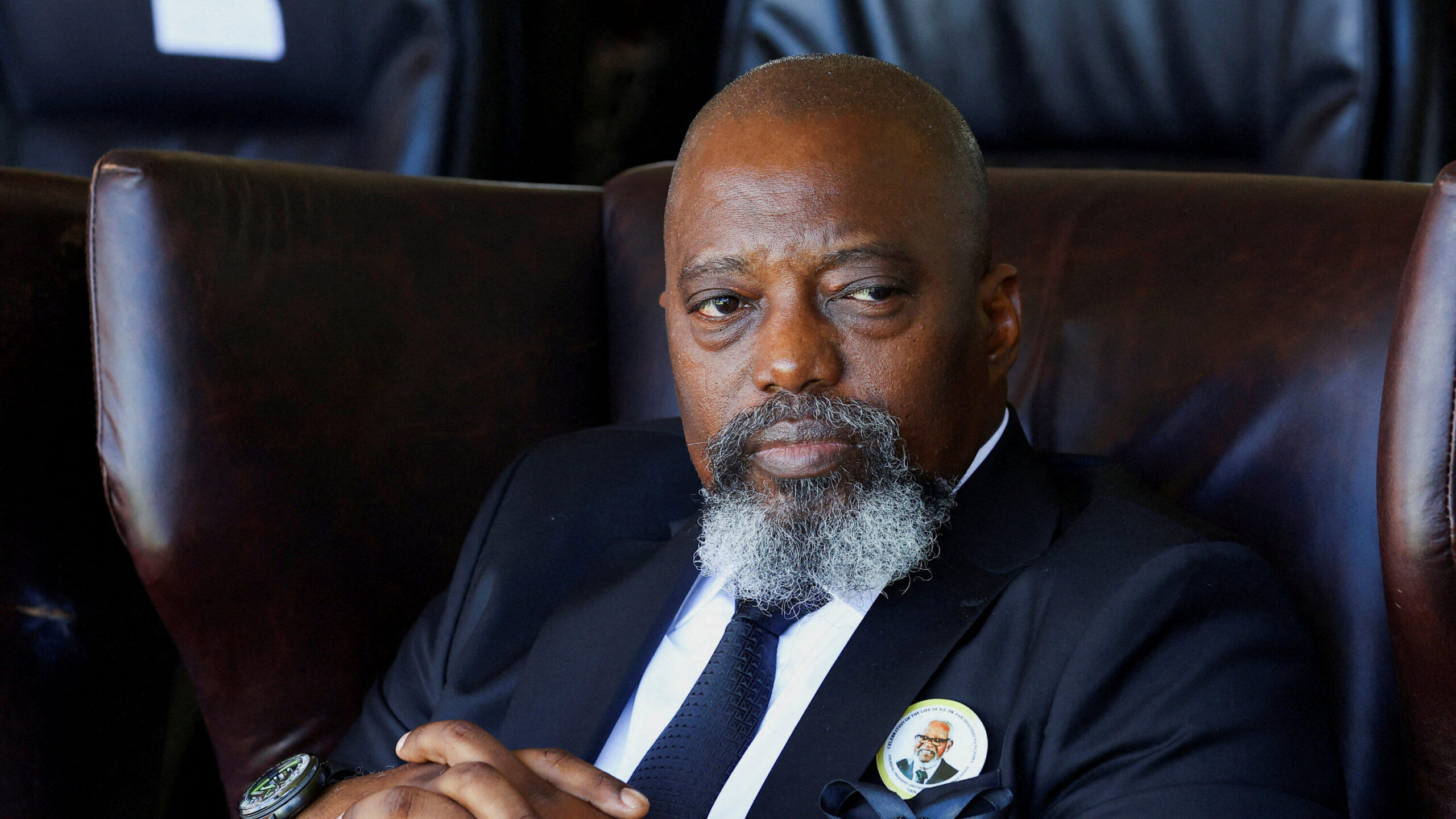
The long-awaited treason trial of former Congolese President Joseph Kabila has begun in a military court in Kinshasa, plunging the Democratic Republic of Congo (DRC) into a new phase of political tension.
Kabila, who ruled Africa’s second-largest country for 18 years, faces multiple charges including treason, murder, and supporting an insurrectionist movement, in connection with the ongoing M23 rebellion in the east of the country. He did not appear in court for the opening hearing on Friday and has denied all charges, describing the proceedings as “arbitrary” and politically motivated.
The trial marks an unprecedented moment in DRC’s post-independence history—the first time a former president is being prosecuted for treason. The military court convened under heavy security, with local and international media kept at a distance. Kabila’s legal team said the former president is yet to receive a fair hearing.
President Félix Tshisekedi, who succeeded Kabila in 2019 after a disputed election, has publicly accused his predecessor of orchestrating the M23 rebellion, which controls large swathes of North Kivu, a region rich in coltan, gold, and other minerals. Kabila resurfaced in the rebel-held city of Goma in May, after two years in self-imposed exile in South Africa, fueling speculation about his ties to the group.
A ceasefire agreement signed last week between the government and M23 rebels has so far failed to halt hostilities, with fresh clashes reported near Sake and Masisi. Critics of the trial say it risks undermining peace efforts and escalating tensions between Kinshasa and rebel strongholds.
Adding to the complexity, Rwanda has been accused by the United Nations and several Western governments of backing the M23, including sending troops into Congolese territory. Kigali denies the allegations, maintaining its actions are defensive, aimed at preventing conflict spillover.
In May, Congo’s Senate lifted Kabila’s lifetime immunity, clearing the path for prosecution on charges that also include forcible occupation of territory. Legal analysts say the decision sets a significant precedent but also opens questions about judicial impartiality, especially given the history of political rivalry between Kabila and Tshisekedi.
Kabila’s allies are calling the trial a witch-hunt. Ferdinand Kambere, a former senior official in Kabila’s now-dissolved PPRD party, blasted the government for what he termed “double standards”, criticizing Kinshasa for being lenient in its dealings with M23 rebels while coming down hard on the former head of state.
“This trial is not about justice,” Kambere said. “It is about eliminating Kabila from the political scene.”
The former president, now 53, has remained defiant. In a YouTube video published in May—since taken down—he condemned President Tshisekedi’s administration as a dictatorship, accusing it of muzzling opposition voices and eroding democratic gains.
Government spokesperson Patrick Muyaya swiftly dismissed the video, saying Kabila “has nothing to offer the country” and calling his remarks a distraction from his legal battles.
Observers say the trial will be a defining moment for the country’s judiciary and could further inflame an already volatile political climate as the country inches toward the next electoral cycle. It remains unclear when or if Kabila will appear in court in person, but for now, DR Congo’s future hangs in a precarious balance between justice, peace, and political survival.