
Inside URC’s Shs20.8bn Capacity Building Programme Under Parliamentary Scrutiny
August 11, 2026

The Uganda Railways Corporation (URC) has clarified that the Shs20.8 billion capacity-building component of a wider Spain-financed railway modernisation programme was not spent solely on staff training, as recent public discussions have suggested.
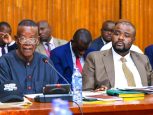
The clarification comes amid scrutiny by Parliament’s Committee on Physical Infrastructure, following hearings in which questions were raised over the corporation’s expenditure on capacity building and the value delivered by the programme.
URC said the figure of Shs25 billion circulating in public discourse is inaccurate. According to the corporation’s clarification cited in the programme documents, the capacity-building component was budgeted at €4.821 million, equivalent to approximately Shs20.8 billion at current exchange rates.
The Capacity Building Programme (CBP) formed part of a broader Spain-financed modernisation programme implemented by Spanish firm Consultrans, part of the Imathia Group, under a contract awarded by URC in June 2020. Implementation ran from February 2022 to January 2025.
The wider programme was designed to rebuild URC’s institutional, technical and managerial capacity after years of underinvestment that followed the collapse of the Rift Valley Railways concession.
At the beginning of the programme, only about a fifth of URC’s 1,271-kilometre metre-gauge network was operational, while the corporation’s operating ratio was above 300 percent, according to the document.
What the Shs20.8 billion covered
URC said the capacity-building budget covered considerably more than classroom training.
The package included refresher courses for staff, remuneration for international and Ugandan personnel involved in delivering the programme, logistics and other implementation costs over its three-year duration.
Documents cited in the clarification indicate that 1,380 URC staff completed 55 formal training courses, representing more than 9,700 training days across departments including railway operations, engineering, safety, procurement, finance, human resources, IT and management.
The programme also facilitated the construction of two training rooms at the Nalukolongo workshop, on-the-job coaching and two benchmarking visits to Spain for URC managers and technical staff.
A resident technical team was stationed in Kampala throughout the three-year programme, while specialists from Spain provided technical support in areas including signalling, structural design and rolling-stock engineering.
The broader Spain-backed package also included engineering designs for railway infrastructure, preliminary designs for the Kampala Multimodal Hub, the supply of 3,024 tonnes of UIC 54E1 rails, and rehabilitation of the 26.8-kilometre Kampala–Namanve–Mukono line.
Questions over consultant payments
The parliamentary hearings also raised questions about payments associated with the Consultrans project team.
During questioning on July 24, URC Managing Director Benon Kajuna named five members of the project team and cited figures of €864,000 and €738,000 in relation to engineers Morris Tibenda and Paul Tukashaba respectively.
The figures were subsequently interpreted in public reports as personal payments to the two individuals.
However, Tibenda has petitioned Parliament disputing that interpretation, saying he was a salaried Key Expert employed by Consultrans and that the amounts cited represented project budget-line figures rather than his personal earnings.
The document argues that URC and Consultrans should provide Parliament with the underlying payroll and budget breakdown to establish how much of the €4.821 million went towards salaries, operating costs and other expenses.
Parliament's wider concerns
The capacity-building programme is only one of several issues raised during the parliamentary hearings.
The committee has also questioned URC over hundreds of railway wagons that remain unaccounted for. The document cites figures of between 394 and 412 wagons, with the Auditor General reportedly tracing only 18 of 412 and estimating their value at more than Shs220 billion.
URC Managing Director Kajuna has been directed to record a statement with the CID, while URC says it is reconciling records with Kenya Railways concerning assets dating back to the Rift Valley Railways concession.
The committee is separately examining a disputed parcel of railway land opposite URC headquarters, reportedly registered to businessman Godfrey Kirumira.
The document stresses that these matters should not be conflated with the capacity-building expenditure: the CBP concerns procurement and value for money under a specific foreign-financed contract, while the missing wagons and land questions concern asset management and control.
URC urged to provide fuller documentation
Despite the clarification, the programme document acknowledges that Parliament has legitimate grounds for demanding greater transparency.
During the July 24 hearing, Kajuna was reportedly unable to immediately provide some of the requested information and committed to submit the appraisal report, training needs assessment and project completion report.
The document says this gap in URC's ability to produce information on demand represents an institutional weakness, regardless of whether the expenditure was properly utilised.
The key issue, therefore, is not simply whether Shs20.8 billion was spent, but what the money paid for, whether the contracted deliverables were achieved and whether URC can provide Parliament with the documentation necessary to demonstrate value for money.
The programme was part of a wider railway rehabilitation effort, which the document says also includes the Tororo–Gulu metre-gauge rehabilitation, African Development Bank-supported works on several railway lines, new locomotives and wagons, and new passenger hubs at Namanve and Kyengera ahead of AFCON 2027.
Bottom line: The parliamentary scrutiny has placed the URC Capacity Building Programme under the spotlight, but the documents indicate that the widely cited Shs25 billion “training” figure is both higher than URC’s stated Shs20.8 billion capacity-building budget and too narrow a description of what the programme financed. The outstanding question for Parliament remains whether URC can substantiate the expenditure and demonstrate that the contracted programme delivered value for money.

UG Diplomat is an independent digital news and media platform dedicated to comprehensive coverage of national politics, regional diplomacy, international relations, geopolitics, defense, and business. Published under Currentarc Media Ltd, we provide authoritative analysis, breaking news, and in-depth reporting on the diplomatic and economic developments shaping East Africa and the global arena.
COMPANY
Contact Us
Privacy Policy
Terms and Conditions
CONTACT INFORMATION
info@ugdiplomat.com
+256774552385
Copyright © 2026 UG Diplomat -Product of CURRENTARC MEDIA