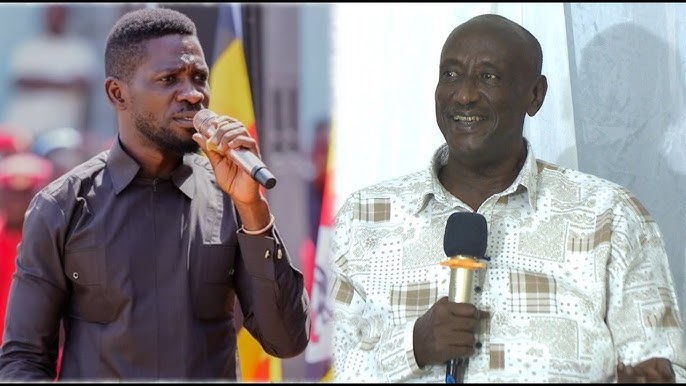
The Chief Coordinator of Operation Wealth Creation (OWC), Gen. Salim Saleh, has dismissed allegations by National Unity Platform (NUP) president and presidential aspirant Robert Kyagulanyi Ssentamu, also known as Bobi Wine, that he grabbed land in Kapeeka.
Speaking during a meeting with CEOs at the Namunkekera Industrial Park in Nakaseke District, Gen. Saleh clarified that he lawfully acquired the land in question, explaining that he previously owned a beach property in Garuga which he later sold and used the proceeds to purchase land in Kapeeka.
“Both of us once owned beaches — Bobi Wine had one in Busabala, and I had mine in Garuga. After selling mine, I bought land in Kapeeka transparently. There was no grabbing,” Gen. Saleh said.
He further turned the allegation around, remarking that if anyone were to be accused of land grabbing, “it could actually be Bobi Wine himself.”
The four-star general said opposition leaders and some critics within the ruling National Resistance Movement (NRM) often “misread” his work, misconstruing his efforts to promote industrialisation and wealth creation as political manoeuvres.
“I am in a dilemma because even my own party members misunderstand my work. The opposition thinks I am grabbing land, while some NRM people believe I am working for the opposition,” Saleh told the gathering.
He urged political leaders to focus less on rhetoric and rallies and instead channel their energy toward productivity and investment that benefit ordinary Ugandans.
“Our priority should be linking government programmes with the private sector to create jobs and income for our people. We cannot achieve that through endless politicking,” he emphasized.
Gen. Saleh also acknowledged that unresolved land governance challenges and delays in the rollout of key economic support schemes, such as the Chapa Loan project, have contributed to tensions surrounding land ownership in parts of the country.
The remarks come amid renewed debate over land rights and industrial development in Uganda, particularly in regions where government projects intersect with private investment.