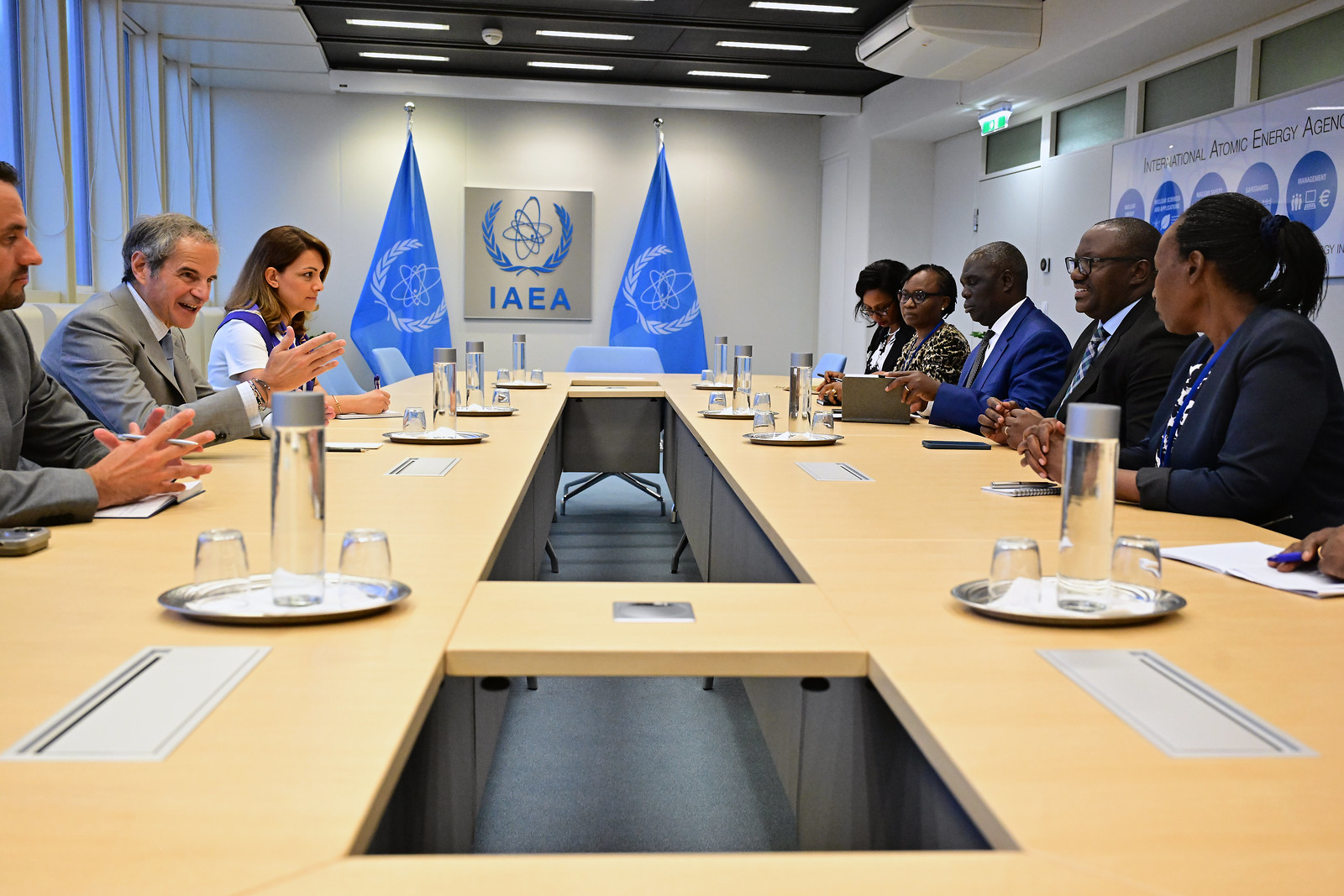
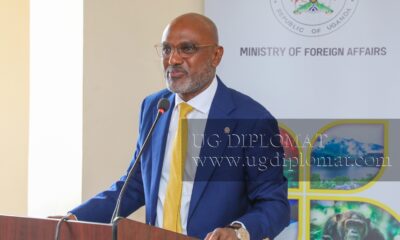
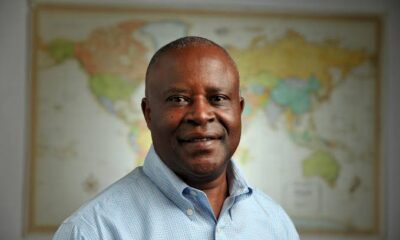
Uganda is accelerating its plans to develop nuclear energy, including enriching its own uranium, following a high-level meeting in Vienna between the Permanent Secretary of the Ministry of Foreign Affairs, Vincent Bagiire, and the Director General of the International Atomic Energy Agency (IAEA), Rafael Mariano Grossi.
During the meeting, held at the IAEA headquarters, Bagiire formally informed the Agency of Uganda’s decision to establish a full diplomatic mission in Vienna.
The move, he said, is intended to deepen collaboration and streamline coordination as Uganda begins developing nuclear energy to meet its growing electricity demands and reduce reliance on hydropower and fossil fuels.
Bagiire was accompanied by Uganda’s Ambassador to Germany and Austria, Amb. Stephen Mubiru, Deputy Head of Mission Dora Kutesa, Mr. Anthony Agama, Ms. Anne Nabaasa, and Ms. Isabella Nakalema.
The announcement marks a milestone in Uganda’s energy strategy, and comes at a time when the IAEA itself is navigating heightened global tensions.
Director General Grossi has been under scrutiny in recent months following the outbreak of war between Iran and the U.S.-Israel alliance, during which several Iranian nuclear sites were bombed, raising serious questions about the IAEA’s ability to secure and monitor sensitive nuclear facilities in volatile regions.
Despite this geopolitical backdrop, Uganda remains committed to a peaceful and regulated nuclear program. President Yoweri Museveni has long championed nuclear energy as essential to Uganda’s development, citing the dangers of over-reliance on traditional energy sources.
“In 2005, Uganda experienced a drought that affected electricity generation from Owen Falls Dam,” Museveni recalled during the 2nd Africa Nuclear Business Platform Conference held in March 2023 in Kampala.
“As a result, we resorted to expensive fossil-powered plants to support the economy. That’s when I directed the Ministry of Energy and Mineral Development to diversify the energy mix — including nuclear power.”
It was at this same conference that Uganda’s Ministry of Energy signed Memoranda of Understanding (MoUs) with nuclear sector partners from Argentina and South Korea, reinforcing Museveni’s vision for a diversified and secure energy future.
“The issue of nuclear power in Africa is a must. It is reliable,” Museveni said in a keynote address. “I even halted the exportation of uranium because we need electricity for socio-economic development. The option of nuclear power is a very wise one, we should not waste time on that.”
That vision took further shape when, in August 2023, Museveni announced that Russia and South Korea had completed negotiations to begin building two nuclear power plants in Uganda. The plants are expected to produce a combined 15,000 megawatts, which would significantly alter Uganda’s energy profile and potentially make the country a regional energy exporter.
“The nuclear project comes at a critical time when nations are dealing with how to ensure energy security for socio-economic development,” Museveni said while addressing the 2nd G-25 Africa Coffee Summit in Munyonyo, attended by delegates from 25 African coffee-producing nations.
Beyond the practical energy benefits, Uganda’s engagement with the IAEA also has a diplomatic dimension. The new Vienna mission strengthens Uganda’s position in global nuclear governance, ensuring that its nuclear ambitions are aligned with international safety, transparency, and non-proliferation standards.
President Museveni has consistently emphasized that Uganda’s nuclear program is strictly peaceful. In a moving address to the United Nations in 2009, he stressed Africa’s position: nuclear technology for development — not for weapons.
“Our aim is to use nuclear power to develop, not to destroy,” Museveni said then. “Africa must industrialize, and energy is the driver of that transformation.”
With climate change straining hydroelectric resources and fossil fuels proving volatile and expensive, Uganda is betting on nuclear to provide reliable baseload power and drive its Vision 2040 development agenda. The IAEA, despite recent controversies, remains a central player in that journey.