
News
Kenya Probes Alleged Ukraine War Recruitment Network; Russia Denies Embassy Involvement

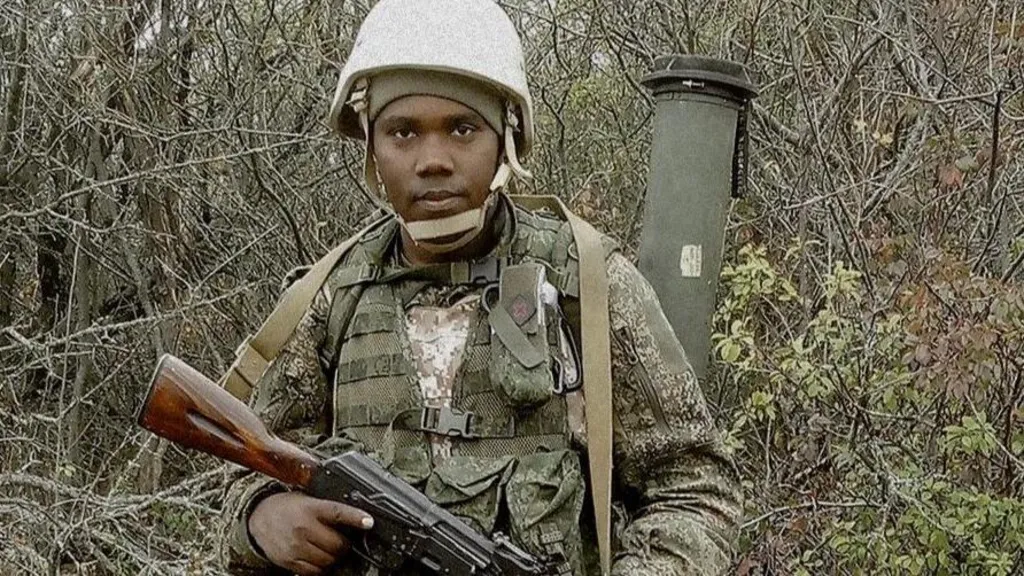
The Russian Embassy in Kenya has denied allegations that it facilitated the recruitment of Kenyan citizens to fight in the ongoing Russia–Ukraine war, following the release of a Kenyan intelligence report detailing an alleged trafficking and recruitment network.
The report, submitted to Parliament by Kenya’s National Intelligence Service (NIS), claims that up to 1,000 Kenyans may have been recruited to join Russian forces since the outbreak of the conflict in Ukraine. Of those, 89 were reportedly on the front lines as of February this year, while at least one Kenyan has died, dozens are injured, and 28 are missing.
Presenting the findings to lawmakers, Majority Leader Kimani Ichung’wah described the revelations as “deeply disturbing,” alleging the existence of a network involving rogue state officials and human trafficking syndicates.
According to the report, some recruitment agencies allegedly colluded with corrupt airport staff, immigration officials, officers from the Directorate of Criminal Investigations (DCI), anti-narcotics personnel, and officials from the National Employment Authority to facilitate travel arrangements for recruits.
Ichung’wah further alleged that certain staff within the Russian embassy in Nairobi and the Kenyan embassy in Moscow may have aided the issuance of visas.
Moscow Rejects Allegations
In a press statement dated February 19, the Embassy of the Russian Federation in Nairobi dismissed the claims as “dangerous and misleading propaganda.”
“At no point in time throughout the ongoing crisis in Ukraine has the Embassy ever issued visas to Kenyan citizens who sought to travel to Russia with the stated purpose of participating in the Special Military Operation (SMO) in Ukraine,” the statement said.
The embassy added that it has never encouraged Kenyan citizens to enlist, nor engaged in illegal recruitment schemes.

However, it noted that Russian law allows foreign nationals who are legally present in Russia to voluntarily enlist in the Armed Forces of the Russian Federation.
Government Response
The Kenyan government, which had previously estimated that around 200 of its nationals had been recruited, is now seeking diplomatic engagement with Moscow to prevent further enlistment.
Ichung’wah told Parliament that Kenya’s ambassador to Moscow must identify any officers who may have colluded with criminal networks.
“Our embassy must be beyond reproach. It must be the place where Kenyans can seek refuge, not exploitation,” he said.
He added that government institutions must not be used to facilitate criminal activities.
Kenya’s Foreign Ministry has yet to issue a formal response to the latest intelligence report.
Recruitment Tactics
According to investigators, recruiters targeted former military personnel, ex-police officers, and unemployed Kenyans aged between 20 and 50.
Prospective recruits were allegedly promised monthly salaries of up to KSh 350,000, alongside substantial signing bonuses. However, many reportedly found themselves deployed to front-line combat roles after minimal military training.
Initial travel routes reportedly involved departures from Jomo Kenyatta International Airport (JKIA) using tourist visas, with transit through Turkey and the United Arab Emirates. Following heightened surveillance, traffickers allegedly shifted operations to neighboring countries including Uganda and South Africa.
Authorities say investigations remain ongoing, with several suspects under active scrutiny and additional arrests expected.
The developments risk introducing diplomatic friction between Nairobi and Moscow at a time when Russia has been seeking to deepen engagement across Africa amid the prolonged conflict in Ukraine.