News
World Bank Injects Shs700Bn Into Uganda’s Public Investment System Overhaul

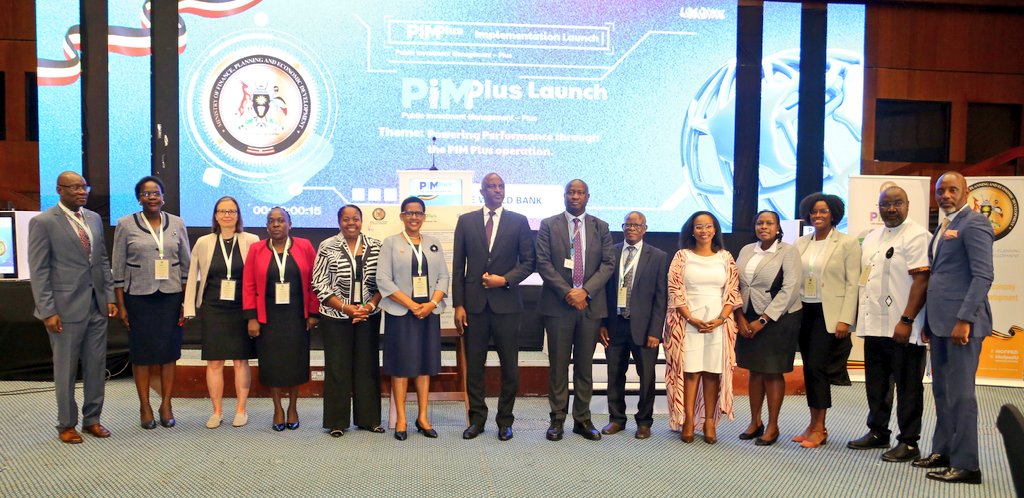
The Government of Uganda has today unveiled the USD 200 million Public Investment Management PLUS (PIM PLUS) Operation, a landmark reform programme aimed at overhauling how the country plans, prepares, executes, and manages public investments.
The initiative was launched by the Permanent Secretary and Secretary to the Treasury (PSST), Dr. Ramathan Ggoobi, who described it as a shift toward a results-based public investment culture. The programme is funded by the World Bank under a Program-for-Results (PforR) arrangement.
Dr. Ggoobi emphasized that PIM PLUS marks a departure from traditional financing models, saying the facility will only be disbursed upon achieving clearly defined Disbursement Linked Indicators (DLIs) and Intermediate Results Indicators (IRIs).

“PIM PLUS utilizes our own systems and disburses funds only when we achieve and verify the agreed results. This ensures resources are earned not by spending, but by improving processes and institutions,” the PSST noted.
He added that the result-driven approach will enhance accountability, empower institutions, and ensure public investments deliver measurable development outcomes.
The PIM PLUS program targets long-standing weaknesses in Uganda’s public investment management chain—especially in project preparation, execution, monitoring, maintenance, asset management, and mitigation of climate-related losses, which are estimated to cost the country over USD 140 million annually.
Of the total USD 200 million:
-
USD 40 million will support the Project Preparation Facility managed by the National Planning Authority (NPA).
-
USD 160 million will finance priority investment projects aligned with NDP IV and Uganda’s Tenfold Growth Strategy, notably through the implementation of the Accelerated Transformation Modalities (ATMs) and their enablers.
World Bank Applauds Uganda’s Reform Momentum
In its message, the World Bank congratulated Uganda for achieving this milestone and reaffirmed its commitment to supporting improved public investment efficiency. The Bank commended the Government for embracing a performance-based model expected to strengthen institutional capacity and deliver better value for money.