
News
Syria’s Fallen President Bashar al-Assad Sentenced to Death

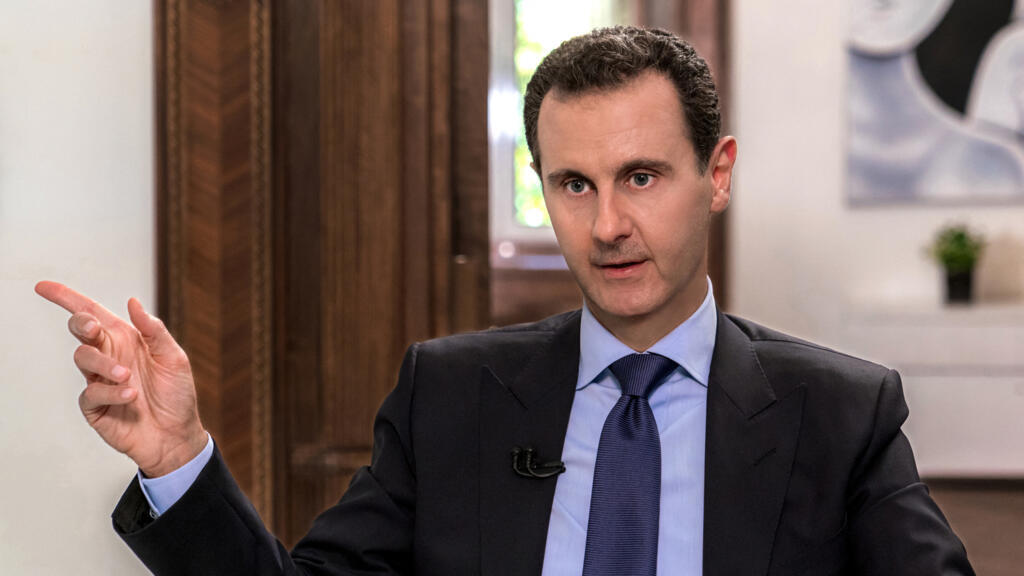
DAMASCUS, Syria — Former Syrian President Bashar al-Assad has been sentenced to death in absentia by a Syrian court over war crimes and crimes against humanity committed during the country’s devastating civil war, in a landmark legal move against the family that ruled Syria for more than five decades.
According to the Associated Press (AP), Assad’s younger brother, Maher al-Assad, and their cousin Atef Najib were also sentenced to death in connection with crimes committed during the conflict.
The ruling marks the first major judicial action against the Assad family since their regime collapsed in December 2024, bringing an extraordinary chapter in Syria’s modern history into the courtroom.
Assad and Maher were not present for the proceedings. Both fled Syria following the fall of the regime and are now in Russia, meaning the death sentences face significant challenges of enforcement.
Bashar al-Assad ruled Syria from 2000 until his government was overthrown in December 2024, succeeding his father, Hafez al-Assad, who had ruled the country for nearly three decades.
The Assad family’s rule was defined by tight political control and an extensive security apparatus. When anti-government protests erupted in 2011, the regime responded with a violent crackdown that eventually spiralled into a prolonged civil war.
The conflict killed hundreds of thousands of people and displaced millions, while international investigators and human rights organisations documented widespread allegations of torture, arbitrary detention, enforced disappearances and other serious abuses.
Maher al-Assad, who commanded Syria’s elite 4th Armored Division, was one of the most powerful figures in the former regime and was accused of playing a central role in the suppression of opposition to Assad’s rule.

Atef Najib, Assad’s cousin and former security chief in Daraa, was also sentenced to death. His forces were accused of violently suppressing early protests in Daraa in 2011, where the uprising against Assad’s government began.
The court’s decision opens a new and potentially consequential chapter in Syria’s post-Assad transition: whether senior figures from the former regime can be held accountable for abuses committed during the country’s long war.
But with Bashar and Maher al-Assad residing in Russia, the verdict is unlikely to result in their immediate arrest or execution.
For Syria’s new authorities, however, the ruling carries enormous symbolic weight — transforming the former president from the country’s most powerful figure into a convicted fugitive facing the ultimate punishment.
Source: Associated Press (AP)