News
Nile Geopolitics: Museveni Hosts Egypt’s FM, Calls for Unity Over River Use

Uganda’s president Yoweri Kaguta Museveni has reiterated the urgent need for cooperation among Nile Basin countries to preserve and sustainably utilize the Nile River.
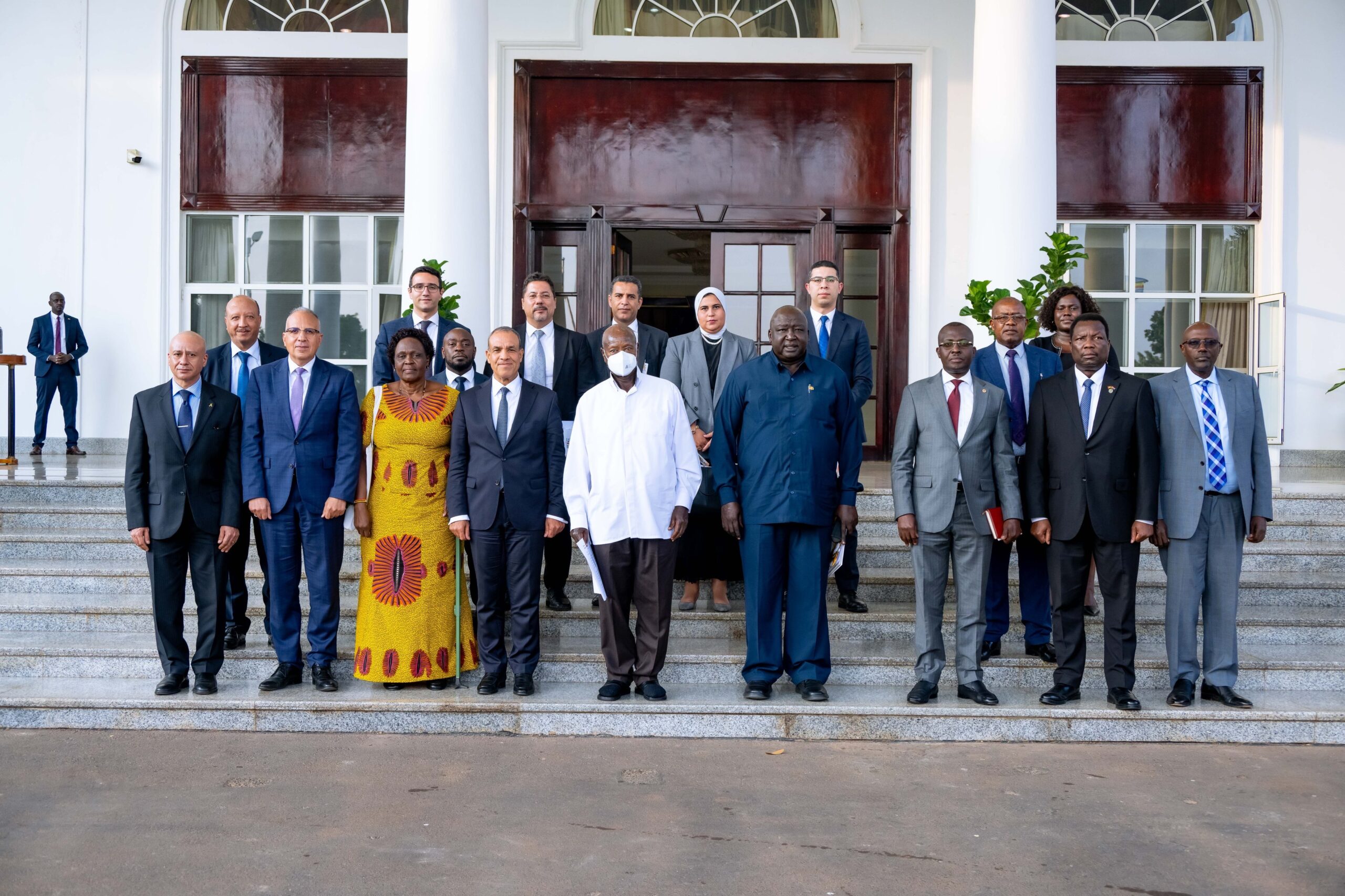
Speaking after a high-level meeting with Egypt’s Minister of Foreign Affairs, H.E. Dr. Badr Abdellaty, at State House Entebbe, President Museveni emphasized the shared responsibility of all stakeholders in ensuring the river’s long-term survival.
During the bilateral talks, the two leaders exchanged views on the future of the Nile and how best riparian states can collaborate on water security, environmental conservation, and development.
“We discussed a number of issues regarding the Nile and how best the stakeholding countries can work together to preserve, and make better use of it,” Museveni said.
He warned that deforestation and outdated farming methods pose a serious threat to the Nile’s sustainability.
“The problem of the Nile is lack of electricity in the tropics,” the President explained. “Communities like the Fellahin will use the trees for cooking, hence destroy the biomass, which in the end affects rain patterns and hurts the Nile.”
He further highlighted the risks of “primitive agriculture” which, when left unchecked, contributes to environmental degradation and reduced water flow.
Calling for proactive solutions, Museveni urged Nile Basin nations to convene high-level discussions aimed at harmonizing development with conservation.

“All stakeholding countries of the Nile must engage in high-level discussions on how best to utilise the Nile without jeopardising its existence,” he said.
The meeting between Uganda and Egypt comes at a critical time for Nile diplomacy, following Ethiopia’s announcement of the completion and upcoming inauguration of the Grand Ethiopian Renaissance Dam (GERD).
Egypt has consistently expressed concern over the dam’s potential impact on downstream water availability, while Ethiopia maintains that the GERD is a development project that poses no harm to its neighbours.
As one of the key upstream nations and a long-time advocate for regional integration, Uganda’s role in bridging the interests of Nile riparian countries is increasingly vital.
Museveni’s calls are part of Uganda’s long-held position that Africa’s shared resources must be used strategically to drive collective progress, not division.
Many believe Uganda’s diplomatic outreach could help foster renewed dialogue and a collaborative framework for managing one of the world’s most geopolitically sensitive waterways.