News
Madagascar’s ‘Robadob’ President, Once a DJ, Flees Amid Gen-Z Protests

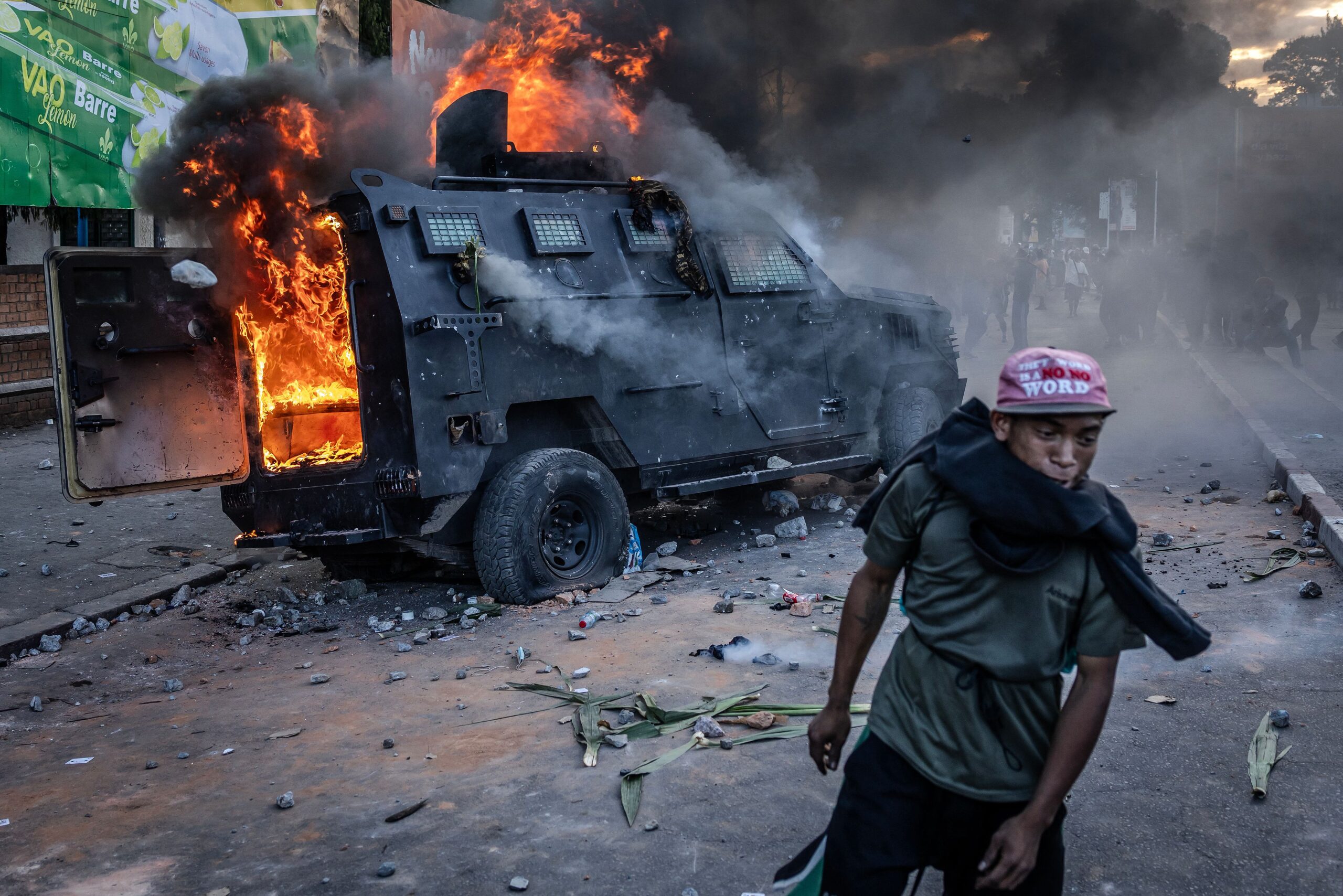
Madagascar’s President Andry Rajoelina has fled the country after weeks of nationwide protests and military defections, opposition figures and security sources confirmed on Monday, marking one of the most dramatic collapses of power in Africa this year.
The unrest, driven largely by young protesters demanding change, mirrors a global wave of Gen Z-led demonstrations that have shaken governments from Nepal to Morocco in recent weeks.
Flew Out on French Military Aircraft
Opposition leader Siteny Randrianasoloniaiko, head of parliament’s opposition bloc, told Reuters that Rajoelina left Madagascar on Sunday after elite army units joined protesters in the capital, Antananarivo.
“We called the staff of the presidency and they confirmed that he left the country,” Randrianasoloniaiko said, adding that the president’s current whereabouts remain unknown.
A military source said Rajoelina departed aboard a French Army Casa aircraft from Sainte Marie airport on Sunday. French radio RFI reported that the president had reached a deal with President Emmanuel Macron, who authorized the evacuation.
According to the source, “Five minutes after the Casa landed, a helicopter arrived and transferred its passenger into the plane. That passenger was Rajoelina.”
The presidency, which had earlier announced a national address for 7:00 p.m. local time, has not commented.
Army and Gendarmerie Turn Against the Government
The 49-year-old leader had grown increasingly isolated in recent days after losing the support of CAPSAT, an elite military unit that helped him seize power during the 2009 coup.

Over the weekend, CAPSAT refused orders to open fire on demonstrators, instead escorting thousands of them to Antananarivo’s main square. The unit later announced it was assuming control of the military and named a new army chief, a move Rajoelina condemned as an attempted coup before his departure.
On Monday, a faction of the paramilitary gendarmerie also sided with protesters, taking control of their headquarters in a symbolic ceremony witnessed by senior officials.
The Senate, which came under heavy criticism during the protests, later announced that its president had been relieved of duties. Jean André Ndremanjary was appointed acting Senate leader — and under Madagascar’s constitution, automatically becomes interim president in the event of a vacancy.
Youth Frustration Over Poverty and Corruption
The protests, which began on September 25 over water and power shortages, have evolved into a national uprising against corruption, unemployment, and poor governance.
“In 16 years, the president and his government have done nothing except enrich themselves while the people stay poor,” said Adrianarivony Fanomegantsoa, a 22-year-old hotel worker. “The youth — the Gen Z — suffer the most.”
At least 22 people have been killed in clashes since the demonstrations began, according to the United Nations.
With a population of 30 million, of which three-quarters live in poverty, Madagascar is among the poorest nations in Africa. The World Bank reports that the country’s GDP per capita has fallen 45 percent since independence in 1960, a rare case of long-term economic decline.
Despite being the world’s largest producer of vanilla, Madagascar’s economy also depends heavily on exports of nickel, cobalt, textiles, and shrimp — sectors now disrupted by the unrest.
A Wider Pattern of Global Youth-Led Movements
The fall of Rajoelina adds to a growing list of governments challenged by youth-driven protests demanding accountability and reform. In Nepal, the prime minister resigned last month following similar demonstrations, while in Morocco, mass rallies have called for an overhaul of political and economic systems.
Analysts say the events in Madagascar could reverberate across the Indian Ocean and African mainland, testing the response of regional bodies such as the African Union (AU) and Southern African Development Community (SADC).
For now, the streets of Antananarivo remain filled with chanting protesters — many waving the national flag and declaring victory over what they call “years of betrayal.”
“The president must quit now,” the crowd shouted on Monday, echoing a sentiment that has united a generation.