
Inside Japan’s Support for Uganda’s Development: A Journey Through JICA’s Longstanding Projects
November 5, 2024
By Alex Masereka Joel
On 30th October, members of the fourth estate were given a glimpse into what the government of Japan is doing to support Uganda's development.
The tour organised under the auspices of the Japan International Cooperation Agency (JICA) together with Japan Embassy in Kampala, provided an in-depth look into the life changing projects supported by the Asian giant in her 62 years of friendship with Uganda.
From agricultural innovation to technical education and power infrastructure, Japan’s contributions demonstrate a long-standing commitment to sustainable development in Uganda.
The tour, led by Japanese Ambassador Sasayama Takuya and JICA’s Chief Representative Inoue Yoichi, provided a first-hand look at the impact these initiatives have made on communities across Uganda. Through the voices of Ugandan experts, trainers, and JICA representatives, the tour illuminated Japan’s enduring investment in the country.
Regional Rice Research and Training Centre: A Ground-Breaking Approach to Agriculture
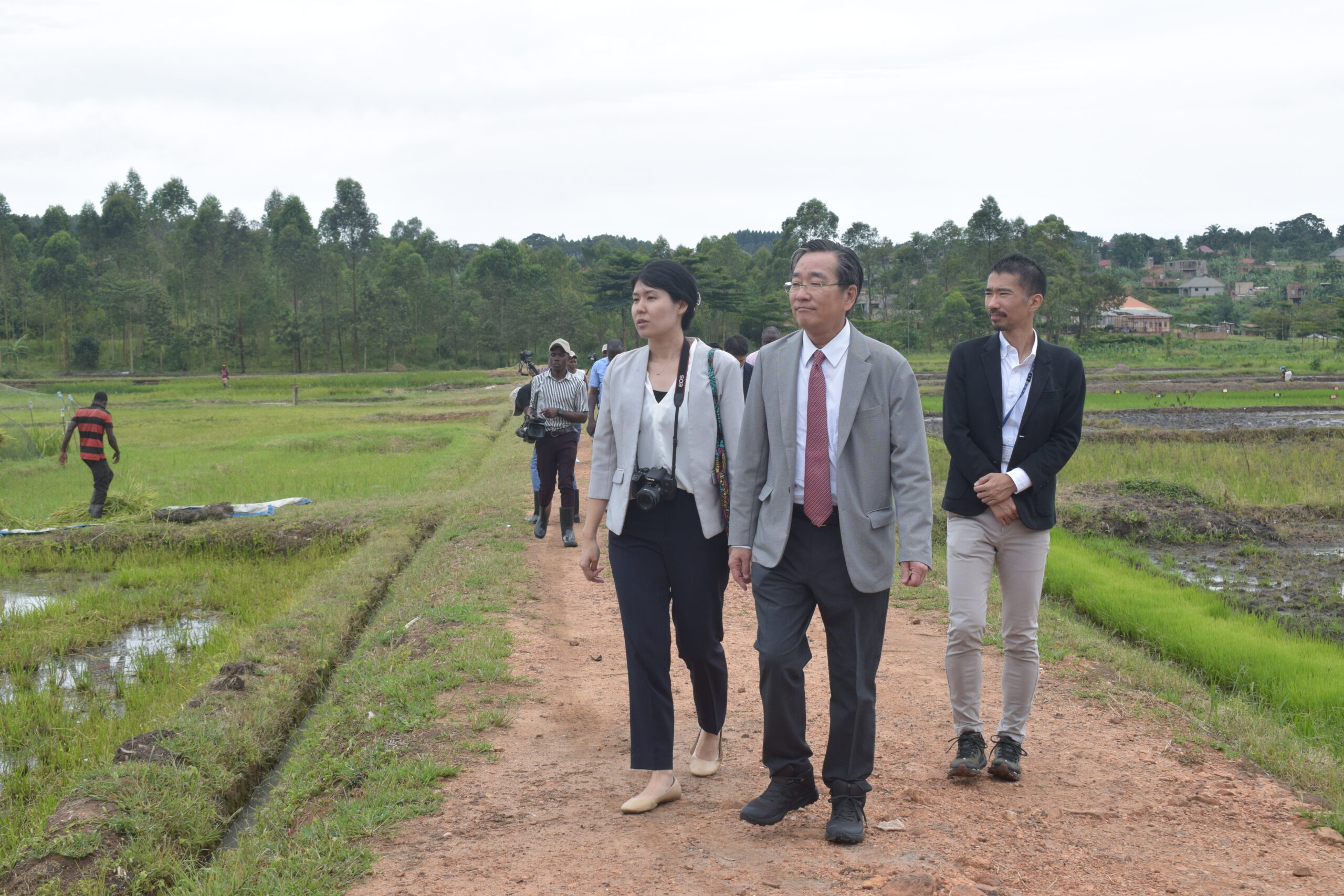
Last week's tour began at the Regional Rice Research and Training Centre (RRRTC) at the National Crops Resources Research Institute (NaCRRI) in Namulonge, where Japan’s assistance has been instrumental in promoting rice cultivation across Uganda.
NaCRRI forms part of the structure of the National Agricultural Research Organization (NARO), which falls under the the Ministry of Agriculture, Animal Industry and Fisheries (MAAIF).
As part of the Promotion of Rice Development (PRiDe) Projects, these initiatives aim to improve both the quantity and quality of rice production. Agronomist Dr. Simon Alibu explained that the project’s “learning by doing” approach has transformed the lives of local farmers by equipping them with hands-on skills.
“Through this initiative, we’ve trained over 13,000 farmers, extending knowledge and technologies that boost rice productivity. Farmers are now actively applying what they’ve learned to improve their yield and quality,” said Dr. Alibu.


JICA’s support has expanded the area under rice cultivation by over 10,000 hectares and has boosted rice production by over 20,000 metric tons, benefitting both rural Ugandan communities and refugees.
Dr. Odama Emmanuel, one of the lead researchers, emphasized the importance of Japan’s collaborative spirit in achieving these outcomes: “This project is not just about rice; it’s about empowering people. Japan’s partnership has given us the tools to improve livelihoods in practical and sustainable ways.”
Dr Joji Miyazawa led the guided tour of the different rice fields, explaining at how their research is helping in formulating better yields of rice that they hope to release into the market with MAAIF's approval.
The group was also joined by Dr. Kisho Miyamoto, a JICA consultant who has worked closely with the NaCRRI team. Reflecting on the project’s objectives, he noted, “Our goal has always been to blend technical expertise with local knowledge. We want the farmers to take ownership, and we are seeing this approach work with visible results.”
Namulonge's tour ended with a rice tasting ceremony.
Nakawa Vocational Training College: Skilling Uganda’s Youth
At the Nakawa Vocational Training College, one of Uganda’s premier institutions for Technical and Vocational Education and Training (TVET), the delegation saw Japan’s commitment to skill development in action. Since the college’s establishment in 1971, JICA’s support has included providing machinery, training, and infrastructure for trades like electricity, motor vehicle maintenance, and welding.
Mr Patrick Asiimwe, a master trainer at the college who recently completed training in Japan, led the group, sharing his perspective on JICA’s invaluable role.
“It’s not just about teaching skills; it’s about creating a self-sustaining workforce. I went to Japan and saw how they do things – the attention to detail, the emphasis on hands-on learning. Bringing that experience back here has helped me transform my approach to training our students,” Asiimwe said.


The tour also included the Deputy Principal, Mr Michael Rujumba, who spoke about the impact of JICA’s support over the years: “We began with just a few trades, and now we have expanded to 26 courses. JICA has helped us grow by continuously supplying us with modern equipment and training our instructors. This support has turned Nakawa into a center of excellence not only for Uganda but also for neighboring countries.”
JICA’s Third Country and In-country Training programs have had a regional impact, with instructors from Kenya, Tanzania, Zambia, Eritrea, and Uganda participating. JICA has also been instrumental in integrating emerging fields such as factory automation, digital technology, and electric fuel injection, ensuring that the curriculum remains relevant to today’s industries.
Uganda Electricity Transmission Company Ltd. (UETCL): Enhancing Power Stability
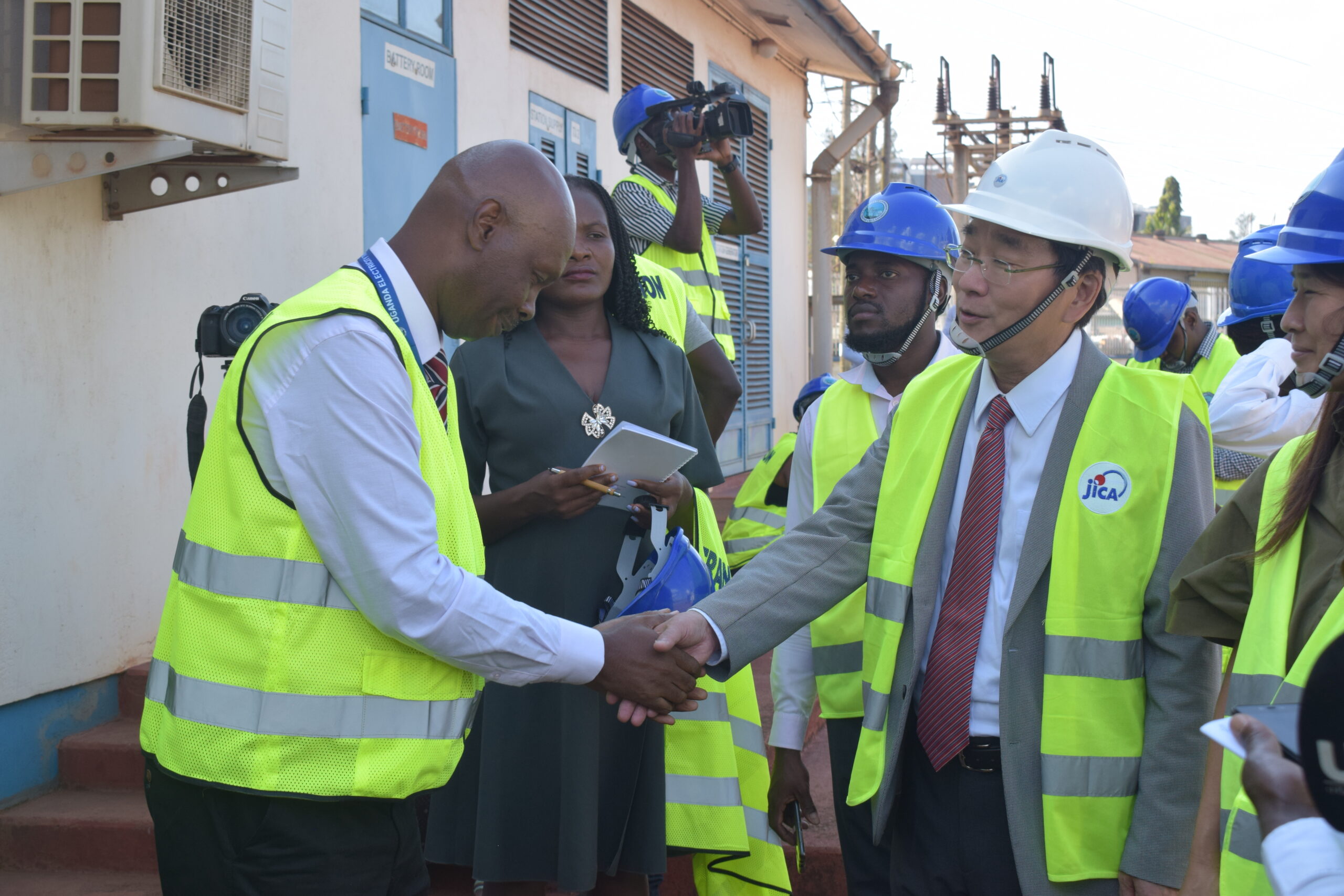
The final leg of the tour took place at the Lugogo substation of the Uganda Electricity Transmission Company Ltd. (UETCL), where JICA has played a crucial role in upgrading Uganda’s power infrastructure. JICA recently donated equipment for power system stability, including fault recorders and servers, to support UETCL’s efforts in monitoring and analyzing outages. Deputy CEO Richard Matsiko, who welcomed the delegation, emphasized how JICA’s support has improved Uganda’s power grid.
“This equipment has revolutionized our work. We can now analyze faults and outages much more effectively, reducing downtime and helping us to deliver more reliable power. Japan’s assistance has enabled us to achieve stability that benefits both industries and households,” Matsiko explained.
For JICA’s Chief Representative, Inoue Yoichi, the projects are part of Japan’s larger commitment to Uganda’s future.


Japan’s Official Development Assistance (ODA) has spanned over 70 years, and in Uganda, this partnership has consistently focused on impactful projects. Through agriculture, vocational training, and energy, our aim is to foster a strong, independent Uganda.
Reflections on a Long-Standing Partnership
The tour highlighted Japan’s extensive contribution to Uganda, beginning in the 1960s and encompassing sectors such as health, agriculture, education, and infrastructure. As Ambassador Sasayama Takuya noted, the success of these projects is due to the close collaboration between Japan and Uganda.
“These projects are built on mutual respect and a shared commitment to progress. What we’ve seen today is the outcome of decades of cooperation, with JICA’s projects contributing directly to Uganda’s growth,” Sasayama said.
With over 40,000 farmers trained and tens of thousands of students empowered at Nakawa College, Japan’s influence has been instrumental in shaping a skilled, productive population in Uganda. From agriculture to technical training and power stability, JICA’s initiatives are ensuring that Ugandans are prepared for the challenges and opportunities of tomorrow.





UG Diplomat is an independent digital news and media platform dedicated to comprehensive coverage of national politics, regional diplomacy, international relations, geopolitics, defense, and business. Published under Currentarc Media Ltd, we provide authoritative analysis, breaking news, and in-depth reporting on the diplomatic and economic developments shaping East Africa and the global arena.
COMPANY
Contact Us
Privacy Policy
Terms and Conditions
CONTACT INFORMATION
info@ugdiplomat.com
+256774552385
Copyright © 2026 UG Diplomat -Product of CURRENTARC MEDIA