News
HISTORIC! UN Vote Declares Enslavement of Africans Humanity’s Gravest Crime; U.S., Israel Vote No

The United Nations General Assembly has adopted a landmark resolution unequivocally condemning the trafficking of enslaved Africans and the transatlantic slave trade as the most inhumane and enduring injustice against humanity.
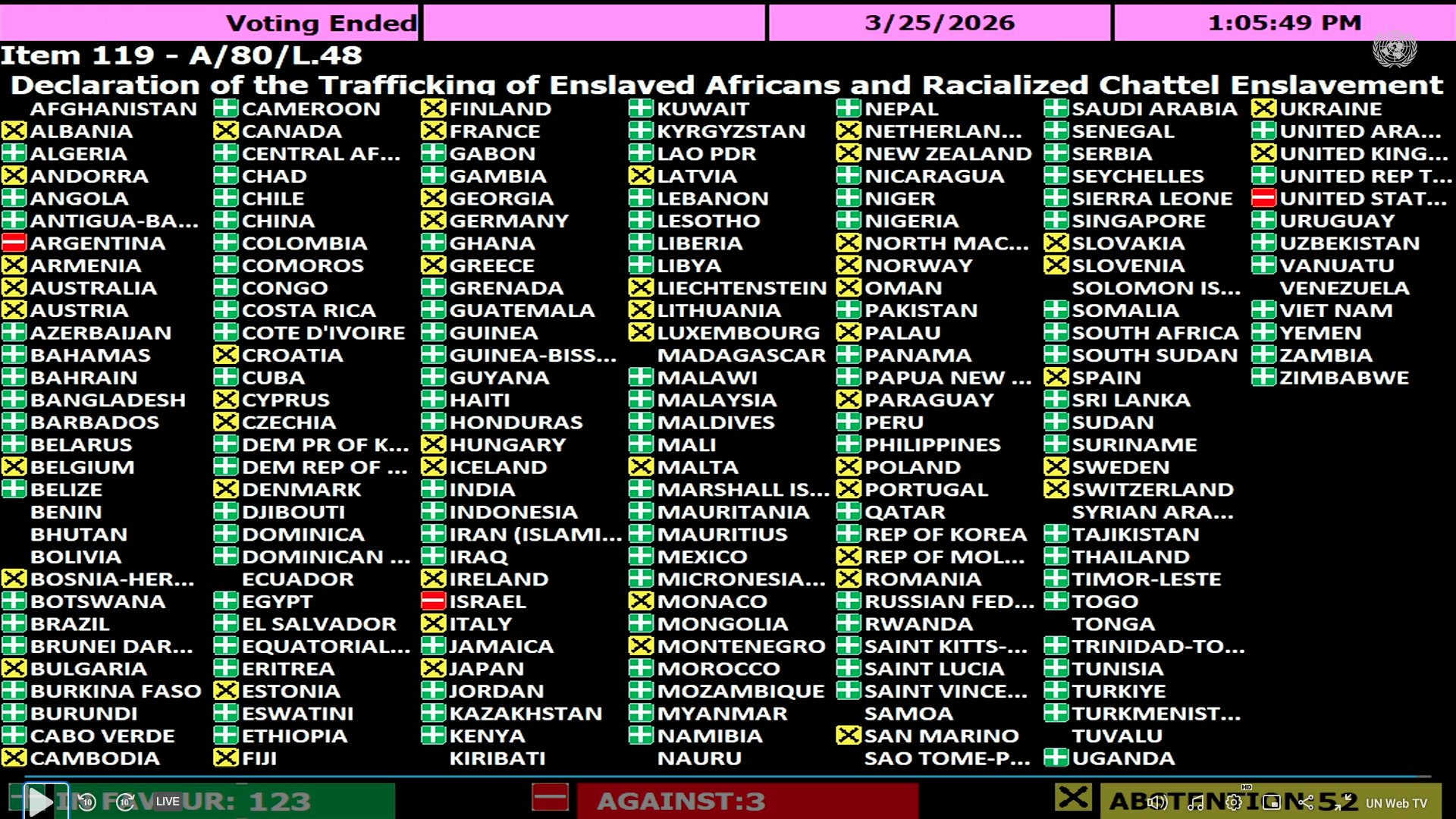
The resolution passed with overwhelming support, with 123 countries voting in favour, three voting against, United States, Israel, and Argentina, and 52 abstaining.
The vote marks a major diplomatic milestone for Ghana, whose President John Dramani Mahama had announced earlier that his country would table a motion seeking formal global recognition of the transatlantic slave trade as a grave crime against humanity, with backing from the African Union and Caribbean nations.
“Today, we come together in solemn solidarity to affirm truth and pursue a route to healing and reparative justice,” President Mahama said before the vote.
The resolution also calls for reparations as “a concrete step towards remedying historical wrongs.”
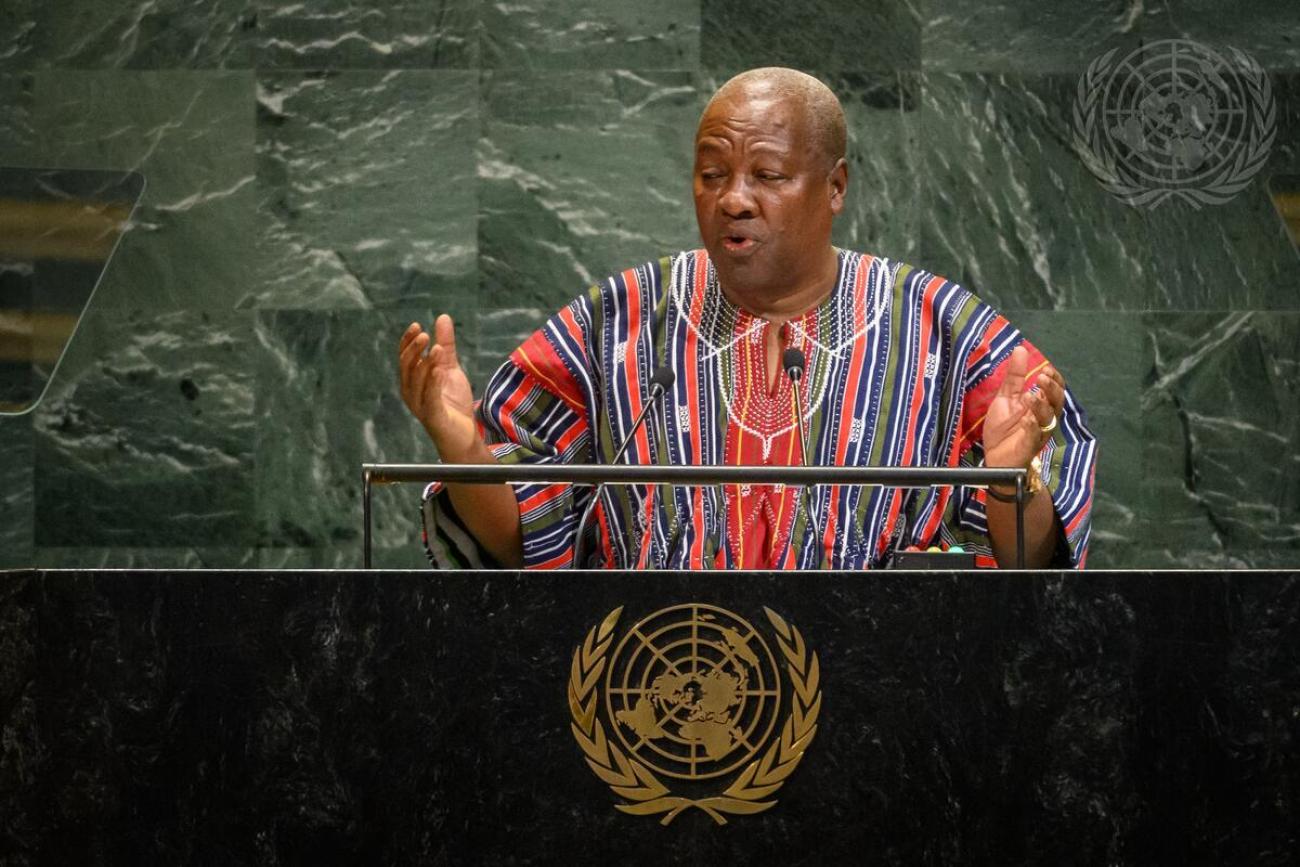
Ghana’s President John Dramani Mahama tabled the resolution
Recognition of Lasting Harm
Beyond condemnation, the resolution acknowledges the profound and enduring consequences of slavery and colonialism, noting their lasting social, economic, and political impacts on Africa and people of African descent worldwide.
It further emphasizes that claims for reparations constitute a concrete step toward addressing historical injustices inflicted by centuries of enslavement and exploitation.
The transatlantic slave trade forcibly removed millions of Africans from their homelands over several centuries, fundamentally reshaping societies across Africa, the Americas, and the Caribbean.

Push for Historical Justice
African and Caribbean states have increasingly pressed the international community to formally recognize the scale of the injustice and to address its ongoing legacy. Advocates argue that structural inequalities rooted in slavery and colonial rule continue to affect development outcomes today.
For Ghana and its partners, the adoption of the resolution represents a significant step toward what leaders have described as restoring historical truth and dignity to the descendants of enslaved Africans.
The resolution carries substantial political and moral weight and is expected to intensify global debate over reparatory justice, historical accountability, and the long-term effects of colonialism.