
Fatuma Nabuulime’s Journey from Childhood Hardship to University Graduation Reframes Uganda’s Disability Debate
October 24, 2026
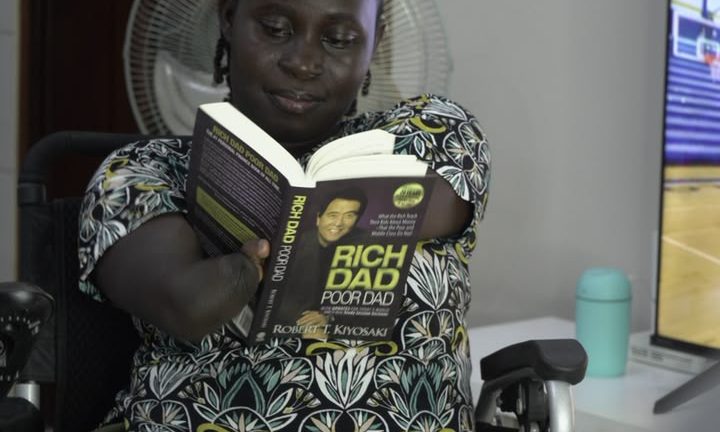
KAMPALA, Uganda — Fatuma Nabuulime, widely known online as Wonder Gal, has emerged as a public figure whose personal journey brings attention to the relationship between disability, childhood vulnerability, access to education and the possibility of greater independence.
Her graduation from Makerere University with a Bachelor’s degree in Social Work and Social Administration marks a significant milestone in a life shaped by barriers that extend beyond physical disability. Her experience also raises questions about the social and institutional support available to children with disabilities in Uganda.
Nabuulime was born in Kisekka Village in Lwengo District with amelia, a congenital condition involving the absence of one or more limbs. Accounts of her early life describe circumstances in which poverty and limited access to support left her vulnerable during childhood.
At approximately five years old, she was taken to Kampala by relatives who reportedly promised opportunities for medical care and education. Instead, she experienced street begging and a prolonged interruption to her schooling.
Her childhood illustrates how disability can intersect with poverty and inadequate protection to expose children to exploitation. It also highlights the importance of systems that ensure vulnerable children can access education, healthcare and safe family or community support.
The difficult road to education
Nabuulime’s return to formal education did not remove every obstacle. She had to navigate learning environments that were not necessarily designed around the needs of students with significant physical disabilities.

Conventional classroom arrangements often assume that learners can write by hand, manipulate books and materials, move independently between facilities and complete examinations under standard conditions.
For a student who cannot use her hands, these assumptions can create substantial barriers. Nabuulime developed alternative ways to complete schoolwork, including holding a writing instrument in her mouth.
Her experience demonstrates the difference between allowing a learner to enrol and providing the support needed for that learner to participate fully.
Accessible education may require reasonable examination accommodations, appropriate facilities, suitable learning materials and staff who understand different accessibility needs. Where such measures are unavailable, students can be forced to expend additional effort simply to meet the same academic requirements as their peers.
Nabuulime continued through the education system and eventually gained admission to Makerere University through a government scholarship programme for students with disabilities, according to published accounts of her journey.
Her graduation represents an individual achievement while drawing attention to the importance of accessible educational opportunities for other students facing similar barriers.
The emergence of Wonder Gal
During her studies, Nabuulime developed a public identity as Wonder Gal through social media, particularly TikTok.
Her content documents aspects of everyday life, including preparing food and managing household tasks. These videos provide audiences with a view of how she adapts ordinary activities to her physical circumstances.
The significance of this content extends beyond its entertainment value. It allows Nabuulime to present her own experiences rather than having her identity defined exclusively by other people’s assumptions about disability.
People with disabilities are often represented in public discussions through narratives of dependency or charity. Although support services are important, such representations can overlook individual agency, skills, ambition and the right to make personal choices.
By sharing her daily activities, Nabuulime presents a more complex picture of life with a disability. She is simultaneously a university graduate, a digital creator and an individual navigating the practical demands of everyday life.
Her growing public profile has also created an opportunity to bring disability inclusion into conversations reaching audiences beyond conventional advocacy spaces.
Beyond an inspirational narrative
Stories of individuals overcoming difficult circumstances can attract considerable public attention. However, focusing only on personal determination risks overlooking the institutions and support systems that influence whether other people can access similar opportunities.
Nabuulime’s experience raises questions about the protection of children with disabilities, the accessibility of schools and universities, and the availability of social services for families experiencing poverty.
It also illustrates the contribution that civil society organisations can make when vulnerable people are connected with educational and community support.
The challenge for policymakers and service providers is to make such opportunities more widely available rather than allowing access to depend on exceptional circumstances or individual interventions.
Uganda’s Persons with Disabilities Act, 2020, provides a legal framework for protecting the rights of persons with disabilities. Its practical impact depends on implementation across education, employment, public infrastructure and other areas of everyday life.
A new chapter after graduation
Nabuulime’s degree in Social Work and Social Administration gives her an academic foundation relevant to understanding social welfare, community support and the challenges faced by vulnerable groups.
Published accounts have also described her interest in supporting children and young people with disabilities. Any proposed organisation or programme associated with those ambitions will need appropriate planning, resources and partnerships before its intended impact can be assessed.
Her next chapter may therefore bring together personal experience, academic training and the public platform she has developed as Wonder Gal.
The broader significance of her journey lies not in suggesting that every person with a disability must become an online personality or overcome every barrier through individual effort. Rather, it demonstrates why access to education, protection and opportunity matters.
Nabuulime’s graduation is an important personal milestone. It is also an opportunity to examine the conditions that allow people with disabilities to participate in society on their own terms.
Her experience leaves a wider question for Uganda: how can the country ensure that education, dignity and economic opportunity become realistic expectations for people with disabilities, rather than achievements available only to a fortunate few?


UG Diplomat is an independent digital news and media platform dedicated to comprehensive coverage of national politics, regional diplomacy, international relations, geopolitics, defense, and business. Published under Currentarc Media Ltd, we provide authoritative analysis, breaking news, and in-depth reporting on the diplomatic and economic developments shaping East Africa and the global arena.
COMPANY
Contact Us
Privacy Policy
Terms and Conditions
CONTACT INFORMATION
info@ugdiplomat.com
+256774552385
Copyright © 2026 UG Diplomat -Product of CURRENTARC MEDIA