News
East Africa’s Women-Led SMEs Push for Financing and Market Access Through Herizon Initiative

Women-driven businesses from Uganda and Kenya gathered in Nairobi for a high-level regional convening aimed at accelerating growth, strengthening cross-border collaboration, and expanding access to finance.
The event, organized by SHONA Group in partnership with Welthungerhilfe (WHH) and supported by Germany’s Federal Ministry for Economic Cooperation and Development (BMZ), took place at the Swiss Belinn Hotel Nairobi in Kenya’s capital.
Held under the theme “Building Bridges for Business & Impact,” the gathering marked a key milestone in the Herizon Project, a strategic initiative designed to expand economic opportunities for women entrepreneurs and improve access to life-enhancing products and services across Kenya and Uganda.
The Herizon Project targets ecosystems where women are highly active in enterprise creation but remain underserved in access to capital, markets, and regional networks. By bringing together founders, gender-lens investors, ecosystem players, and business development leaders, the initiative seeks to build enterprises capable of sustainable scaling across East Africa.

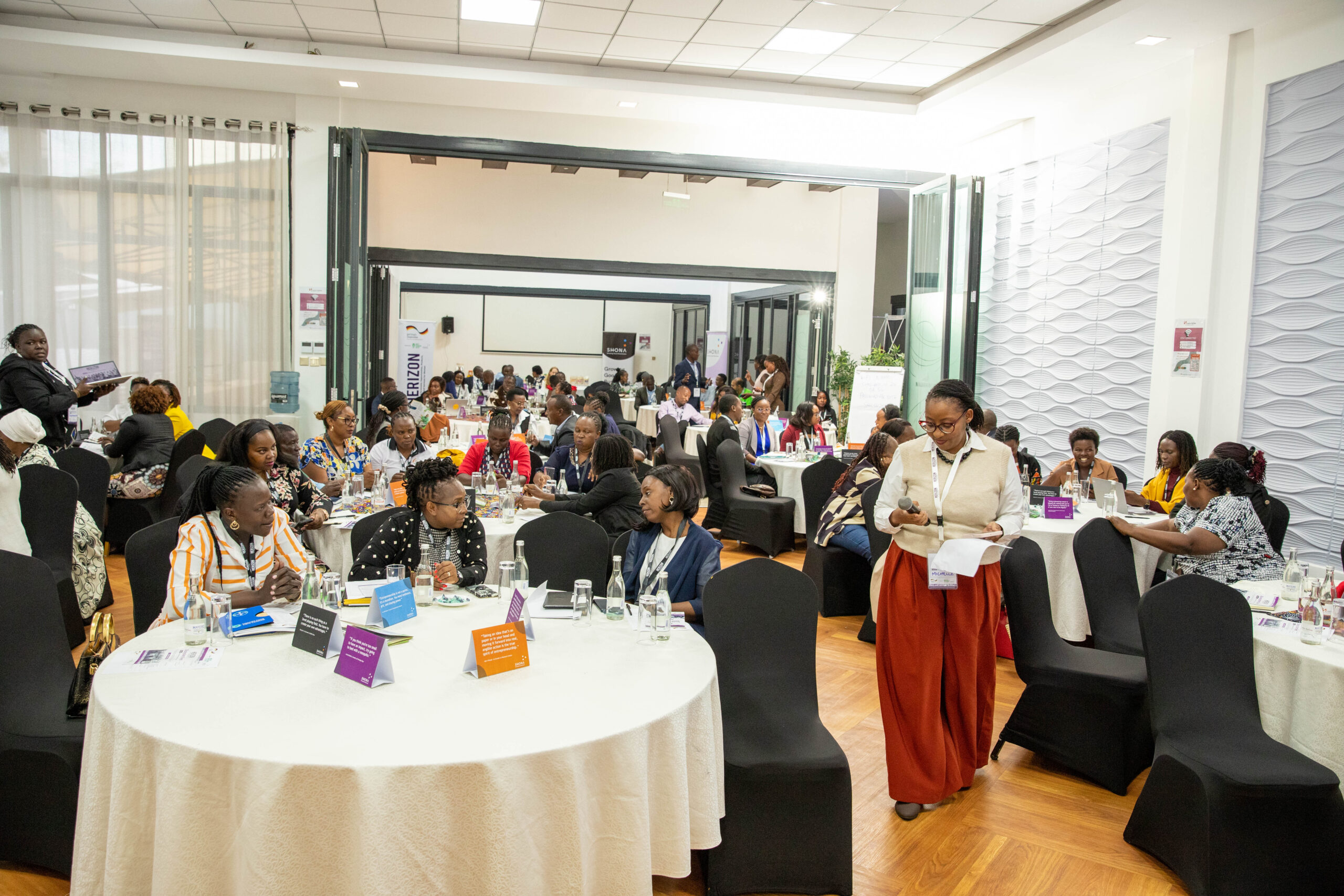
Herizon entrepreneurs and Ecosystem players gathered in Nairobi to discuss oppportunities for women-led business in Kenya and Uganda
SHONA is an East African enterprise support organization focused on developing high-potential businesses through capacity building, investment facilitation, and network connections. The organization aims to positively impact 35 million people through 1,000 ‘Good Businesses’ by 2030.
Participants engaged in expert-led discussions on three key drivers of growth:
-
Increasing sales and market reach
-
Strengthening women’s participation in value chains
-
Expanding access to investment capital
Forty-one enterprises showcased solutions spanning agriculture, climate-smart food production, nutrition, water and sanitation (WASH), digital innovation, skills development, and economic empowerment.
SMEs: Backbone of East Africa’s Economy
The convening highlighted the outsized role small and medium enterprises play in both countries’ economies:
-
In Kenya, SMEs account for about 98% of all businesses and roughly 40% of GDP
-
In Uganda, SMEs make up about 90% of the private sector, employ over 2.5 million people, and contribute around 20% to GDP
Despite this importance, many women-led enterprises still struggle with limited financing and restricted access to regional markets.
Gloria Achiro, CEO of Uganda’s Jather Farmers, emphasized the transformative impact of cross-border platforms:
“When investors, partners, and entrepreneurs are actively looking for collaboration, you begin to think beyond local limitations. Cross-border learning expands both your market and your mindset.”

Participants at the Herizon convening in Nairobi discuss high-impact opportunities for women-led enterprises in Kenya and Uganda.
WHH’s Jovia Nampiina noted that strengthening women-led enterprises, especially in climate-sensitive sectors, delivers both economic returns and community resilience against climate change.
Building “Good Businesses” for Long-Term Impact
For SHONA Group, the meeting reflects a broader strategy to cultivate what it calls “Good Businesses” enterprises that generate value for customers, employees, communities, and the environment, not just owners.
CEO Joachim Ewechu underscored that sustainable development in East Africa requires coordinated ecosystem building rather than isolated interventions:
“When women-led enterprises are connected to affordable capital and strategic networks, the result is structural transformation.”