News
DRC, Rwanda Renew Security Commitments as Peace Deal Enters Critical Phase


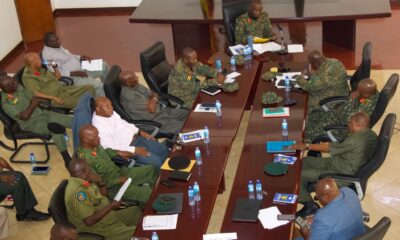
The Democratic Republic of Congo (DRC) and Rwanda have renewed efforts to implement the security provisions of their Washington peace agreement, holding the sixth meeting of the Joint Security Coordination Mechanism (JSCM) amid continued concerns over instability in eastern Congo.
This meeting was held on August 12–13, 2026, with representatives of the two countries participating alongside international partners supporting implementation of the agreement, according to a joint statement issued by the United States Department of State.
The JSCM is a central component of the peace framework signed by the DRC and Rwanda and is responsible for coordinating the security-related commitments made by the two governments.
Among its key responsibilities are implementation of the plan for the neutralisation of the Democratic Forces for the Liberation of Rwanda (FDLR), the disengagement of forces and the lifting of Rwanda’s defensive measures in the DRC. The mechanism also provides a platform for intelligence and information sharing between Kinshasa and Kigali.
The latest meeting comes as Washington-backed efforts to consolidate the DRC-Rwanda peace process enter a crucial implementation phase.
Signed in Washington in June 2025, the deal was designed to address the longstanding security crisis in eastern Congo and establish a framework for normalising relations between Kinshasa and Kigali. Its implementation has involved the United States, Qatar and the African Union as supporting partners.
The sixth JSCM meeting follows previous efforts to translate the political commitments of the peace agreement into concrete security measures.
The mechanism’s work is particularly significant because the agreement links Rwanda’s military disengagement and lifting of defensive measures to progress in addressing the threat posed by the FDLR.

The United States, Qatar and the African Union have continued to support the implementation process, with the African Union also involved in verification and coordination efforts.
In June, the parties and their international partners agreed to work through the JSCM to exchange intelligence and establish a shared understanding of the next steps required to implement the Washington Accords. They also called for conditions that would enable joint verification processes to proceed.
The latest meeting therefore represents another attempt to move the peace agreement from political commitments towards practical implementation on the ground.
A delicate security balance
The security dimension remains one of the most difficult aspects of the DRC-Rwanda peace process.
For Kinshasa, the neutralisation of the FDLR remains an important component of restoring security and addressing Rwanda’s longstanding concerns about armed groups operating from Congolese territory.
For Kigali, the lifting of defensive measures is closely linked to credible action against threats it says originate from armed groups in eastern Congo.
The Washington agreement seeks to address both concerns through coordinated security arrangements rather than unilateral action.
The JSCM was established specifically to facilitate that process and to provide a structured channel through which the two countries can coordinate sensitive military and security matters.
Wider regional implications
The progress of the DRC-Rwanda peace agreement carries significance beyond the two countries.
Eastern Congo has endured decades of armed conflict involving multiple armed groups, foreign forces and regional interests. Continued instability has also generated major humanitarian consequences and strained relations among countries in the Great Lakes region.
The United States has positioned the Washington agreement as a pathway towards both peace and greater regional economic cooperation. Earlier implementation efforts have included discussions on energy, infrastructure, mineral supply chains, national parks and public health.
The security mechanism is consequently important not only for military disengagement but also for creating conditions in which broader economic and regional cooperation can take place.
The road ahead
The sixth meeting does not by itself resolve the longstanding security disputes between Kinshasa and Kigali, but it demonstrates that the formal mechanisms established under the peace agreement remain active.
The central challenge now is translating agreements reached through the JSCM into verifiable actions on the ground.
For the Washington peace process to produce a durable settlement, progress will depend on sustained implementation by both governments, credible verification and continued engagement by the United States, Qatar and the African Union.
The latest meeting is therefore another important test of whether the DRC-Rwanda peace agreement can move beyond diplomatic commitments and deliver measurable security improvements in eastern Congo.