
Analysis
KISANJA NO SLEEP: BALAAM’S ANTI-CORRUPTION FIGHT AND THE MORAL DUTY TO PROTECT UGANDA

Published
1 day agoon
Uganda has entered a new political season with a simple but profound message from President Yoweri Kaguta Museveni of Kisanja No Sleep.
When President Museveni was sworn in for another term on my birthday 12th May 2026, he called upon Ugandans to embrace a period of intensified work, wealth creation, value addition and national transformation. In his official inauguration speech, his declaration that the new kisanja should be regarded as a kisanja of no more sleep, my young brother Hon. Balaam got the message clearly and went to the “bush” to amplify the message.
if Uganda is truly going to have a Kisanja No Sleep then our main enemy against which the country cannot afford to sleep is corruption.
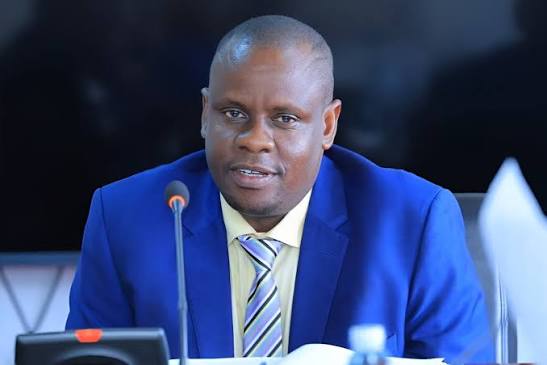
This is where the work of Hon. Balaam Barugahara Ateenyi becomes politically and morally significant.
Balaam has increasingly positioned himself at the frontline of the government’s effort to expose misuse of public resources and demand accountability from local leaders and technical officials. In July he launched a nationwide campaign in Bulambuli under the banner “Expose and Fight Corrupt Officials in Local Governments” and his message was blunt: government had not gone to Bulambuli for flowers but it had gone to work. That is the kind of language the corruption fight requires.
Uganda does not need another season of speeches in which leaders condemn corruption from podiums while the thieves continue doing business behind closed doors.
We need action.
We need inspection.
We need investigation.
We need recovery of stolen resources.
We need prosecution where evidence establishes criminal conduct.
And most importantly, we need a political culture in which nobody believes that public office is a personal ATM.
Corruption is theft from the ordinary Ugandan
The greatest misunderstanding about corruption is that it is victimless.
It is not.
When a government official inflates the cost of a public project, the difference is ultimately paid by the Ugandan taxpayer.
When money meant for a health centre disappears, a mother may travel farther to seek treatment.
When funds meant for a school are misused, children study in inadequate conditions.
When money allocated for roads is diverted, farmers pay the price through poor transport and lost markets.
When local taxes are collected but services remain poor because resources are mismanaged, the citizen is effectively being robbed twice.
That is why the fight against corruption must never be reduced to political drama as some political actors are already posturing.
It is an economic fight.
It is a governance fight.
It is a development fight.
And ultimately, it is a moral fight.
The Bible has spoken about this problem for thousands of years.
Proverbs 15:27 warns that greed brings ruin, while the person who rejects dishonest gain is commended. Exodus 23:8 warns against bribery because it can corrupt judgement and distort justice.
These are not merely ancient religious teachings. They describe precisely the danger Uganda faces today.
A public servant who steals from the government is not simply stealing from an institution in Kampala. He or she is stealing from the citizen in Kasese, the farmer in Luwero, the student in Namisindwa, the trader in Mbale and the patient waiting for medicine in a rural health facility.
Balaam is taking the fight to the local level
One of the most important features of Balaam’s current approach is that he is taking the anti-corruption fight beyond Kampala and into the districts where government programmes actually touch the lives of citizens.
That matters.
For many Ugandans, government is not an abstract concept. Government is the road outside their home. It is the health centre in their village. It is the government school their children attend. It is the market where they sell their produce. It is the Parish Development Model money they expect to access.
If government resources are mismanaged at the local level, the citizen feels the consequences immediately and the actions by Hon. Balaam demonstrate this approach.
In Namisindwa, Balaam directed security agencies to investigate allegations surrounding the purchase of land intended for Luwa Town Council offices. The reported figures raised questions about a substantial difference between the stated purchase price and the amount local leaders said the land was actually worth. Balaam called for investigation and recovery of any public funds found to have been lost. These remain allegations requiring due process and evidence and this is the spirit of the fight.
In Fort Portal City, he demanded disciplinary action over garbage-management failures and raised concerns about possible corruption where resources and local taxes existed but services were not being delivered adequately.
In Mbale, he raised concerns about the quality of work on the Budwale road project after residents alleged that the materials used were inadequate and he ensured the allegations are investigated properly, but the important principle is that public projects should not be treated as private feeding grounds.
And in Namisindwa Secondary School he intervened after concerns over illegal charges imposed on students at a government-aided institution. These interventions send an important political message.
Government money must produce government services.
Kisanja No Sleep must mean No Sleep for thieves
President Museveni’s “Kisanja No Sleep” cannot simply mean working harder to build Uganda.
It means working harder to protect what Uganda already has.
There is little value in appropriating billions for infrastructure if a percentage disappears before the project reaches the ground.
There is little value in expanding government programmes if the money intended for citizens is captured by officials and intermediaries.
There is little value in increasing Uganda’s national budget if leakages continue to undermine service delivery.
Parliament approved an Shs84.3 trillion budget for the 2026/27 financial year.
That is an enormous national commitment.
Every Ugandan should therefore ask a straightforward question:
How much of every shilling appropriated actually reaches the intended beneficiary?
That question should not be regarded as hostility towards government.
It is patriotism.
Indeed, citizens demanding accountability are helping government achieve its own objectives.
The Bible and the politics of public service
There is a powerful biblical principle in Luke 12:48: “From everyone who has been given much, much will be demanded.”
Public office is one of those responsibilities.
A minister has been given much.
A permanent secretary has been given much.
A chief administrative officer has been given much.
A district leader has been given much.
A procurement officer has been given much.
A political leader has been given much.
And therefore, much is demanded from them.
The Bible also says in Romans 13:4 that authority exists to serve the good.
That is the essence of public service.
Leadership is not an opportunity to become wealthy at the expense of the people. It is a responsibility to use authority to improve the lives of those who entrusted you with it.
This is why Balaam’s anti-corruption campaign should not be viewed merely through partisan political lenses.
A serious fight against corruption should have no party colour.
A thief wearing yellow should be treated as a thief.
A thief wearing blue should be treated as a thief.
A thief wearing red should be treated as a thief.
A thief wearing a suit should be treated as a thief.
A thief wearing a government uniform should be treated as a thief.
The principle must be fearless accountability without political favouritism but also always within the law and with due process.
The danger of selective anti-corruption politics
This is where Balaam and the government must be held to an equally high standard.
The public will support an anti-corruption campaign if it is consistent.
They will become sceptical if they see corruption being punished only when the accused person is politically inconvenient.
The credibility of the campaign will therefore depend on whether it reaches everyone.
The powerful.
The connected.
The politically protected.
The technically qualified.
The newly appointed.
The long-serving.
Everybody.
Uganda’s corruption problem cannot be solved by changing a few individuals while leaving the networks, loopholes and incentives that facilitate corruption untouched.
The campaign must therefore strengthen institutions such as the Inspectorate of Government, Auditor General, police, prosecutors, Parliament, SHACU and local accountability structures.
Balaam can provide the political pressure and field-level vigilance.
But institutions must provide the evidence, investigations, prosecutions and recovery mechanisms.
That combination is what will make the campaign sustainable.
Expose corruption but do not manufacture guilt
There is another principle that must remain central.
Fighting corruption does not mean declaring every accused person guilty.
It means exposing suspicious conduct, investigating it, establishing the facts and allowing justice to take its course.
That distinction is critical.
An allegation is not a conviction.
An investigation is not a conviction.
A political accusation is not evidence.
The strongest anti-corruption campaign is therefore one that is both aggressive and lawful.
Balaam should be encouraged to maintain that balance.
The objective should not be to create political enemies.
The objective should be to protect public resources.
This is bigger than Balaam
Balaam should not be expected to fight corruption alone.
President Museveni has provided the political direction through the “Kisanja No Sleep” message and his renewed call for action against corruption. The Ministry of Local Government has now taken that message into districts through its campaign. But the citizens must become part of the system.That is why Balaam’s call to citizens to expose corrupt officials “without fear or favour” is important.
Citizens know where the potholes are.
They know which government school is charging illegal fees.
They know which health centre has no drugs.
They know which road contractor is doing substandard work.
They know which local official suddenly acquired unexplained wealth.
They know where government programmes are being manipulated.
The citizen must therefore become the government’s eyes and ears.
But citizens must also report responsibly, honestly and through lawful channels.
The political test of Kisanja No Sleep
President Museveni has entered this new term promising a period of intensified work and transformation.
The political test is now whether the machinery of government can translate that declaration into measurable results.
If Kisanja No Sleep means wealth creation, then corruption must not be allowed to consume the wealth being created.
If it means infrastructure, the infrastructure must be built properly.
If it means industrialisation, public resources must not be diverted away from productive investment.
If it means supporting households programmes such as PDM then the money must reach genuine beneficiaries and be properly accounted for. Parliament’s Public Accounts Committee has already raised concerns about slow recovery of PDM funds in Kira Municipality, demonstrating why accountability cannot be an afterthought.
If it means better public services, then officials who deliberately sabotage those services must face consequences when wrongdoing is established. That is the real meaning of Kisanja No Sleep.
The hour has come
Uganda has no shortage of laws against corruption.
What Uganda needs is relentless implementation.
We need leaders who are prepared to ask uncomfortable questions.
We need officials who know that public resources are sacred.
We need citizens who refuse to normalise theft.
We need institutions that follow evidence wherever it leads.
And we need political leadership that does not protect corruption because of friendships, political connections or personal interests.
Hon. Balaam has chosen to put his political weight behind this fight.He should be supported but he should also be held to the same standard he demands of others. Because this is not ultimately about Balaam.
It is not even about Museveni.
It is about Uganda.
The Uganda we leave to our children will be determined not only by the roads we build, the factories we establish or the money we mobilise, but also by how much of what we have is protected from those who want to steal it.
The Bible says in Proverbs 29:4: “By justice a king gives a country stability.”That is the standard. So let this new political season carry a message stronger than a slogan:
KISANJA NO SLEEP.
No sleep in building Uganda.
No sleep in creating wealth.
No sleep in delivering services.
And, above all NO SLEEP IN HUNTING CORRUPTION Because every shilling stolen from Uganda is a piece of Uganda stolen from its people.
Let the corrupt sleep knowing that the era of looking away is ending. Let the honest work knowing that government is watching and let every public servant remember that Uganda’s resources are not yours to consume but they are yours to protect.
Kisanja No Sleep. Corruption No More. Uganda Must Work