Analysis
Otunnu Unveils UN Agenda: End Conflicts, Reform Security Council & Govern AI

KAMPALA, UGANDA — Ambassador Olara Otunnu has placed the restoration of global peace, sweeping United Nations reforms and stronger international governance of artificial intelligence at the heart of his campaign to become the next UN Secretary-General.
Uganda formally presented Otunnu’s candidature for the world body’s top diplomatic position, describing the veteran statesman as an experienced consensus-builder capable of restoring confidence in an organisation facing intensifying geopolitical divisions, prolonged conflicts and growing questions about its effectiveness.
Uganda’s Permanent Secretary in the Ministry of Foreign Affairs, Vincent Bagiire Waiswa, said Kampala was presenting an international statesman whose decades of experience in diplomacy, peacebuilding and global governance had prepared him to lead the UN.
“Uganda is honoured to present a distinguished statesman whose decades of experience in diplomacy, peacebuilding and international governance position him well to lead the United Nations,” Bagiire said while presenting the candidature of Otunnu at the Ministry of Foreign Affairs head offices in Kampala on Tuesday.
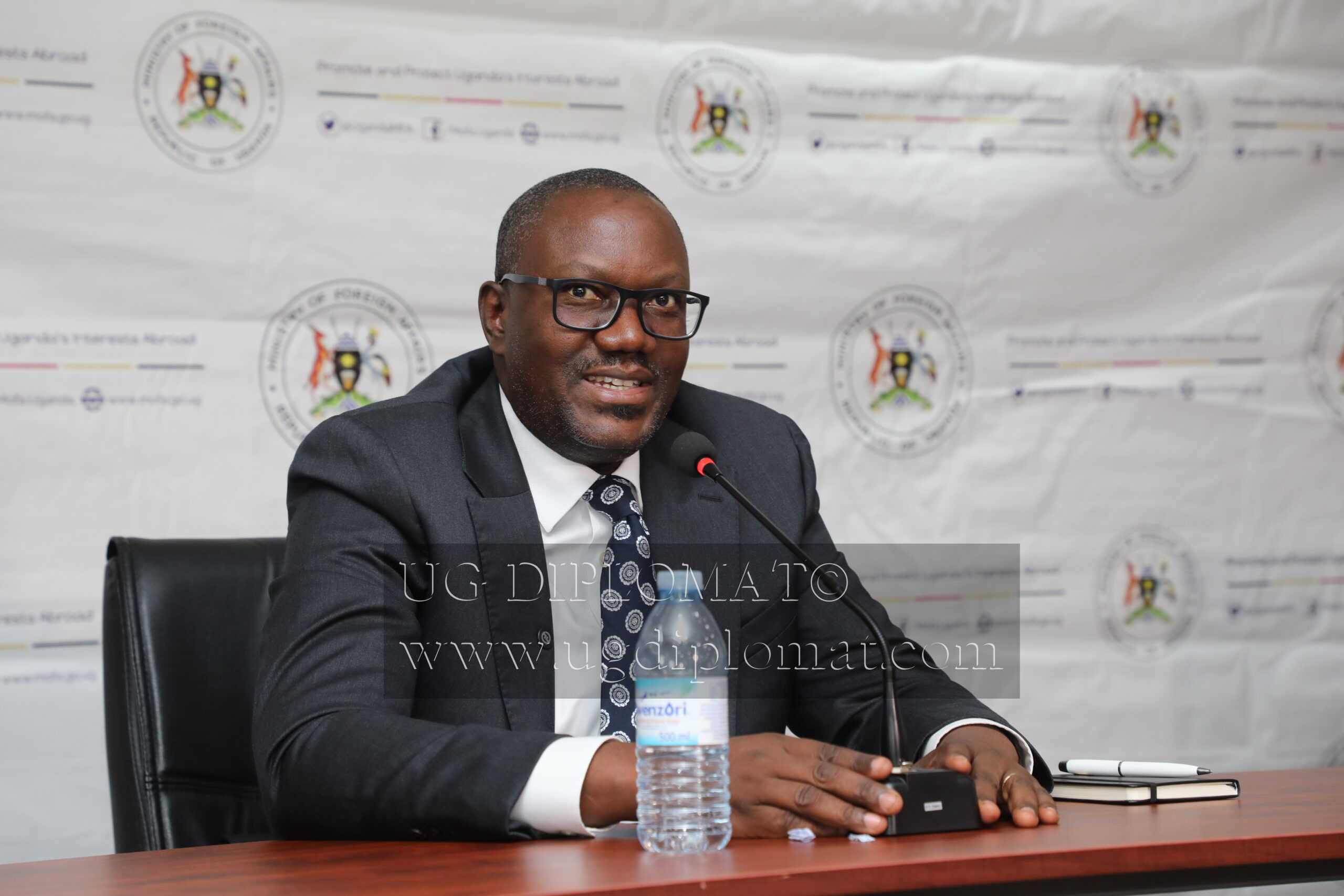
Uganda’s Ministry of Foreign Affairs Permanent Secretary, Vincent Bagiire, speaks during a press briefing in Kampala, where Ambassador Olara Otunnu was formally unveiled as the country’s candidate for United Nations secretary-general, July 29, 2026. PHOTO/ALEX MASEREKA JOEL
Presenting his vision, Otunnu argued that the next Secretary-General must rebuild the moral authority of the office through impartial leadership, dialogue, patient diplomacy and the ability to mobilise consensus among competing global powers.
“The Secretary-General serves the peoples of the world,” Otunnu said after thanking President Yoweri Museveni and Uganda for considering his nomination.
He added, “The challenges of peace, development, climate change, technology and human dignity are collective concerns that require collective solutions.”
Uganda’s submission makes Otunnu the seventh declared candidate seeking to succeed António Guterres, whose second five-year term expires on December 31, 2026. The new Secretary-General is expected to take office on January 1, 2027.

Ending wars at the top of agenda
Otunnu identified peace and security as the central responsibility of the United Nations, saying the organisation was created in response to the destruction of the Second World War and must recover its ability to prevent and end major conflicts.
“The central mandate of the UN is the ending of conflicts and the building of peace,” he said arguing that will use what has been described in the media as the ‘Otunnu Formular.’
“That goes to the top of my agenda, to see what the Secretary-General of the UN can do, working with the major stakeholders, the big powers who are implicated in these conflicts, to end those conflicts.”
His proposed approach would require the Secretary-General to engage directly with major powers, governments, regional organisations and other parties whose interests influence conflicts.
Otunnu argued that although the UN chief does not command an army, control vast financial resources or enjoy conventional political power, the office possesses a different instrument: moral authority.
“The Secretary-General does not have conventional power,” he said. “But he has something else, which is moral authority.”
That authority, he added, flows from the UN Charter, the support of member states and the confidence of people around the world. It should therefore be exercised carefully but firmly to encourage dialogue, mediate disputes and rally international action.
Protecting women and children
Otunnu also pledged to prioritise the protection of women and children, who he said often suffer disproportionately during both interstate wars and internal conflicts.
“We cannot be indifferent to this,” he said. “The UN must lead the way, ensuring that we agree and act to cushion the impact of war on women and children.”
His agenda includes stronger protection during conflicts and effective rehabilitation programmes for survivors once hostilities end.
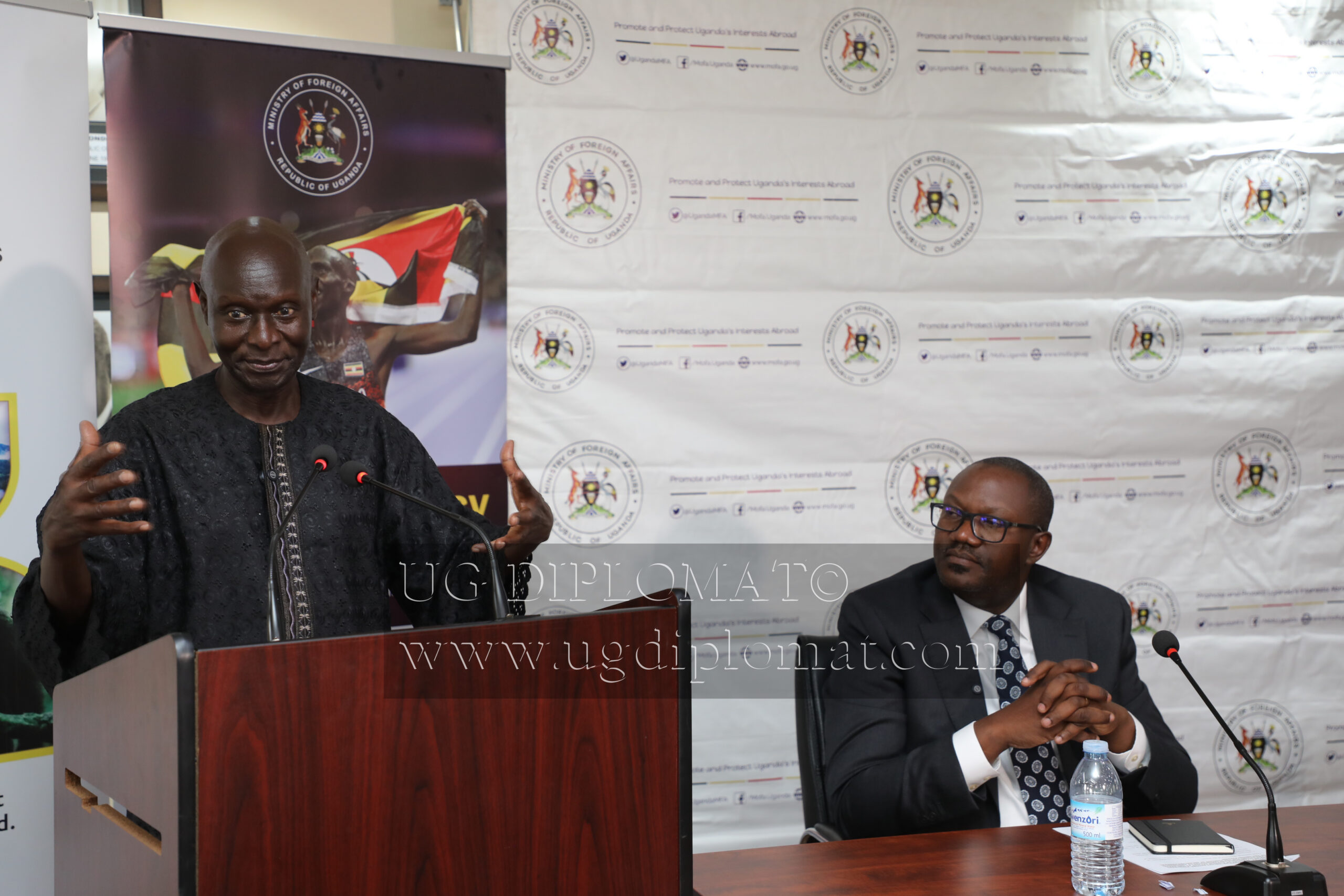
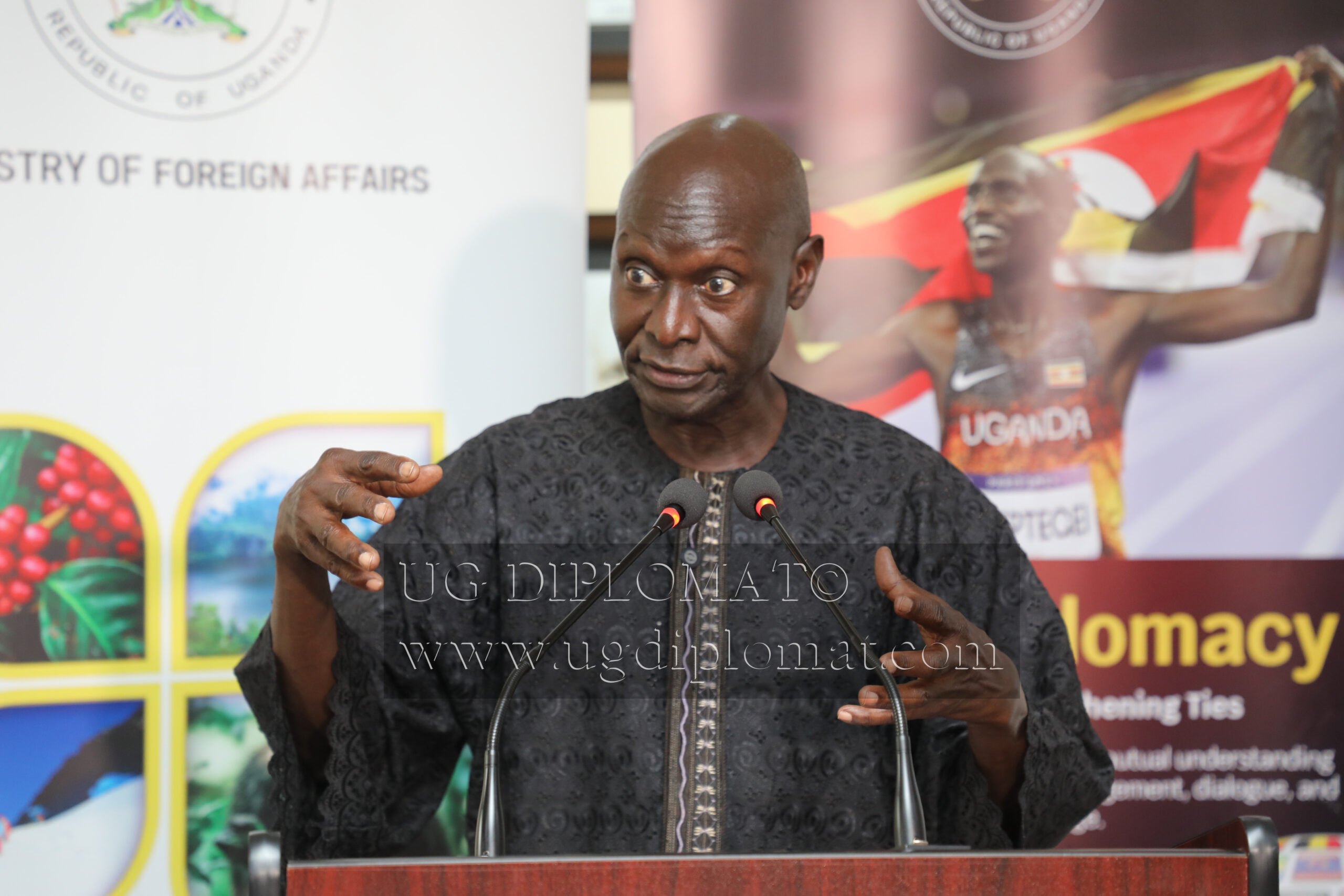
Ambassador Olara Otunnu speaks as Uganda’s Ministry of Foreign Affairs Permanent Secretary, Vincent Bagiire, looks on during a press briefing in Kampala, Uganda, July 29, 2026. PHOTO/ALEX MASEREKA JOEL
The issue is closely connected to Otunnu’s previous UN service. From 1997 to 2005, he served as UN Under-Secretary-General and Special Representative of the Secretary-General for Children and Armed Conflict, leading international efforts to protect children affected by war and support their healing and reintegration.
Uganda says Otunnu helped place the protection of war-affected children on the Security Council’s agenda and contributed to the compliance and monitoring framework later adopted under Security Council Resolution 1612.
Reforming the United Nations
Institutional reform forms another major pillar of Otunnu’s platform.
He called for changes that would make the UN more representative, efficient and credible, pointing to continuing debates over the composition of the Security Council, the organisation of the UN bureaucracy and duplication across its agencies.
“There is a debate about making the Security Council more representative of the world, and that is ongoing,” he said.
“There is discussion about the UN bureaucracy, the functional organisation of the UN and inefficiencies within the organisation. That needs to be addressed.”
Otunnu argued that reform should not be pursued merely as an administrative exercise. A more effective and representative institution, he said, would possess greater legitimacy and therefore greater authority to respond to global emergencies.
“The reform of the UN, so that the UN speaks with a sense of legitimacy as an organisation and is effective and efficient, is not wishful,” he said. “That gives it legitimacy and authority.”
The next Secretary-General will inherit an institution under pressure to reduce bureaucracy, eliminate duplication and demonstrate that multilateral institutions can still respond effectively to global crises.
Global rules for artificial intelligence
Otunnu’s policy programme also calls for equitable governance of artificial intelligence as the technology rapidly transforms economies, security, employment and access to information.
His vision proposes a stronger UN mechanism to coordinate international work on AI and prevent technological governance from being dominated exclusively by the world’s most powerful states or corporations.
The Ugandan candidate wants developing countries to have a meaningful voice in establishing global rules governing emerging technologies. He has also linked technology policy to human dignity, development and the need to prevent new forms of inequality. His published vision includes establishing a body to oversee the UN system’s work on AI.
Climate action and development financing
Climate change and sustainable development financing are also prominent in Otunnu’s campaign.
He has called for climate action that recognises the urgent need to protect the planet without denying developing countries the opportunity to industrialise, create employment and improve living standards.
His agenda seeks to connect climate responsibility with fair development financing, arguing that poorer countries require greater access to affordable resources to finance adaptation, clean energy, infrastructure and social transformation.
Otunnu’s approach places peace and security, human rights and sustainable development, the UN’s three principal pillars, within a single programme rather than treating them as separate challenges.
‘Non-partisan by DNA’
Beyond policies, Otunnu said the position requires an individual who is impartial, humble, experienced and prepared to listen to all sides.
The next Secretary-General, he said, should be “utterly, by DNA, non-partisan,” demonstrate goodwill towards all parties and prevent personal ego from interfering with the responsibilities of the office.
“A Secretary-General should be a good listener, a patient listener, hear everybody out, but not be afraid to put forward creative ideas on how to get out of the problems,” he said.
Otunnu presented himself as a patient listener who is nevertheless prepared to propose solutions during moments of crisis and diplomatic deadlock.
He pointed to his experience within the UN Secretariat, Security Council, international peace institutions, academia and grassroots reconciliation programmes as evidence that he understands both international diplomacy and the realities faced by communities affected by conflict.
Otunnu previously served as Uganda’s Permanent Representative to the United Nations, President of the Security Council and Vice-President of the UN General Assembly. UN records indicate that he played a role in resolving the Security Council deadlock surrounding the 1981 selection of Javier Pérez de Cuéllar as Secretary-General.
“I have a long track record of building consensus and proposing innovative solutions in situations of crisis and deadlock,” he said.
From the local to the global
Otunnu also highlighted his recent community peacebuilding work in northern Uganda, presenting it as evidence of his ability to connect international policy with the experiences of ordinary people.
“We need to connect the global to the local and the local to the global,” he said.
After years working at the highest levels of international diplomacy, Otunnu said he had returned to communities affected by prolonged conflict to participate in efforts to rebuild social cohesion.
“I came from the global to the local,” he said. “And now the call has come to say, we want the local boy from the local to come back to the global.”
Uganda says that combination of high-level diplomatic leadership and community-rooted peacebuilding distinguishes Otunnu from other candidates.
The government has consequently urged UN member states to support his candidature, arguing that his experience across diplomacy, government, academia, civil society and the UN system makes him suited to lead the organisation during a period of geopolitical instability.
Road through Security Council
Despite the strength of his credentials, Otunnu faces a highly political selection process.
Under Article 97 of the UN Charter, the Secretary-General is appointed by the General Assembly following a recommendation from the Security Council. A successful candidate must obtain sufficient support in the 15-member Council while avoiding a veto from any of its five permanent members—China, France, Russia, the United Kingdom and the United States.
Otunnu joins a field that includes former Senegalese President Macky Sall, former Chilean President Michelle Bachelet, International Atomic Energy Agency Director-General Rafael Grossi and senior diplomats from Costa Rica, Ecuador and Guyana.
The Security Council is expected to use confidential straw polls to assess the candidates and progressively narrow the field before recommending one name to the General Assembly.
For Uganda, however, Otunnu’s candidature is also a statement about Africa’s capacity to contribute leadership, ideas and diplomatic experience to the reform of the multilateral system.