
News
Museveni Backs OACPS Headquarters Exit From Europe, Rallies Africa-Caribbean Unity

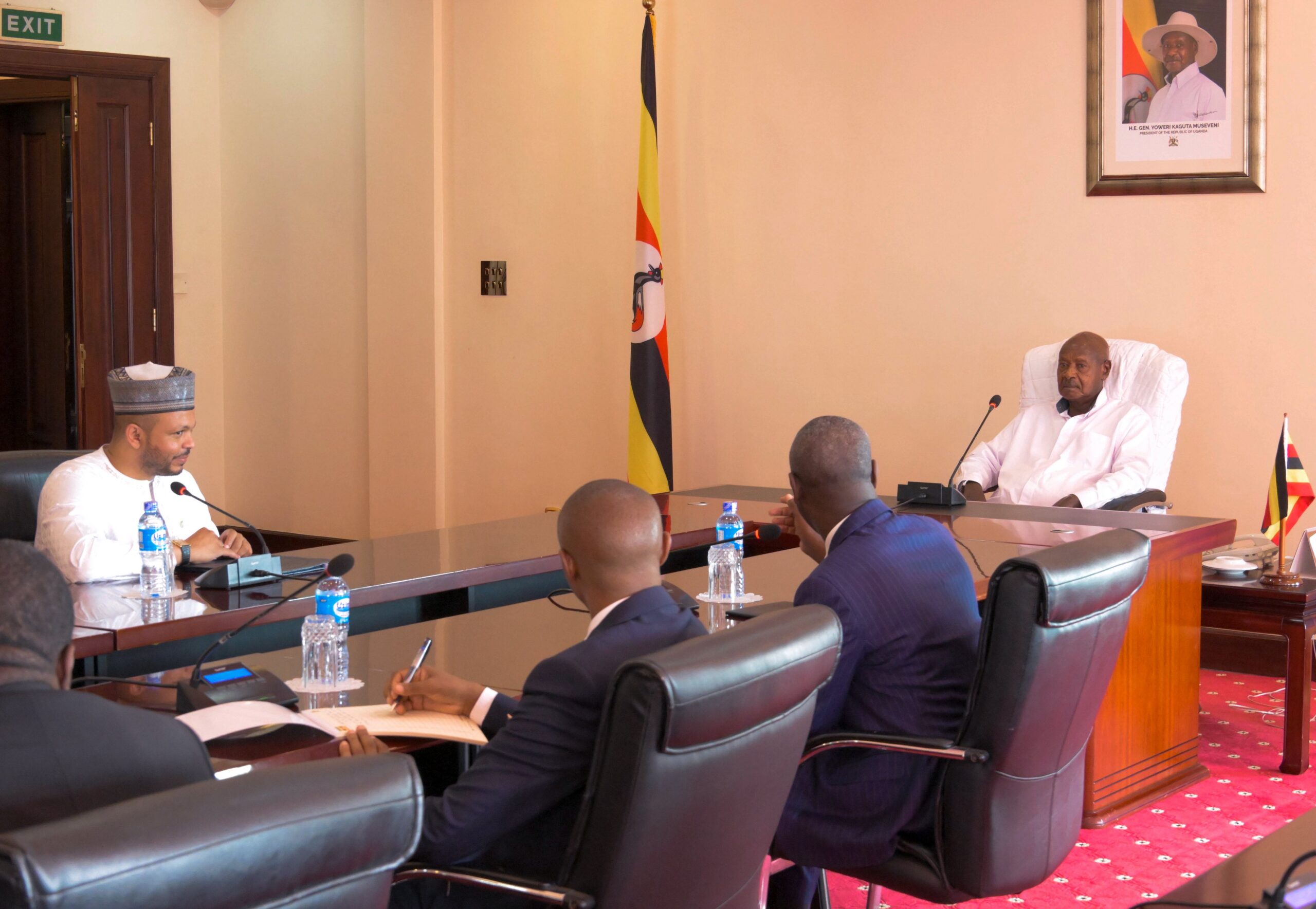
ENTEBBE, Uganda — President Yoweri Museveni has backed proposals to relocate the headquarters of the Organisation of African, Caribbean and Pacific States from Europe, arguing that the move would strengthen the institution’s independence and enable it to better represent its member countries.
Museveni announced his position after receiving OACPS Secretary-General Moussa Saleh Batraki at State House Entebbe on Tuesday, July 28, 2026.
The talks focused on strengthening cooperation between Uganda and the 79-member organisation, with Museveni placing particular emphasis on the historical and cultural connections linking Africa, the Caribbean and the indigenous peoples of the Pacific.
The President said Africans living in the Caribbean and indigenous communities in the Pacific should not be viewed as distant populations, but as members of Africa’s wider historical family.
“I told him that Africans in the Caribbean and the indigenous peoples of the Pacific are part of our extended African family,” Museveni said following the meeting.
The remarks reflected Museveni’s longstanding Pan-African argument that Africa’s engagement with its diaspora should go beyond symbolic cultural connections and be translated into stronger political, economic and institutional cooperation.
The Caribbean is home to millions of people whose ancestry can be traced to Africa, largely because of the transatlantic slave trade. Museveni’s position suggests that relations between African and Caribbean countries should therefore be strengthened through trade, investment, education, tourism, technology and coordinated diplomacy.
The President also endorsed the proposal to move the OACPS headquarters away from Europe, saying such a decision would give the organisation greater institutional independence and more accurately reflect the aspirations of its member states.

“I also support the proposal to relocate the OACPS headquarters from Europe,” Museveni said. “It would strengthen the Organisation’s independence and better reflect the interests of its member states.”
The OACPS currently operates from Brussels, Belgium, despite its membership being drawn from Africa, the Caribbean and the Pacific.
The organisation describes itself as a collective voice for 79 countries across the three regions, focusing on sustainable development, trade, climate resilience, digital transformation, human development, peace, security and governance.
Relocating its headquarters to one of its member regions could carry considerable political symbolism, marking a shift towards greater ownership of the organisation by the countries it was created to represent.
It could also support ongoing efforts to reposition the OACPS as a more independent Global South institution, rather than one whose identity and operations remain closely tied to its historical relationship with Europe.
Museveni said Uganda was prepared to support the relocation initiative and deepen its cooperation with the organisation.
“Uganda is ready to support this effort and deepen cooperation with the OACPS,” he said.
The meeting comes as the organisation pursues internal reforms intended to strengthen its relevance, financial autonomy and geopolitical influence.
The OACPS brings together countries with a combined population exceeding one billion people. Many of its members face similar challenges, including limited access to development financing, climate vulnerability, dependence on commodity exports and unequal participation in the global trading system.
Its Caribbean and Pacific members also include several small island developing states that are particularly vulnerable to rising sea levels, extreme weather events and other effects of climate change.
The organisation says 39 of its 79 members are small island developing states, while 64 are coastal nations, making climate action, ocean governance and the sustainable blue economy central to its agenda.
Batraki was elected OACPS Secretary-General in February 2025. The Chadian national previously served as his country’s minister responsible for economic planning, development, land affairs, housing and urban development. His current term runs from 2025 to 2030.
Under his leadership, the organisation has promoted stronger South-South cooperation and a shift from traditional donor-recipient arrangements towards investment, trade and partnerships that give member countries greater control over their development priorities.
Museveni’s endorsement of closer Africa-Caribbean-Pacific cooperation could strengthen calls for the organisation to expand trade and diplomatic coordination among its own members.
For Uganda, deeper engagement with the OACPS could open opportunities to promote coffee, tourism, agriculture, pharmaceuticals and manufactured goods in Caribbean and Pacific markets while attracting investment into infrastructure, energy and industrial development.
The talks also align with Uganda’s Economic and Commercial Diplomacy agenda, under which the government wants its international engagements to produce measurable gains in exports, investment, technology transfer and employment.
By framing Caribbean Africans and Pacific indigenous communities as part of Africa’s extended family, Museveni positioned the proposed institutional reforms as more than an administrative matter.
His message was that the organisation’s future should be grounded in the historical connections, shared interests and collective political strength of its member states rather than continued institutional dependence on Europe.