News
DETAILS: Museveni, Tshisekedi Seal Mega Deals in Kampala

Uganda and the Democratic Republic of Congo (DRC) have strengthened their bilateral ties through the signing of several Memoranda of Understanding (MoUs) covering strategic sectors including trade, security, ICT, public administration, diplomatic relations, tourism, and transport.
The agreements, signed during the 9th Session of the Uganda-DRC Joint Permanent Commission in Kampala, are aimed at enhancing cross-border cooperation, boosting regional trade, improving connectivity, and promoting peace and stability in the Great Lakes Region.
The latest developments highlight the growing partnership between Kampala and Kinshasa, which both governments say is central to regional transformation, shared prosperity, and long-term development.
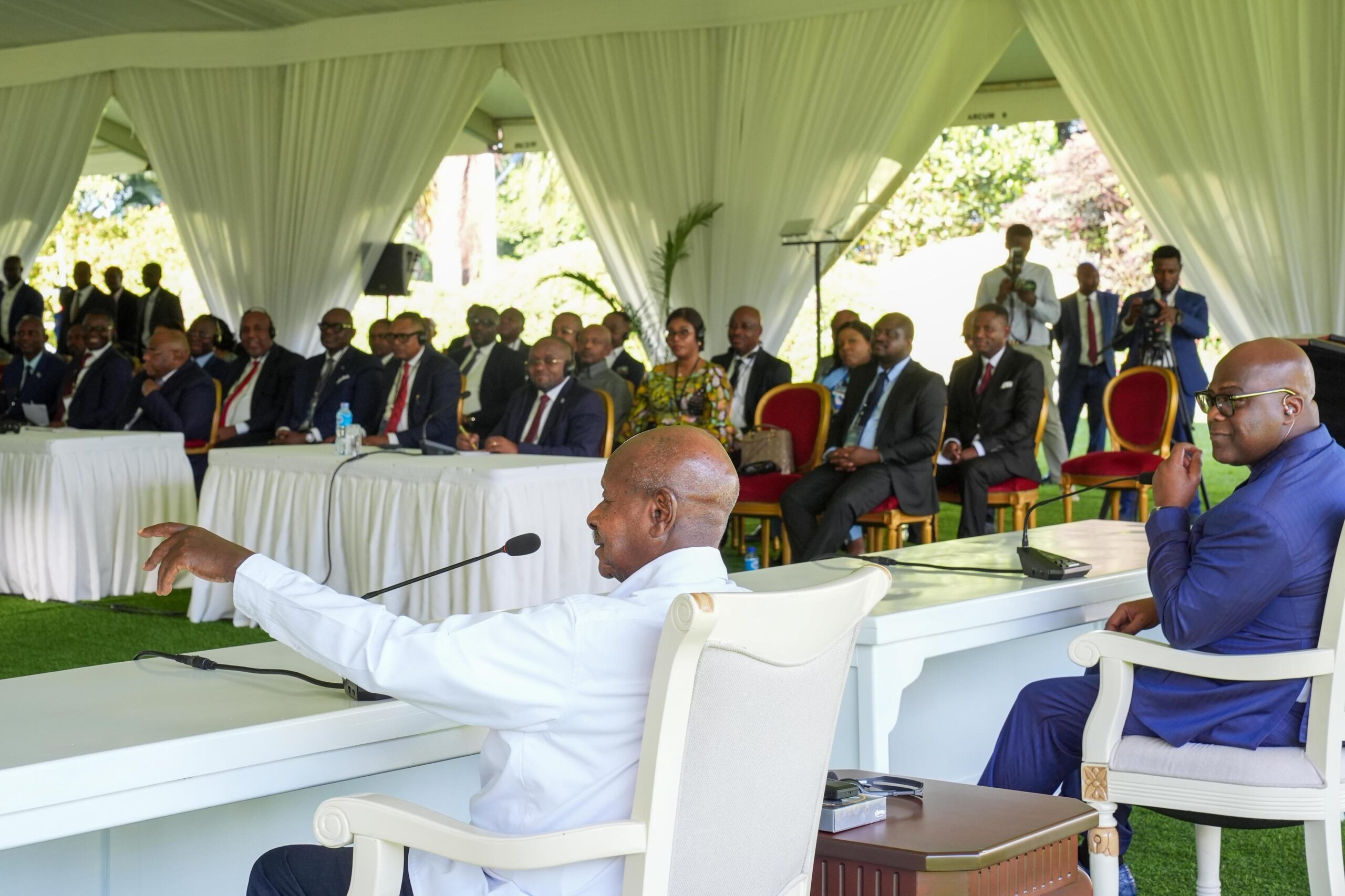
President Yoweri Museveni later welcomed DRC President Félix Tshisekedi to Uganda ahead of Tuesday’s swearing-in ceremony, where several regional leaders are expected to attend.
In a message issued after their meeting at State House Entebbe, Museveni said the two leaders held “productive discussions” focused on security, trade, infrastructure, petroleum cooperation, and peace along the common border areas of North Kivu and Ituri.
The Ugandan leader revealed that the two sides also reviewed the progress of key road infrastructure projects designed to improve trade and regional integration between the neighbouring countries.
“I commend both sides for signing agreements that will directly benefit our people. African governments should not frustrate wananchi with unnecessary barriers to trade and movement. These agreements are a step in the right direction,” Museveni said.
He also thanked President Tshisekedi for leading a “strong delegation” to Uganda. DRC sent seventeen ministers for the JPC.

The Uganda-DRC partnership has in recent years expanded beyond security cooperation to include trade corridors, joint infrastructure projects, energy cooperation, and efforts to stabilize eastern Congo, particularly in conflict-hit areas bordering Uganda.
Analysts say the latest agreements could further deepen economic integration and strengthen cooperation on shared regional challenges, while opening up new opportunities for businesses and citizens on both sides of the border.