
Fidel Castro Ruz: Solidarity and Internationalism in His Thought
October 12, 2026

MSc. Fernando Gastón Arias Rubio
“To fight for our dreams of justice for Cuba and for the world, which is the basis of our patriotism, our socialism and our internationalism.”
Introduction
It is not possible to understand the solidarity and internationalism of the Cuban Revolution without articulating the thought, preaching and praxis of Commander in Chief Fidel Castro Ruz. The Cuban Revolution introduced two closely linked but distinguishable concepts into the political lexicon: solidarity and internationalism. These categories acquired in Fidel Castro's speech and action an ethical, strategic and practical content that marked the foreign policy of the Cuban Revolution.
In Fidel Castro's thought, solidarity appears as the active willingness to share resources, efforts and risks for others, both within one's own country and abroad. The solidarity of our people has grown, Fidel's teachings have deeply penetrated our psyche. Let us remember what our Commander in Chief stated: “We have sensitized our people to the concept of internal and external solidarity. The external is internationalism.”
In practice, internationalism is the expression of solidarity. Fidel expresses it thus: “For us, internationalism is a sacred principle.” And he adds: “Internationalism is the most beautiful essence of Marxism-Leninism and its ideals of solidarity and fraternity among peoples.”
Fidel Castro, a follower of Martí, repeatedly expressed this in reference to the Master: “José Martí, guide and apostle of our war of independence against Spain, taught us that internationalist spirit that Marx, Engels and Lenin confirmed in the consciousness of our people. Martí felt that ‘homeland is humanity’, and he drew the image of a united Latin America in the face of the other imperialist and haughty America, ‘chaotic and brutal’—as he said—which despised us.”
“Our patriotic sentiments have deepened and our internationalist feelings have spread as the most beautiful of Martí's ideas were inculcated in the soul of the Cuban people, when he stated that ‘homeland is humanity’.”
Fidel Castro, referring to internationalism, likewise emphatically states: “And those people who are incapable of helping others are incapable of helping themselves.”
EXPANDING ON THE THEME
From a very young age, solidarity had a concrete expression in Fidel Castro's thinking. During his time as a university student, right from the first year of law school, he was elected president of the Dominican Pro-Democracy Committee of the University Student Federation (FEU) and of the Pro-Independence Committee of Puerto Rico.
His work in defence of the sovereignty of the Dominican Republic led him to join the abortive Cayo Confite expedition to participate in the struggle against the dictator Leónidas Trujillo in 1947. His participation as an internationalist combatant in Colombia, during the Bogotazo in 1948, undoubtedly strengthened his internationalist ideas, which, after the triumph of the Revolution, would guide his work in raising the awareness of the Cuban people.
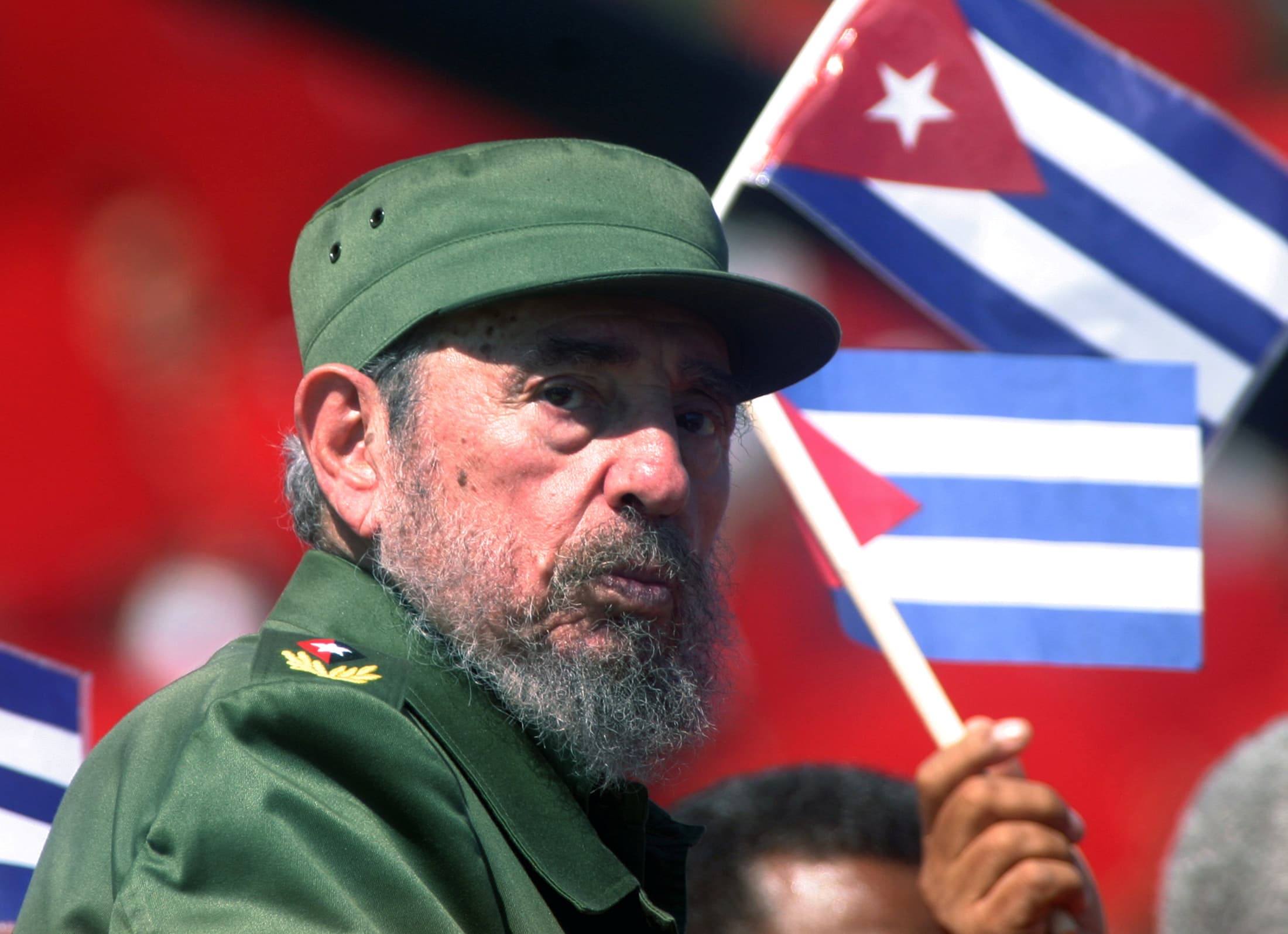
Through the speeches of the leader of the Cuban Revolution, it is possible to discern his solidarity stance and internationalist thinking. As early as September 2, 1960, he declared:
“The National General People’s Assembly of Cuba postulates the duty of each one to show solidarity with all oppressed, colonized, exploited peoples or those who have suffered aggression, regardless of where they are in the world and the geographical distance that separates them.
“All the peoples of the world are brothers!”
At other times, he would posit: “Patriotism and proletarian internationalism, within the socialist Revolution, are intertwined.” And that was the thought that guided the conduct of the Cuban revolutionary leadership.
“Internationalism is one of our most sacred flags, and we develop our internationalist consciousness in the practice of internationalism. And also—to the extent of our capacity—modestly joining the task of cooperation and struggle for other peoples as well.”
“Internationalism is the most beautiful essence of Marxism-Leninism and its ideals of solidarity and fraternity among peoples. Without internationalism the Cuban Revolution would not even exist. To be an internationalist is to pay off our own debt with humanity.”
This internationalist vocation of the Cuban Revolution would translate into its maximum leader confronting different US administrations that would see their imperialist hegemony threatened.
Cuban solidarity with other peoples of the world has materialized throughout the revolutionary process, without forgetting solidarity with Puerto Rico, given that since his years as a university student, Fidel was elected president of the Pro-Independence Committee of Puerto Rico. The statement of our Commander in Chief that “we are willing to give the people of Viet Nam not only our sugar, but our blood” speaks to solidarity to an enhanced degree.
The cause of the Palestinian people has been central in the solidarity creed of the Commander in Chief. Let us remember the VI Summit of the Non-Aligned Movement when he declared:
“We condemn with every fibre of our being the ruthless persecution and genocide unleashed by Nazism against the Jewish people in its time. But in our contemporary history I cannot remember anything similar to the eviction, persecution and genocide that imperialism and Zionism mete out today against the Palestinian people. Dispossessed of their lands, expelled from their own homeland, dispersed throughout the world, persecuted and murdered, the heroic Palestinians constitute an impressive example of self-sacrifice and patriotism, and are the living symbol of the greatest crime of our time.”
Cuba's solidarity has also been evident in providing educational opportunities to thousands of children and young people from many countries to study in Cuba. We should remember the numerous schools that were built on the Isle of Youth, the Latin American School of Medicine and specialized medical care for the war-wounded from National Liberation Movements.
Cuba organized and developed a massive and free comprehensive medical care programme to attend to children who lived in areas affected by the accident at the Chernobyl Electronuclear Power Plant, which occurred on April 26, 1986, as a response from the Cuban government to requests from social organizations in the former Soviet Union. A total of 26,114 patients from Russia, Belarus and Ukraine were also treated.
MILITARY INTERNATIONALIST MISSIONS
In 1963, in response to Morocco's expansionist desires, Algeria received the first internationalist military mission, made up of a T-34 tank battalion, a 122 mm artillery group, an anti-aircraft artillery group, a 120 mm mortar group and a 75 mm recoilless cannon battery. In total, there were 686 men led by the then commander Efigenio Ameijeiras Delgado.
In April 1965, more than a hundred Cuban internationalist fighters, under the command of Commander Ernesto Che Guevara, arrived in the Congo to support the Congolese revolutionary movement in its fight against the government of Moise Tshombe, who was supported by Western powers and Belgian, French, American, Rhodesian, British and counterrevolutionary mercenaries of Cuban origin, among others.
In October 1966, Cuban internationalist combatants arrived in Pointe Noire (Congo-Brazzaville), who would continue their journey to the Republic of Guinea-Conakry to create the militias that defended President Sekou Touré from a coup d'état that had threatened to overthrow him, and to help the combatants of Guinea-Bissau, which at that time constituted one of the strongest, most active and serious movements in Africa fighting against colonialism. Cuban military doctors would collaborate with the guerrillas and people of Guinea-Bissau.
Other countries would receive military collaboration from Cuba, including Syria, where Cuban internationalist fighters “from a tank brigade stood guard at the request of the Arab nation of Syria between 1973 and 1975 in front of the Golan Heights, when that part of the territory was unjustly taken from that country.”
In mid-1977, Somalia's direct aggression against Ethiopia took place, with disproportionate use of armour, artillery, air support and infantry forces, in complicity with reactionary governments in the area encouraged by Western powers, including the United States.
On November 25, 1977, Commander in Chief Fidel Castro, giving a positive response to the request of the Ethiopian authorities, signed the order authorizing the participation of Cuban troops in confronting the Somali aggression against Ethiopia.
In a message in his own handwriting to the then Revolutionary Armed Forces Minister, Army General Raúl Castro, Fidel wrote:
“The Internationalist Operation to support Ethiopia will receive the name of Baraguá, as a worthy tribute to that glorious event whose centenary we will commemorate next year.”
Perhaps Cuba's internationalist mission in Angola is the best known, not only for its magnitude and duration, but for its impact on the African continent.
Starting in 1975, for more than three decades, thousands of Cuban internationalist combatants, in the context of Operation Carlota, supported the Popular Movement for the Liberation of Angola at the request of its leader, Dr. Antonio Agostinho Neto. They helped prepare the guerrilla forces of the Popular Movement for the Liberation of Angola (MPLA) and confronted the foreign invasion that sought to occupy the country's capital and prevent Neto's assumption of the country's presidency.
Later, in concert with the Popular Armed Forces for the Liberation of Angola (FAPLA), having expelled the apartheid forces from the territory of Angola, Cuba's military collaboration was aimed at preserving the independence of that country.
But it was not only in the military field that internationalist aid was offered to Angola. The doctors of the military units provided medical assistance to the local population. Two contingents of Cuban teachers taught Angolan children to read, while builders and other civil technicians from Cuba revamped industries abandoned by the colonialists and built bridges, roads, schools and hospitals, selflessly fulfilling their internationalist duty towards their brotherly oppressed people.
The war bled the nascent nation. Numerous crimes and terrorist actions would occur, among them the Cassinga Massacre in May 1978, when planes and helicopters of the South African Air Force carried out a fierce bombing and strafing attack against the Namibian refugee camp in that town, in Angolan territory, 250 km from the border with Namibia. The result of the raid was 600 dead refugees and 350 seriously injured, most of them elderly people, women and children.
Children who survived the Cassinga massacre were sent to Cuba, and with them the first SWAPO school was created on the Isle of Youth.
In July 1987, the Popular Armed Forces for the Liberation of Angola (FAPLA) attempted, in Operation Greeting October in southeastern Angola, to destroy UNITA strongholds supported by South Africa. It was a trap in which, according to Fidel, the South Africans tried to decide, in their favour and in favour of UNITA, the war against Angola.
To avoid the looming disaster, the Angolan government asked the Cuban leadership for help. Regarding this situation, the Commander in Chief expressed:
“We made the political decision and the military decision to face the situation, and adopt the measures that were necessary. Otherwise, it would have led to the probable annihilation of the best grouping of Angolan troops, after which the consequences would have been unforeseeable for the survival of the People's Republic of Angola; a complicated situation could even have arisen for our troops. That is why, after thinking carefully about it, the leadership of our Party takes the decision to reinforce the troops and help solve that serious problem that had been created.”
In the Battle of Cuito Cuanavale, South African armoured forces and UNITA battalions, supported by fighter aircraft, attacked positions of Angolan troops and Cuban advisers. The defending troops firmly resisted the South African attacks, managing to repel them and inflict significant losses.
Regarding this, Fidel added:
“But the Cuban-Angolan strategy was not simply to stop the enemy in Cuito Cuanavale, but to concentrate sufficient forces and means to the west of our lines, to advance towards the south and threaten key points of the South African forces. The essential idea was to stop them in Cuito Cuanavale and hit them from the southwest. Sufficient forces were accumulated to seriously threaten places of strategic importance for South Africa and deliver forceful blows, on the terrain chosen by us, not by the enemy.”
In the theatre of operations chosen by Fidel, Cubans and Angolans, with the collaboration of SWAPO, fought the definitive battles for the consolidation of Angola's independence.
The defeat of the South Africans on the battlefield led them to accept United Nations Security Council Resolution 435/78 for the independence of Namibia. On December 22, 1988, the definitive agreements for peace in South West Africa were signed at the United Nations headquarters in New York.
Years later, in 1990, when referring to Cuba's internationalist vocation, Commander in Chief Fidel Castro pointed out:
“Hundreds of thousands of compatriots have fulfilled internationalist missions as soldiers, always defending just causes, or bringing health to dozens of countries, or bringing education. There is no country that has more scholarship recipients per capita in the world than Cuba, around 25,000 young people from the Third World study here.”
CIVIL INTERNATIONALIST MISSIONS: HEALTH AND EDUCATION
The earliest Cuban medical collaboration with other nations dates back to May 1960, when doctors, officials and health technicians travelled to Chile following the earthquake that occurred in that country.
Three years later, on May 23, 1963, this was followed by the departure to Algeria of a medical brigade, considered the first Cuban internationalist medical mission. It was made up of 29 doctors, four stomatologists, 14 nurses and health technicians who provided health services in Algeria. This first medical brigade would be followed by another.
In relation to Cuba's aid to Nicaragua, just four months after the triumph of the Sandinista Revolution, the First Contingent of Internationalist Teachers Augusto César Sandino left for the Caribbean country to collaborate in the educational task undertaken by the Sandinista Revolution and bring education to the most remote regions of that country.
On April 4, 1982, the Commander in Chief expressed:
“We are developing a growing internationalist consciousness, and there are examples. When the teachers were requested for Nicaragua, I think there were 29,500 teachers, 29,500 were offered, and that was difficult; it was to teach classes in the most difficult conditions. And when yesterday the fellow delegate brought us an album that represented the twenty-odd albums with the signature of 92,000 teachers, willing to take the place of Francisco de la Concepción, Pedro Pablo Rivera, or Bárbaro Rodríguez, or Águedo Morales, who had been murdered there fulfilling their duty as teachers in Nicaragua, what is that? Isn't that an internationalist conscience? Can we doubt it? I, for one, do not doubt that those 92,000 teachers are willing to fulfil their commitment. And what an extraordinary thing to be able to say that our Revolution, at twenty-something years old, has 92,000 teachers willing to carry out an internationalist mission in conditions of proven risk! What a truly extraordinary, admirable, incredible thing! Why, why?”
But the help was not only in the education sector. In response to the brother country's request for one hundred doctors, the Commander in Chief expressed:
“We decided to do a survey with the final-year medical students, about to graduate with medical practice, and we asked them who was willing—we needed 100 doctors—to participate in this internationalist mission in Nicaragua? And of the 1,000 final-year medical students, 1,000 volunteered to fulfil the internationalist mission!”
“There are collaborators in the field of education and in almost all fields, if we have to help repair a thermoelectric plant, if we have to cooperate in the sphere of agriculture, if we have to cooperate in the sphere of sports. In many fields, in many branches, there are our civil collaborators, and there are particularly the builders of Bluefields, who are several hundred, and among them around 50 women.
“The two branches that have the most personnel, with almost two-thirds of the collaborators, are medicine and the construction of Bluefields.”
COMPREHENSIVE HEALTH PROGRAMME (PIS)
This programme began in 1998, in response to the request of the Central American presidents of Honduras, Guatemala and Nicaragua, in the face of the natural and human catastrophe caused by Hurricane Mitch. It has progressively expanded, satisfying the demand for its services in countries of Latin America and the Caribbean, Africa, Asia and Oceania, and Ukraine.
The PIS represents the consolidation of internationalist activity in health that preceded it, having as its principles the free sending of health collaborators for a maximum period of two years, the training of indigenous human resources, the provision of services in rural areas where their work does not interfere with that of the doctors of the country in question, and attention to the entire population without getting involved in internal political affairs and while respecting the laws and customs of the countries in which they work.
OPERATION MIRACLE
In 2004, Operation Miracle emerged at the initiative of Commander in Chief Fidel Castro Ruz and Venezuelan President Hugo Chávez Frías. The programme restores vision to many people around the world who lack the financial resources to pay for an operation, even if they had access to private medicine.
The programme took its first steps at the Serial Ocular Microsurgery Centre of the Cuban Institute of Ophthalmology “Ramón Pando Ferrer” in the Cuban capital. Thousands of patients from many countries in Latin America and the Caribbean, Angola, Mali, and ophthalmological centres in 18 countries had their eyesight restored.
In the first year, 13,630 cataract surgeries were performed on Venezuelan patients. In 2006, surgeries were performed in Venezuela and Bolivia.
On repeated occasions, international organizations have highlighted Cuba as a model for many nations because, in addition to offering international collaboration, it has also trained more than 29,000 doctors from a hundred territories at the Latin American School of Medicine (ELAM).
Governments and peoples benefiting from Cuban medical collaboration have, on different occasions, expressed gratitude for this selfless help, whose main promoter was Commander in Chief Fidel Castro.
HENRY REEVE INTERNATIONAL CONTINGENT
On September 19, 2005, the “Henry Reeve” International Contingent of Doctors Specialized in Disaster Situations and Serious Epidemics was established by the Commander in Chief.
On that occasion, the Commander in Chief stated:
“Cuba, which did not hesitate to offer the people of the United States the immediate dispatch of experienced medical personnel with the essential resources for the urgent care of people at risk of death due to a great natural disaster. Added to this was the fact that our country is the closest to the area hit by the hurricane and was able to send human and material aid in a matter of hours. It was as if a large North American cruise ship with thousands of travellers on board was sinking in the vicinity of our coasts. We could not remain indifferent. No one would believe that such assistance could be considered an offence or humiliation. Our message was sent to the federal authorities of the United States as soon as Katrina crossed with its devastating force over New Orleans.”
The United States government did not allow the contingent to enter its territory, but Fidel's idea in establishing it did not take long to show its value.
Just a few days later, on October 8, 2005, the contingent faced its first emergency in Guatemala, assisting the population affected by floods caused by Hurricane Stan in October 2005. A total of 688 health professionals, including 600 doctors, assisted more than 477,000 people and saved the lives of more than 1,300.
On October 14, 2005, the work of the contingent was highlighted after the impact of the large-magnitude earthquake in Pakistan, which caused the loss of 70,000 human lives, left 100,000 injured and made three million people homeless.
Over almost eight months, the 2,564 Cuban health professionals treated more than 1,700,000 patients. More than 14,000 surgeries were performed, more than 166,000 survivors received specialized rehabilitation treatment, and more than 2,000 lives were saved. The collaborators were deployed in 32 field hospitals.
On May 16, 2006, a large earthquake occurred in Indonesia. A medical brigade from the contingent participated with 135 collaborators, of whom 78 were doctors.
In the same year, due to the floods in Mexico, 54 collaborators, including 39 doctors, provided assistance from November 6 to December 26, 2007.
From May 23 to June 9, 2008, 35 collaborators, including 18 doctors, participated in the response to an earthquake in China.
From August 15, 2007, to March 25, 2008, following an earthquake in Peru, 79 Cuban health collaborators attended, including 41 doctors.
On January 12, 2010, an earthquake in Haiti required medical assistance from a medical brigade specialized in epidemics and disasters.
On February 27, 2010, after the earthquake in Chile, a medical brigade treated 79,137 patients.
On March 1, 2010, another earthquake occurred, mobilizing 78 collaborators, in addition to 62 members who worked together with the medical brigades of the Comprehensive Health Programme already in the country, as well as 90 graduates of the Latin American School of Medicine from 18 countries.
On May 8, 2015, a brigade from the contingent left for Nepal with the mission of saving lives and alleviating the situation in the Asian country after the earthquake of April 25. The 49 professionals from different specialties, including 22 specialist doctors, faced existing diseases and others that increased or emerged in the aftermath of a natural disaster of such magnitude.
The following year, on April 17, 2016, Ecuador was shaken by an earthquake. Fifty-three collaborators immediately left to join the 700 Cuban health collaborators already providing services in that country.
CONFRONTING EBOLA
The Henry Reeve Contingent has carried out numerous missions, but we could not fail to mention the heroic and risky mission it undertook in the global campaign against Ebola. This represented a revolutionary contribution to universal history, the history of Cuba and, in particular, the history of Cuban medicine.
Responding to the call of the World Health Organization (WHO), the United Nations and the governments of Liberia, Sierra Leone and Guinea-Conakry, in October 2014 Cuba sent 256 collaborators, including doctors and nurses, to the affected countries to combat the Ebola epidemic.
On that occasion, more than 2,000 patients were treated, more than 300 lives were saved and the mortality rate decreased. Unfortunately, during this period, two members of the Henry Reeve Contingent died from malaria, and a health professional became ill with Ebola but recovered satisfactorily.
It was the only medical mission that provided direct healthcare to Ebola patients in Africa.
Regarding this dangerous mission, Commander in Chief Fidel Castro expressed:
“The medical personnel who go to any point to save lives, even at the risk of losing their own, are the greatest example of solidarity that human beings can offer, especially when they are not motivated by any material interest.”
CONFRONTING COVID-19
To combat the COVID-19 pandemic, 57 brigades made up of 4,982 members carried out solidarity missions in 40 nations and provided healthcare services to more than 3.1 million patients.
They arrived in several countries for the first time, including Italy and Andorra in Europe, Togo in Africa, and the United Arab Emirates in the Middle East. Likewise, the Turks and Caicos Islands, British Virgin Islands, Anguilla and Montserrat—all island territories of the United Kingdom in the nearby Caribbean environment—requested help from Cuba.
The authorities of Lombardy and Piedmont requested Cuban medical collaboration given the seriousness of the health situation caused by the new coronavirus epidemic. Hospitals had collapsed, health specialists were overwhelmed, and local cemeteries could not accommodate the avalanche of the deceased.
In March and April 2020, Cuban medical brigades from the Henry Reeve International Contingent left for Italy. A medical brigade went to Lombardy in mid-March 2020, one of the regions hardest hit by the new coronavirus, and another went in April to Turin, in Piedmont, one of the richest cities in the European country, which was severely affected by the pandemic. At the time, Italy was close to a death toll of 20,000 and had more than 150,000 infected people.
On March 31, 2020, a medical brigade from the Henry Reeve Contingent arrived in the Principality of Andorra, located in the Pyrenees. It was made up of 39 health professionals who contributed to bending the infection curve of the SARS-CoV-2 coronavirus, which causes COVID-19. They offered care to 3,508 patients infected with the virus and helped in the recovery of 468 positive cases, of which a total of 752 recovered in the Pyrenean nation.
But developed Europe would not be the only destination for Cuban medical brigades combating the coronavirus. Countries on the African continent would also benefit from the work of these health professionals.
In March 2020, the first collaborators of the Henry Reeve Contingent arrived in Venezuela to advise more than 22,000 collaborators and the Venezuelan health authorities on protective actions against COVID-19, prevention and confronting the new coronavirus. They also participated in health education sessions and advised staff on combating COVID-19.
On June 24, 2026, earthquakes of magnitudes 7.2 and 7.5 on the Richter scale shook Venezuela. Cuban doctors deployed in that country immediately came to the aid of the victims, while rescue brigades and medical specialists left the Island to reinforce Cuban collaboration.
US CAMPAIGNS AGAINST CUBAN MEDICAL COLLABORATION
President George W. Bush put into effect the Admission Program for Cuban Medical Professionals, implemented as of August 11, 2006. The initiative aimed to stimulate the abandonment of missions by health professionals. Diplomatic officials from United States embassies in different countries directly influenced Cuban medical personnel to take advantage of the programme, thereby affecting the image of Cuban medical collaboration and depriving Cuba of valuable human resources.
Donald Trump disputes with Bush the merit of being the president who put the most effort into aggression against Cuban international health agreements, which became a priority of US foreign policy against Cuba.
The current US Secretary of State, Marco Rubio, along with other senators from the Cuban American mafia, had promoted various actions against Cuban medical collaboration during the first Trump administration. These included presenting a resolution before the United States Senate calling for the restoration of the Admission Program for Cuban Medical Professionals and the Cut the Benefits to the Cuban Regime Law, which requires the State Department to publish a list of countries that have Cuban medical collaboration and to take that into account in preparing the State Department’s Annual Report on Trafficking in Persons.
He also introduced the “Combating the Trafficking of Cuban Doctors” Bill. It seeks to hold the Cuban Government accountable for its healthcare agreements and to re-establish the Cuban Medical Professionals Admission Programme.
CONCLUSIONS
Humanism, solidarity and self-sacrifice are the basic principles that have always characterized the internationalism of the Cuban Revolution: the legacy of Martí's thought, the teachings of Fidel and the unparalleled example of Che. Today, this has its maximum expression in Cuban medical cooperation with other countries of the world.
Currently, and in spite of the boycott by the Donald Trump/Marco Rubio administration against Cuban medical cooperation, thousands of compatriots are offering their internationalist cooperation, fundamentally through medical missions in Latin American, Caribbean and African countries.


+256774552385 | info@ugdiplomat.com
Copyright © 2026 UG Diplomat -Product of CURRENTARC MEDIA